
In Louisiana, the AC isn't optional, so a dead unit in July feels like an emergency. Whether homeowners insurance pays depends on what broke it. A storm, a tree or a thief? Usually covered. Old age or a worn-out part? Not covered. Here's how it works, including hurricanes, floods and copper theft.
When homeowners insurance covers your AC
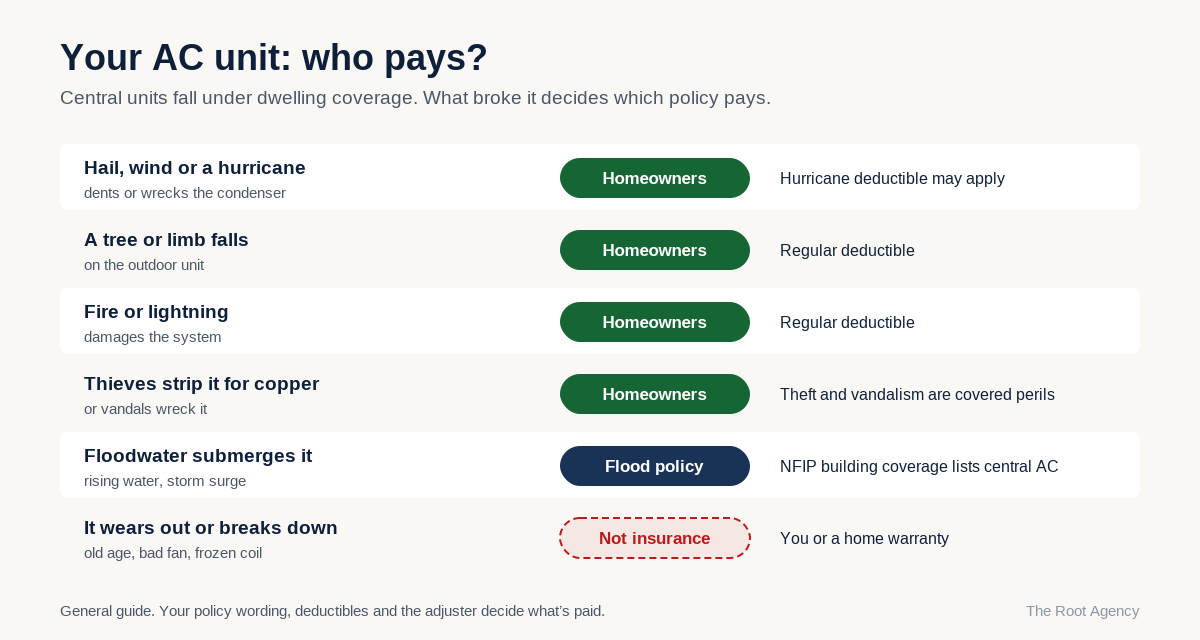
Homeowners insurance may cover your heating and air conditioning system when it's damaged by a sudden, accidental covered peril (Allstate). A standard HO-3 policy covers fire, lightning, windstorms, hail, explosions, smoke, vandalism and theft (Triple-I). For an AC unit, that typically means:
- Hail. One of the most common covered causes of damage to central AC units (Allstate).
- Falling trees and limbs. A central unit crushed by a tree is most likely covered (Allstate). See tree damage coverage.
- Wind, including hurricane winds that throw debris into the condenser.
- Fire, lightning and explosions.
- Theft and vandalism, including a condenser stripped for its copper. File a police report first; see theft coverage.
Central AC vs. window units
A central system, the outdoor condenser plus the indoor air handler and ductwork, is built into the house, so it falls under dwelling coverage. A window unit is a personal possession, so it falls under personal property coverage (Allstate). That can change the answer: Allstate notes a window unit damaged by hail might not be covered, while a central unit likely would be.
What isn't covered: wear and tear
Most AC failures aren't insurance claims. Normal wear and tear, aging and mechanical breakdown aren't covered, so a broken fan or a frozen evaporator coil is yours to fix (Allstate). Homeowners insurance typically won't help if an air conditioner breaks down or is defective (Allstate).
Other things insurance won't pay for:
- Replacing an old or inefficient system
- Damage from skipped maintenance, like a clogged condensate line or dirty coils
- Refrigerant leaks from corrosion or age
A home warranty or service contract is designed for breakdowns; homeowners insurance is designed for sudden damage. Regular maintenance is the best protection against wear-and-tear costs (Allstate).
Hurricanes: which deductible applies
Wind damage to your AC during a hurricane or named storm is generally covered, but most Louisiana policies apply a separate hurricane or named-storm deductible, often a percentage of your dwelling coverage. That deductible applies once per calendar year in Louisiana, so damage from an earlier storm the same year counts toward it. Once it's used up, a later storm that year still carries the greater of what's left of it or your regular deductible (La. R.S. 22:1337).
If the condenser damage is less than the hurricane deductible, you'll likely pay for it yourself. Still document and report it, and keep the repair receipt. See how homeowners deductibles work.
Floods: you need flood insurance
Homeowners insurance excludes flood, and an outdoor condenser sitting on a pad is one of the first things floodwater reaches. A flood policy fills that gap. The National Flood Insurance Program's dwelling policy lists central air conditioners, furnaces and heat pumps as covered building property, including in the enclosed area below an elevated home in high-risk zones (FEMA).
Raising the condenser on a platform helps keep it above water. See flood insurance vs. homeowners insurance.
How to file an AC claim
- Photograph the damage before anything is moved: the dented fins, the fallen limb, the cut lines.
- Call the police for theft or vandalism and get a report number.
- Get an HVAC technician's written report saying what caused the damage. That's often what separates a covered storm claim from a wear-and-tear denial.
- Compare the repair estimate with your deductible before filing.
- Report the claim to your insurer or agent and keep all receipts.
Check your coverage with a Baton Rouge agent
The Root Agency is a local Allstate agency on Goodwood Blvd. We can show you your regular and hurricane deductibles in dollars, confirm whether you have flood coverage, and help you understand what your policy would pay if a storm or thief takes out your AC. Call (225) 529-1990 or start with homeowners insurance in Baton Rouge.
This article is general information, not insurance or legal advice. Coverage depends on your policy, endorsements and the cause of the damage.