
A standard homeowners policy in Louisiana does not cover flooding — you need a separate flood policy for that. The dividing line is where the water comes from: a burst pipe or a wind-driven roof leak is usually a homeowners claim, while rising water, storm surge, and overflowing rivers are flood-only. That distinction is exactly where uninsured Louisiana losses happen, because homeowners assume “water damage is water damage” until a claim proves otherwise.
Here's the gap that catches Louisiana homeowners off guard every storm season: your homeowners policy explicitly excludes flood. And the line between “water damage” and “flood damage” — which sounds like a technicality — is exactly where uninsured losses happen. Rising water from a hurricane or a swollen river is the classic Louisiana event that a homeowners policy will not pay for. This guide draws that line clearly, explains what each policy actually covers, and shows why so many Louisiana homes need both. The team at The Root Agency in Walker can review your homeowners policy and add matching flood coverage so there's no gap between them.
Key takeaways
- Homeowners insurance never covers flooding — it's an explicit exclusion on every policy.
- Water from inside (a burst pipe, an overflowing appliance) is typically a homeowners matter.
- Water from outside (rising water, storm surge, river overflow) is flood-only.
- Flood insurance covers your building and your contents as two separate coverages.
- Many Louisiana homes genuinely need both policies to be fully protected.
Does homeowners insurance cover flooding?
No — flooding is excluded from every standard homeowners policy. This isn't a fine-print surprise your carrier slipped in; it's a universal exclusion across the industry, which is why a separate flood policy exists at all.
That means if rising water enters your home during a hurricane or a river overflow, your homeowners policy will not pay to repair the damage or replace your belongings. Homeowners insurance handles fire, wind, theft, and many kinds of water damage that originate inside the home — but not flood. Understanding that one fact before a storm is what separates protected Louisiana homeowners from those facing a repair bill with no coverage behind it.
Flood vs. water damage — where is the line drawn?
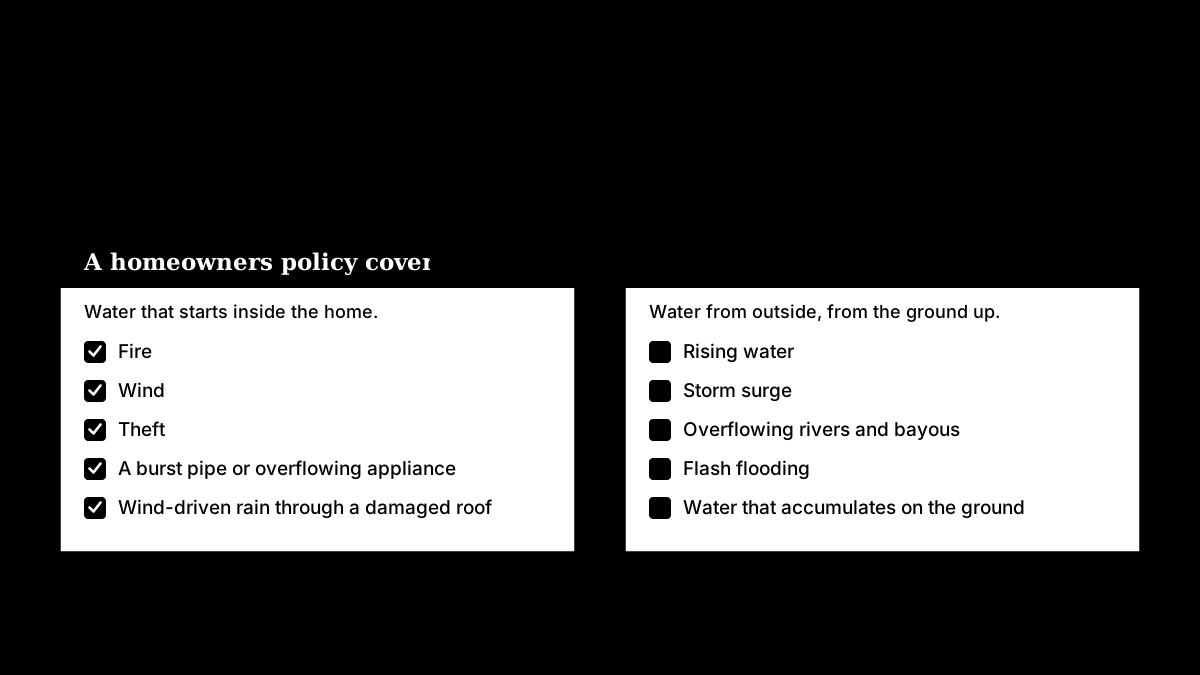
The line is drawn by where the water comes from, not how much damage it does. This is the single most important distinction to understand, because it decides which policy — if any — pays.
- Typically covered by homeowners insurance: a burst supply line, an overflowing washing machine or water heater, a wind-driven rain leak through a storm-damaged roof. The water originates inside or enters through sudden accidental damage.
- Covered only by flood insurance: rising water, storm surge, overflowing rivers and bayous, flash flooding, and water that accumulates on the ground and enters your home. The water comes from outside, from the ground up.
So the same hurricane can cause both kinds of damage — wind tears the roof (homeowners) while storm surge floods the first floor (flood) — handled by two different policies. Our guide on what triggers insurance coverage in Louisiana digs deeper into how these distinctions decide a claim.
What does flood insurance cover (building vs. contents)?
Flood insurance covers your home and your belongings as two separate coverages. According to FloodSmart, the NFIP defines a flood specifically, and its coverage splits into two parts you choose:
- Building coverage protects the structure — foundation, walls, electrical and plumbing systems, furnace, water heater, and built-in appliances. Through the NFIP, this caps at $250,000 for a home.
- Contents coverage protects your belongings — furniture, electronics, clothing. Through the NFIP, this caps at $100,000.
The trap is buying building coverage alone and assuming your belongings are included — they're not. In a Louisiana flood, where a foot of water can ruin everything on a first floor, contents coverage is often what makes you whole. Carrying both is usually the point.
Why do many Louisiana homes need both policies?
Because Louisiana homes face both kinds of risk, and each policy only handles one. A homeowners policy protects against wind, fire, and theft; a flood policy protects against rising water. Skip either one, and you've left a real Louisiana hazard uninsured.
This matters more here than almost anywhere. Hurricane storm surge and river rise are defining Louisiana events, and they produce exactly the losses homeowners insurance won't touch. Nearly a third of NFIP flood claims nationally come from outside high-risk zones, so even homes that “aren't in a flood zone” flood. For most Louisiana homeowners, full protection means two policies working side by side — not one and a hope. See our guide on whether you need flood insurance in Baton Rouge to weigh it for your home.
How do the two policies work together after a storm?
They divide the claim by cause of damage. After a storm that brings both wind and water, your homeowners policy handles the wind-driven damage, and your flood policy handles the flood damage — each with its own deductible and its own adjuster.
That coordination is smoother when both policies are set up thoughtfully in advance. A common Louisiana headache is the “wind vs. water” dispute — arguing whether the damage came from wind (homeowners) or surge (flood). Having both coverages in place removes the incentive to leave you uncovered on a technicality, because one policy or the other responds. A local agent who writes both can make sure your coverage is aligned, so a storm doesn't fall into the gap between them. Our guide to insurance agent vs. company roles explains why that coordination matters.
Not sure your two policies actually line up?
The gap between homeowners and flood coverage is where Louisiana losses hide — and it's easy to close before a storm. The team at The Root Agency will review your homeowners policy, identify your flood exposure, and add matching NFIP flood coverage so nothing falls between them. When you're ready, start on our flood insurance page or contact your Walker-area team, and we'll make sure you're covered on both sides.
This article is general information, not insurance advice. Coverage depends on your specific policies and situation — talk with a licensed agent about your protection.