
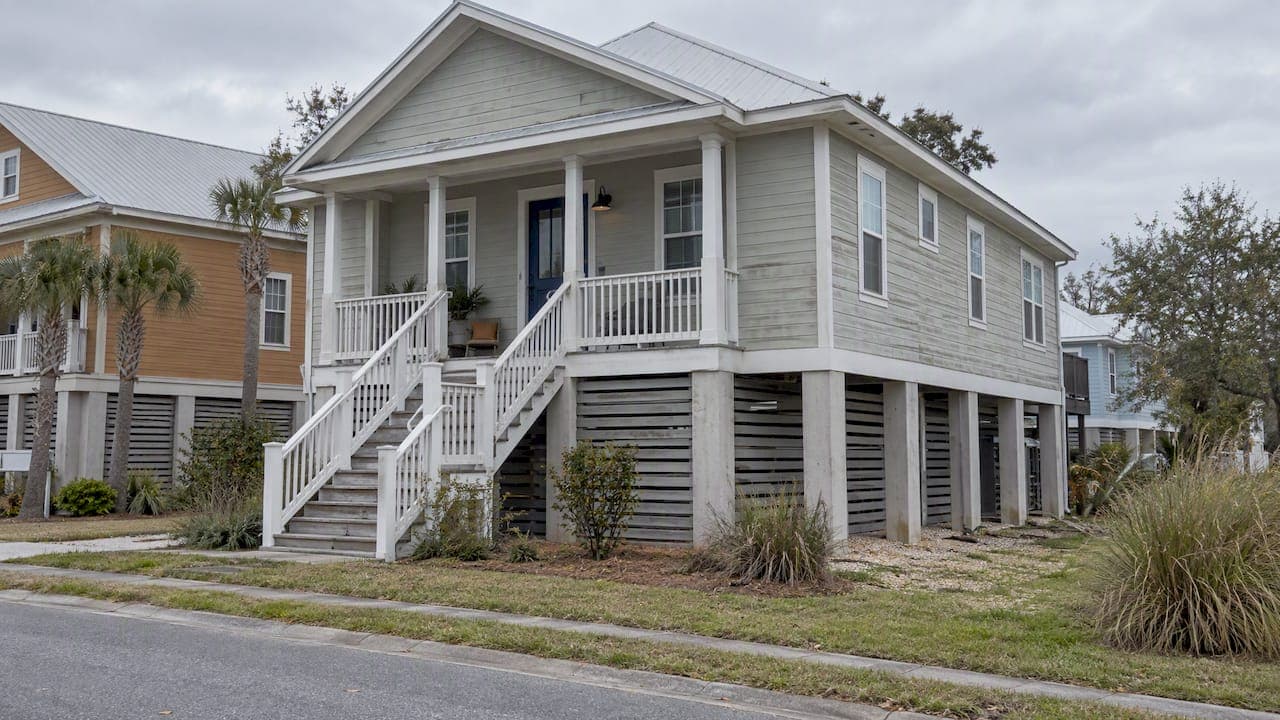
Flood Insurance Cost in Mississippi: What You’ll Pay

There is no single price for flood insurance in Mississippi. Your premium depends on your own property: its foundation, its elevation, how far it sits from water and what it would cost to rebuild. A statewide average can tell you the range people pay, but it cannot tell you what you will pay. FEMA says so itself, and in this guide I walk through what actually sets the number, how to get a real quote, and where cutting cost turns into cutting protection.
I’m Steve Root. My family has worked in Louisiana insurance for 40 years, and I’ve run this agency personally for more than 20. We serve Mississippi homeowners too, and the Gulf Coast storms that shaped how we work don’t stop at the state line.
TL;DR
- Flood insurance is priced property by property. FEMA says a statewide average cannot reliably predict an individual premium.
- A homeowners policy does not cover flooding, so the cost of flood coverage is a separate line in your budget.
- Foundation type, first-floor elevation, distance from water, replacement cost and your deductible all move the price.
- Most NFIP policies take 30 days to start, so the time to buy is before a storm is in the forecast.
- The cheapest policy is rarely the best one. Check limits, exclusions and what your claim would actually pay.
Table of Contents
- What flood insurance costs in Mississippi
- What sets your premium
- NFIP or private: does the price differ?
- What you are paying for: coverage and limits
- How to get your real number
- Our perspective: price the claim, not the policy
- Working with The Root Agency
- FAQ
- Sources
What flood insurance costs in Mississippi
Here is the straight answer: it ranges widely, and the range is the point. Two houses on the same street can carry very different premiums.
FEMA’s analysis of single-family homes reports median current and risk-based costs by state, county and ZIP code, based on policies in force as of August 31, 2023. Those figures are annual, and FEMA is clear that risk-based costs are not necessarily what policyholders currently pay. It also says an individual premium can’t be reliably inferred from a statewide average, because pricing uses the property’s own flood peril, foundation and first-floor elevation, distance from water, replacement cost, flood openings and levee performance.
So be careful with any website that gives you one Mississippi number and calls it your cost. Use it as a rough sense of scale and nothing more. The only number that matters is the quote on your address.
Why current premiums and risk-based premiums differ
NFIP pricing moved to Risk Rating 2.0, which prices each building on its own characteristics instead of mostly on the flood zone. Not everyone reached their full risk-based price at once. FEMA found that 38% of single-family policyholders were already paying their risk-based premium, while others were on a glide path. For most policyholders, federal law limits annual increases to 18%.
That has a practical meaning. If your premium today looks manageable, check whether you are still climbing toward a higher risk-based number. Ask your agent to show you both figures. We explain the same mechanics for our home state in our Risk Rating 2.0 guide for Louisiana homeowners, and the logic applies the same way across the Gulf.
What sets your premium
FEMA lists the key factors as flood perils, building characteristics, elevation and distance from flooding sources, replacement cost, flood adaptations and levee performance. In plain terms:
- Foundation type. Slab, crawlspace, pier-and-beam and elevated homes are rated differently. A house up on piers faces water differently than one poured on grade.
- First-floor elevation. How high the lowest floor sits compared with likely flood levels is one of the strongest levers.
- Distance to water. Coast, bayou, river, creek or drainage ditch. Closer usually costs more, but not always, because local flood sources vary.
- Replacement cost. What it would cost to rebuild, not what you paid or what the market says the house is worth.
- Flood openings and adaptations. Vents that let water pass through an enclosure, and utilities raised off the ground.
- Levee performance. Where a levee protects the property, how well it performs is part of the rating.
- Construction date. FEMA notes that premiums vary with construction date and flood risk.
Zone alone no longer tells the story. The Mississippi Insurance Department stresses that flood risk exists beyond designated floodplains. A home outside a mapped high-risk zone can still take water, and can still be priced for it.
Building and contents are priced separately
An NFIP policy lets you choose building coverage and contents coverage separately, and both carry their own rating variables. On top of the rate, premiums include fees such as the Federal Policy Fee and surcharges required by the Homeowner Flood Insurance Affordability Act. When you compare quotes, compare the total, not just the base rate.
Renters should note this too. Your landlord’s policy does not cover your belongings, and a standard renters policy generally does not cover flood either. A contents-only flood policy is a different, smaller purchase than a full building policy.
NFIP or private: does the price differ?
You have two routes. The Mississippi Insurance Department says flood coverage is available through the NFIP or private insurers.
On the NFIP side, the price is the same no matter who sells it. FEMA states that NFIP premiums do not differ between companies or agents. That surprises people. You will not save money by calling five agents for the same NFIP policy. What differs is the service: who explains the quote, who catches mistakes on your elevation information, who answers when you file.
Private flood is priced by each insurer, so quotes can differ, and so can terms, limits and how claims are valued. Private coverage is most often worth a look when a home’s rebuild cost is high or when you want more than the federal limits provide. We break the comparison down for our region in private vs NFIP flood insurance. Read it as a framework for the questions to ask, then apply it to your Mississippi address.
| What to compare | NFIP | Private flood |
|---|---|---|
| Price between agents | Same everywhere | Varies by insurer |
| Pricing basis | Property-specific rating, plus fees and surcharges | Insurer’s own underwriting |
| Coverage choices | Building and contents selected separately | Depends on the policy |
| Best fit | Most homes, straightforward coverage | Higher-value homes, or buyers who want broader terms |
What you are paying for: coverage and limits
A lower premium means little if the policy won’t pay enough. Four facts shape what your flood dollars buy.
Flood is not in your homeowners policy. FEMA’s guidance is that standard homeowners, renters and commercial policies generally do not cover flood damage, so you need a separate policy. Mississippi’s insurance regulator says the same in its Flood Insurance Awareness Week release. If you want to see exactly where the line falls between water that comes from rising surface water and water that comes up a drain, this explanation of water backup versus flood shows what to look for on your declarations page. Our own take for Louisiana homeowners is in flood vs homeowners insurance.
It is not a guaranteed replacement cost policy. The NFIP pays the replacement cost or the actual cash value of the damage, whichever is less, up to the policy limit. An older roof or worn flooring can be paid at depreciated value. That is the gap people discover only after a claim.
Some things are excluded. FEMA lists items such as currency, precious metals, most self-propelled vehicles and personal property kept in basements, and notes that flood insurance does not cover additional living expenses. If you’d have to live in a hotel for months, that bill is yours unless another policy covers it.
There is a waiting period. NFIP coverage generally begins after 30 days, with exceptions for mortgage closings and renewals and one-day waits in certain situations such as newly designated high-risk zones. Buying when a storm is in the Gulf is too late. See how to avoid a 30-day gap.
Most NFIP policies also include Increased Cost of Compliance coverage, which FEMA’s agent bulletin says provides up to $30,000 toward elevating, demolishing or relocating a structure declared substantially or repetitively damaged. That bulletin is from 2018, so confirm the current figure on your policy.

When the NFIP alone may not be enough
If rebuilding your home would cost more than the NFIP will pay, you have a gap. Ways to fill it include private flood coverage, excess flood coverage and, for liability exposure, an umbrella policy. Our umbrella coverage starts from $150 per year, and it is worth asking about if you own significant assets. Umbrella coverage does not replace flood insurance, but it belongs in the same conversation about protecting what you’ve built.
How to get your real number
FEMA’s own advice is to get a quote, because the specific premium must be determined by a quote. Here is how to make that quote accurate.
- Gather your property facts. Year built, foundation type, number of floors, and any flood vents or raised utilities.
- Find an elevation certificate if you have one. FEMA says providing one may help a policyholder pay less. If you don’t have it, ask whether a surveyor’s certificate is worth the cost for your address.
- Decide on building and contents separately. Decide what your belongings are worth before you accept a default.
- Compare deductibles. A higher deductible may lower the premium, but only choose one you could pay tomorrow out of savings.
- Ask what mitigation counts. Elevating utilities and adding flood openings can matter. Ask before you spend money on them.
- Read the declarations page. It shows the coverage purchased, the limits and the deductible. Check the building limit against your rebuild cost.
FEMA’s guidance says these steps may help a policyholder pay less. It does not promise they will, and neither do I. Every property is different.
Saving money without losing protection
Owners often ask us how to make the premium smaller. We answer with a different question: what does the policy need to pay when the water comes? The sensible savings are the ones that lower real risk: raised equipment, proper openings, an accurate elevation certificate. The risky savings are dropping contents coverage you actually need, or setting a deductible you can’t meet. For a Louisiana view of the same trade-offs, see what lowers flood insurance cost.
Our perspective: price the claim, not the policy
The families we serve have been through storms. Many have filed claims, and they know the difference between a policy that looked good on paper and one that paid. When people ask me what flood insurance costs, I tell them the real cost is what they pay after a loss without the right coverage.
We are the agency that stayed in Louisiana when other carriers and agents left after the hurricanes. We have 356 Google reviews at 4.9 stars, and we run a mobile catastrophe response unit that sends RVs to disaster zones, because a claim is a human problem before it is a paperwork problem. We’re available 24/7 for claims support and we serve clients in English and Spanish.

Here is how I’d approach a Mississippi flood quote. Start from the rebuild cost. Choose building limits that reflect it. Decide what your contents are worth, and don’t skip them. Pick a deductible you can actually pay. Then ask whoever is selling the policy one question: when the water is in the house, will you pick up the phone? An NFIP premium is the same from every agent, so that answer is what you’re really choosing between.
Flood insurance is a foundation, not an extra. FEMA’s own view is that it’s meant to be a base layer, since federal disaster assistance is not a comprehensive substitute for a policy. The Mississippi Insurance Department asks homeowners to consider flood coverage before flooding occurs. I agree with both, and I’d add that waiting costs more than any premium.
— Steve Root
Working with The Root Agency
We are an Allstate exclusive agency based in Baton Rouge, and we write flood insurance alongside home, auto, life, renters, umbrella and commercial coverage, so your policies can be reviewed together. If you own property in Louisiana, we can quote it directly and compare options with you. For Mississippi addresses, call us at (225) 926-0160 and we’ll tell you plainly what we can do and how to proceed. You can also see everything we offer on our products page. Life and renters coverage start from $20 per month, and each is a separate policy from flood.
If you own a business, standard commercial policies also generally exclude flood, so ask about commercial insurance and flood together.
FAQ
Is flood insurance tax-deductible in Mississippi?
For a home you live in, flood insurance premiums are generally treated like other personal home insurance costs and are not deductible. Business and rental property can be treated differently, because insurance on income-producing property may be a deductible expense. Ask a CPA or tax preparer about your own situation before you file.
Is flood insurance capped at $250,000?
NFIP building coverage has a ceiling, and contents coverage is a separate, lower limit. If your home would cost more to rebuild than the NFIP will pay, look at private or excess flood coverage. Check the building limit on your declarations page against your real rebuild cost.
Do I need flood insurance if I’m outside a flood zone?
The Mississippi Insurance Department says flood risk exists beyond designated floodplains. A lender may require coverage inside a high-risk zone, but outside one you can still take water and your homeowners policy will not pay for it. A quote based on your property’s own characteristics will show you what the coverage costs.
How long until a new flood policy takes effect?
NFIP coverage generally begins after 30 days. There are exceptions, including some mortgage closings, renewals and newly designated high-risk zones, where the wait is shorter or none. Buy well before hurricane season peaks, never after a storm has formed.
Does flood insurance cost the same with every agent?
For NFIP policies, yes. FEMA says NFIP premiums do not differ between companies or agents. Private flood premiums do vary by insurer, so compare coverage terms as well as price.
Sources
- FEMA: Cost of Flood Insurance for Single-Family Homes under Risk Rating 2.0
- NFIP: Premium Costs
- NFIP: Buy a Flood Insurance Policy
- NFIP Agents: Types of Coverage
- NFIP Agents: How Much Does Flood Insurance Cost?
- NFIP Agents: When To Use Flood Insurance
- NFIP Agent Bulletin W-05033 (2018)
- FEMA: Group Flood Insurance Policy guidance
- Mississippi Insurance Department: Flood Insurance Awareness Week
- Water backup vs flood explained