

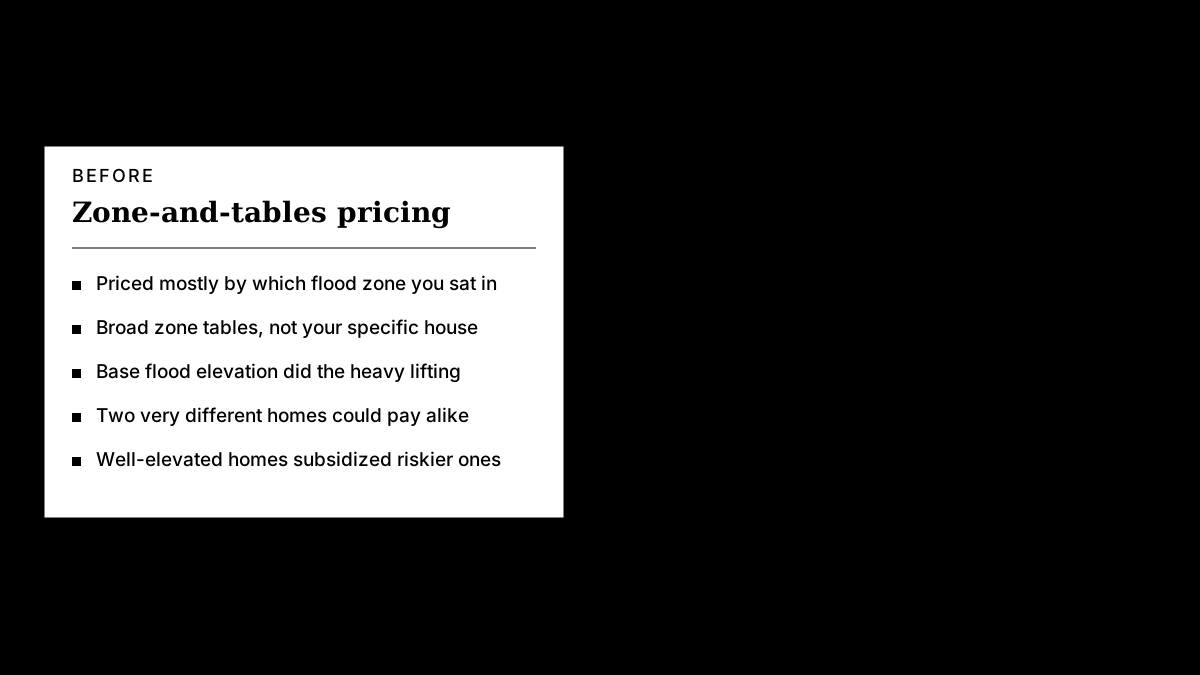
Risk Rating 2.0 is FEMA's flood-insurance pricing method that rates each property individually using its own flood risk — elevation, distance to water, flood type, and rebuild cost — instead of the old broad zone-and-tables approach. For many Louisiana homeowners it's fairer; for some it means rates rising toward their true cost over time. Federal law caps most primary-residence increases at 18% per year, so even a big change is phased in rather than applied all at once.

If your Louisiana flood premium changed and you're not sure why, the answer is almost certainly Risk Rating 2.0 — FEMA's rebuilt way of pricing flood insurance. Instead of rating your home mostly by which flood zone it sits in, it now prices your specific property using its own risk. That's fairer for a lot of Louisiana homes, but for some it means rates climbing toward their true cost, capped by law each year. This guide explains what Risk Rating 2.0 is, the factors it uses, why your premium moved, the annual cap that protects you, and what it means when you buy or sell. The team at The Root Agency, serving Ascension Parish and beyond from Baton Rouge, can explain exactly how your rate was built.
Key takeaways
- Risk Rating 2.0 prices each home on its own flood risk instead of just its flood zone.
- It uses distance to water, flood frequency and type, foundation, first-floor elevation, prior claims, and rebuild cost.
- Some Louisiana homes saw premiums drop; others rise toward their true-risk price.
- Federal law caps most primary-residence premium increases at 18% per year until the full-risk rate is reached.
- It changes what you should check when buying or selling a Louisiana home.
What is Risk Rating 2.0?
It's FEMA's current method for pricing NFIP flood insurance, and it rates each property individually. Rather than leaning on broad flood-zone tables, Risk Rating 2.0 — fully in effect since April 2023 — sets your premium from your home's own flood risk.
The goal, per FEMA, is rates that are “actuarially sound, easier to understand and better reflect a property's flood risk.” In plain terms: your price is supposed to match your home's real exposure, not a one-size-fits-a-zone estimate. That's a meaningful shift in a state like Louisiana, where two homes in the same zone can face very different flood realities.
What factors does it now use?
It draws on a fuller picture of your property's risk. Where the old system leaned heavily on your flood zone and base flood elevation, Risk Rating 2.0 folds in several property-specific variables:
- Distance to a water source — rivers, bayous, the coast.
- Flood frequency and type — river overflow, storm surge, coastal erosion, heavy rainfall.
- First-floor height relative to the base flood elevation.
- Foundation type — how your home is built.
- Prior claims on the property.
- Rebuild (replacement) cost — what it would cost to repair or rebuild.
Because it weighs all of these together, the system can recognize when your specific home is lower-risk than its zone suggested — or higher. That's the whole idea behind pricing the house, not the map square.
Why did your flood premium change?
Because your price now reflects your home's individual risk, and that's rarely identical to the old zone-based estimate. Under Risk Rating 2.0, some Louisiana homeowners saw premiums decrease — often well-elevated homes that had been subsidizing riskier neighbors — while others saw them rise toward the true cost of their risk.
It's important to be honest that both happen. If your rate went up, it generally means your home's full-risk price is higher than what the old system charged, and you're now moving toward it. If it went down, the new method recognized that your home is safer than its zone implied. Either way, the change reflects your property's real exposure. For the broader context on Louisiana's high insurance costs, see our guide to why insurance is so expensive in Louisiana.
What is the annual increase cap, and what does it protect?
Federal law limits how fast your premium can climb. Even if your home's full-risk rate is much higher than what you pay today, most primary-residence NFIP premiums can't increase more than 18% per year, per the statutory cap FEMA operates under.
That cap is a shock absorber. Instead of jumping straight to the full-risk price, your premium steps up gradually, giving you time to plan — or to mitigate your risk and slow the climb. And the increases only continue until your rate reaches its full-risk level; they don't rise forever. So if you've received notice that your flood premium is going up, the cap is the reason it isn't going up all at once.
What does it mean when you buy or sell a Louisiana home?
It makes the property's flood premium a real part of the transaction — and a more transparent one. Because pricing is now tied to the specific home, a buyer can (and should) find out the actual flood premium for that property, not just its zone.
Two practical points. First, flood risk and its cost now travel with the house in a clearer way, so it's worth getting a quote before you buy. Second, mitigation that lowers risk — elevation, flood vents — can lower the premium and become a selling point. If you're buying or new to Louisiana, our guide to flood insurance in Baton Rouge is a good starting point, and a local agent can pull the real number for any address you're considering.
Want to understand your flood premium?
If your flood rate moved and you don't know why, a quick review can show you exactly how it was built — and where mitigation could slow any increase. The team at The Root Agency will explain how Risk Rating 2.0 priced your home and quote NFIP coverage for your address. When you're ready, start on our flood insurance page or contact your Prairieville-area team, and we'll walk through your rate.
This article is general information, not insurance advice. Flood pricing depends on your specific property — talk with a licensed agent about your coverage.