
There's no single sticker price for flood insurance in Louisiana anymore. Under FEMA's Risk Rating 2.0, your premium is built from your specific property — its elevation, distance to water, the type of flooding it faces, and what it would cost to rebuild — which is why two neighbors on the same street can pay very different amounts. The only way to get a real number is a quote on your exact address. As an Allstate agency, The Root Agency writes NFIP flood coverage and can quote it directly.
If you're asking how much flood insurance costs in Louisiana, the honest answer is: it depends on your specific home — and that's a bigger change than it sounds. There's no flat rate anymore. Under FEMA's Risk Rating 2.0, your premium is built from your property's own flood risk — its elevation, how close it sits to water, the kind of flooding it faces, and what it would cost to rebuild. This guide explains what actually determines your price, how Risk Rating 2.0 changed the math, and the real levers that lower your premium. The team at The Root Agency in Baton Rouge writes NFIP flood coverage and can pull an exact number for your address.
Key takeaways
- Flood insurance is now priced per property under Risk Rating 2.0 — there's no flat Louisiana rate.
- Your premium is driven by elevation, distance to water, flood type, prior claims, and rebuild cost.
- NFIP coverage caps at $250,000 for the building and $100,000 for contents on a home.
- Community Rating System discounts can cut NFIP premiums 5%–45% in participating Louisiana communities.
- The average NFIP flood claim paid between 2020 and 2024 was about $82,614 — which puts the premium in perspective.
What determines your flood insurance premium in Louisiana?
Your specific property does. Since FEMA moved to Risk Rating 2.0, flood premiums are calculated from the individual features of your home rather than a broad zone-and-tables approach.
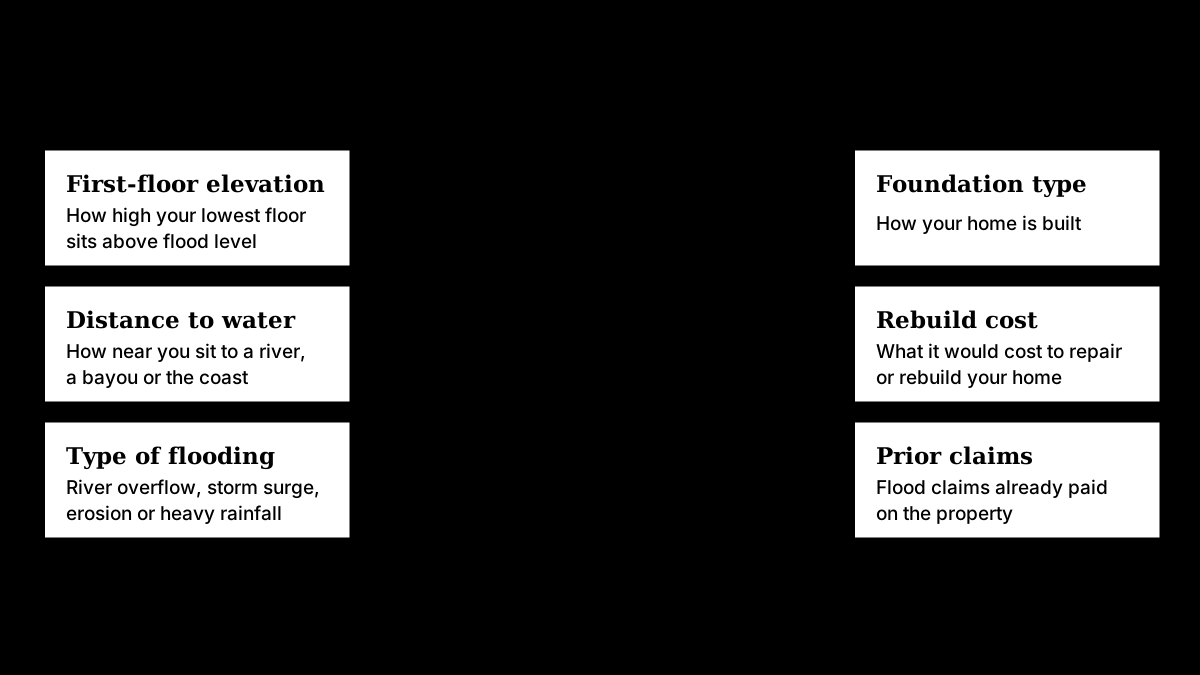
According to FEMA, the pricing now reflects flood frequency, the types of flooding your property faces (river overflow, storm surge, coastal erosion, heavy rainfall), your distance to a water source, your foundation type, the height of your lowest floor relative to the base flood elevation, prior claims, and your home's rebuild cost. That's why a made-up “average” is misleading — the number is assembled from your address. In flood-heavy parishes like East Baton Rouge, Livingston, and Ascension, where rebuild costs run high after storm surge and river flooding, those property-specific factors matter even more.
How did Risk Rating 2.0 change the way you're priced?
It replaced a one-size-fits-a-zone system with individual pricing. Before, your premium leaned heavily on which flood zone your home sat in; now, Risk Rating 2.0 rates each property on its own risk — so your price reflects your home, not just your neighborhood.
For many Louisiana homeowners that's fairer: a well-elevated home no longer subsidizes a riskier one nearby. For some, it means rates moving toward their true cost over time. Federal law softens that transition — most primary-residence premiums can't rise more than 18% per year, per FEMA's statutory cap, until they reach the full-risk rate. So even if your home's true-risk price is higher, the increase is phased in rather than applied all at once.
Does an elevation certificate still lower your cost?
It's no longer required to get a rate, but elevation still matters — a lot. Under Risk Rating 2.0, FEMA can rate your property without an elevation certificate, so you don't have to pay for one just to buy coverage.
That said, how high your lowest floor sits relative to flood risk is one of the biggest factors in your premium. If your home is elevated — or you elevate it, or add flood vents and other mitigation — that lower risk can translate into a lower price. An elevation certificate can still be worth providing if it documents a favorable elevation, so it's worth asking your agent whether one helps in your specific case.
Building coverage vs. contents coverage — why both cost money
They're two separate coverages, and each carries its own premium. Building coverage protects the structure itself — foundation, walls, electrical, plumbing, built-in appliances. Contents coverage protects what's inside — furniture, electronics, clothing, and other belongings.
Through the NFIP, residential building coverage is capped at $250,000 and contents at $100,000. Many homeowners buy building coverage and skip contents, then discover after a flood that their belongings weren't protected. In a state where a flood can ruin everything on a first floor, carrying both is usually the point. If your home's value exceeds the NFIP building cap, that's also the moment to ask about supplemental options.
How can you lower your flood premium?
Focus on risk and coverage choices, because you can't shop the federal rate away. A few levers genuinely move an NFIP premium:
- Raise your deductible. A higher deductible lowers your premium, as long as you could cover it after a loss.
- Mitigate the risk. Elevating utilities, adding flood vents, or elevating the structure can reduce your rated risk.
- Right-size your coverage. Insure to your actual building value and realistic contents, rather than over- or under-buying.
- Benefit from community discounts. Many Louisiana parishes participate in FEMA's Community Rating System, which discounts NFIP premiums 5%–45% community-wide — and under Risk Rating 2.0 that discount applies whether or not you're in a high-risk zone.
For the broader reasons insurance costs run high across the state, see our guide to why insurance is so expensive in Louisiana.
How do you get an exact number for your address?
Get a quote on your specific property — it's the only real answer. Because Risk Rating 2.0 prices each home individually, an online “average” can't tell you your cost; your elevation, distance to water, and rebuild cost have to be run.
That's a quick step with a local agent. The team at The Root Agency writes NFIP flood coverage and can pull your flood risk and quote a real premium for your address — and help you weigh building versus contents limits and any mitigation that lowers the number. If you're weighing whether you even need it, our guide on whether you need flood insurance in Baton Rouge is a good companion read.
Want a real flood insurance quote for your home?
The only way to know your flood insurance cost is a quote built on your actual address — not an online average. The team at The Root Agency will pull your flood risk, quote NFIP coverage directly, and show you where mitigation or coverage choices can lower the number. When you're ready, start on our flood insurance page or contact your Baton Rouge team, and we'll get you a real number.
This article is general information, not a quote or insurance advice. Flood premiums vary by your specific property — talk with a licensed agent about your coverage.