
No Federal Mandate, Real Risk: Flood Zone X Coverage in Louisiana

Federal law does not require flood insurance for homes in FEMA Zone X, but lenders can still require it, and coverage is available through the NFIP and private carriers. Zone X means moderate-to-low hazard, not no hazard. Premiums are generally lower than in high-risk zones, yet your price depends on your home and current risk-based rating.
TL;DR:
- FEMA’s map reflects the parcel’s mapped area, not a home inspection, and may miss flooding from heavy rain, drainage failures, or levee breaches.
- Before closing, get lender confirmation in writing, request the seller’s claims history and policy details, and arrange an insurance review.
- NFIP residential limits reach $250,000 for buildings and $100,000 for contents, which are generally paid at actual cash value rather than replacement cost.
- A new NFIP policy typically takes 30 days to begin coverage, so start quotes early; exceptions include certain purchases required by a lender at closing.
- Do not assume the seller’s premium will carry over, because new policyholders receive current ratings based on the specific property.
Table of Contents
- 1. What Zone X means and how flood maps work
- 2. Is flood insurance required in Zone X?
- 3. What coverage Zone X homeowners can buy
- 4. How much flood insurance costs in Zone X
- 5. How to buy flood coverage and what to bring
- 6. Why Zone X homeowners still buy flood insurance
- 7. How flood claims work in Zone X
- 8. What happens when flood maps change
- 9. Endorsements and extra coverage worth asking about
- 10. A local agent’s view on Zone X
- 11. How we help Zone X homeowners protect what they own
- FAQ
- Sources
1. What Zone X means and how flood maps work
Zone X covers areas outside the Special Flood Hazard Area, which FEMA describes as moderate and minimal flood hazard. The label is shorthand for how likely the ground under your home is to flood, and it comes with a distinction that matters. Shaded Zone X generally marks moderate hazard, such as areas between the 100-year and 500-year flood levels, while unshaded Zone X marks minimal hazard. Either way, FEMA calls the risk reduced, not removed.
Your zone comes from a Flood Insurance Rate Map, or FIRM. These maps are drawn for whole areas, so your zone reflects where your parcel sits on the map, not an inspection of your house. FEMA offers training on reading a FIRM, including how to locate a property and how to request a correction when a map seems wrong. Its Know Your Flood Risk pages let you look up your address.
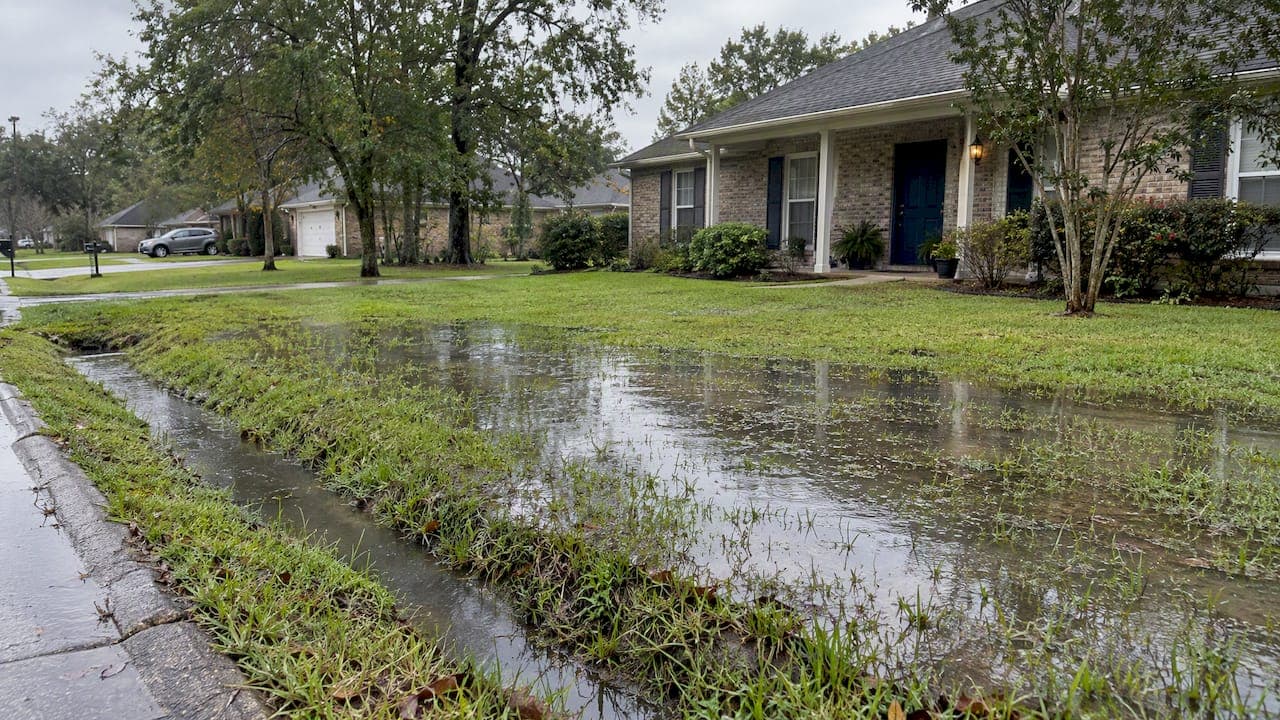
Maps are useful, but they are not the whole story. They are built around river and coastal flooding. Heavy rain overwhelming a drainage system, a bayou rising faster than forecast, or a levee that gives way can flood a home that the map labels low risk. In south Louisiana, where a stalled storm can bring intense rainfall, that gap is the reason many of our clients keep coverage in Zone X. If you want the basics of every zone first, we break them down in our guide to FEMA flood zones.
2. Is flood insurance required in Zone X?
Not by federal law. The mandatory purchase rule attaches to high-risk zones, and FEMA states that Zone X properties are not subject to it. But FEMA also notes that lenders keep the right to require flood coverage on any loan, and borrowers should be ready for that. A lender may do this because of its own portfolio rules, its view of local flooding history, or concern about a levee or drainage issue near the property.
For buyers, the practical result is simple: your loan documents decide, not the map alone. The Consumer Financial Protection Bureau suggests asking pointed questions when buying a house, including whether the home has flooded before and what flood insurance will cost you.
Before closing, we recommend three steps:
- Ask your lender in writing whether flood coverage is a loan condition.
- Request the seller’s flood claims history and current policy details.
- Schedule an insurance review before closing so nothing surprises you in escrow. FEMA itself advises an insurance review before closing.
A review takes a short conversation. Discovering a requirement just before closing takes much more.
3. What coverage Zone X homeowners can buy
The NFIP offers residential buildings up to $250,000 in coverage and contents up to $100,000. Contents are typically paid at actual cash value, meaning replacement cost minus depreciation. An older sofa is paid at what it is worth today, not what a new one costs.
The NFIP Summary of Coverage explains that a policy covers direct physical loss by flood to your building and, if you buy it, your contents. It also lists what surprises homeowners: limited basement coverage, most outdoor property, most motor vehicles, and certain earth movement. A base policy with no understanding of those gaps can leave you underinsured.
Increased Cost of Compliance, or ICC, deserves a mention. If a flood damages your home badly enough that local rules require you to elevate, demolish or floodproof it before rebuilding, ICC coverage can help pay part of that cost. Whether it applies to your situation depends on your community’s rules and the claim, so we confirm it with you rather than assume.
Private flood policies are the other route. They can offer different limits, different contents valuation, or shorter waits, but terms vary by carrier and by state. We walk through the differences in private vs NFIP flood insurance in Louisiana. Standard homeowners policies leave out most flood damage, which we cover in flood vs homeowners insurance.

4. How much flood insurance costs in Zone X
Zone X premiums are generally lower than premiums in high-risk zones, and that is real money saved. But they are not uniform. Your price is set by your specific property under FEMA’s current risk-based rating, and it varies widely by state and by home. For Louisiana numbers, see our post on how much flood insurance costs in Louisiana.
These factors move your premium the most:
- Location: your parish and how close you are to water.
- Elevation: the height of your lowest floor relative to expected flood levels.
- Rebuilding cost: the replacement value of the structure.
- Deductible: a higher deductible lowers the premium but raises what you pay at claim time.
- Claims history: prior flood losses on the property.
- Community participation: whether your community takes part in the NFIP.
- Preferred Risk Policy eligibility: a lower-cost option for qualifying lower-risk properties. Ask us whether your home qualifies.
One warning for buyers: assume the seller’s premium will not follow you. FEMA says new policyholders are rated under current standards, and the CFPB makes the same point about seller premiums not transferring. A listing that brags about a low flood premium tells you very little about your own.
We do not price on guesswork, and we do not publish a Zone X rate here because a fair rate comes from your address and your home, not an average.
5. How to buy flood coverage and what to bring
Timing catches people. A new NFIP policy typically carries a 30-day waiting period before coverage takes effect. Exceptions are narrow, such as certain lender-required purchases tied to a loan closing or specific map revisions. If a storm is on the radar, it is already too late to start, so buy early.
You can get quotes from NFIP-authorized agents and from private insurers. When both are available, we suggest comparing the two side by side, because limits, contents valuation and waiting periods differ.
To get an accurate quote, bring:
- The property address and the building’s age
- Construction type and foundation
- An elevation certificate, if you have one. Learn how a flood elevation certificate works
- The building and contents limits you want
Then ask your agent:
- What are the building and contents limits, and how are contents paid?
- What is excluded, especially in basements and outbuildings?
- Does ICC coverage apply?
- Who handles my claim, and how fast do they answer?
- Will you do a review before closing?
Pro Tip: Start the quote before you remove your inspection contingency, so any lender requirement and the 30-day clock never collide with your closing date.
6. Why Zone X homeowners still buy flood insurance
The CFPB’s research found that mortgage-market flood exposure is more geographically dispersed than FEMA’s maps suggest, and it cautions against assuming zero risk in Zone X. Its full report compared FEMA’s designations with a model from First Street Foundation and found the model captures additional inland and rain-driven risk that FEMA’s high-risk definition does not.
FEMA says much the same: a moderate designation lowers the hazard without eliminating it, and areas behind levees can still flood if a levee fails. Louisiana readers do not need that explained twice. Stormwater, inland flooding and levee trouble can do real damage far from the nearest mapped floodplain.
7. How flood claims work in Zone X
A claim in Zone X follows the same path as any NFIP claim, and your zone does not change how a covered loss is paid. You report the loss, an adjuster inspects, you document damage with photos and an inventory, and the policy pays covered losses up to your limits, less your deductible. Buildings are generally paid on a repair or replacement basis, and contents at actual cash value.

Typical Zone X scenarios look like this: a slow-draining neighborhood after a multi-day rain event, a bayou or canal overtopping its banks, or a drainage failure pushing water through a slab. In each case the question is whether water covered the ground and entered the structure, not what color your property was on the map.
One zone detail matters. NFIP procedures require that if a flood zone on a policy is later found to be wrong, the correct zone is used for claims and premiums are adjusted going forward. Keep your policy’s zone information accurate from day one.
After a storm, you want someone local who answers. Our team deploys in person after catastrophes, and we help you organize documentation so your claim moves cleanly.
8. What happens when flood maps change
Maps are revised, and a revision can move your property from one zone to another. If your home goes from Zone X into a high-risk zone, the mandatory purchase rules can begin to apply for federally backed loans, and your rating may change. If it moves the other way, you may qualify for a lower-cost option.
NFIP rules include limited waiting-period exceptions tied to map revisions, as FEMA’s flood insurance page describes. Policyholders with continuous coverage may also see their situation handled differently from new buyers, which is one more reason to hold a policy before a remap rather than scramble after one.
Our advice: do not let a favorable map today set your long-term plan. Check your zone when you buy, check it again when your community announces a map update, and keep your agent informed. Rate structures also differ across zones, as NFIP rate tables for zones B, C and X have shown historically, so a zone change can alter your premium even when your house has not changed.
9. Endorsements and extra coverage worth asking about
The base NFIP policy has built-in limits, so the useful questions are about gaps. Start with basements: NFIP coverage there is limited, so ask exactly what is and is not covered, including the furnace, water heater and electrical panel. Then ask about detached structures such as a garage, workshop or shed, and about outdoor property, which the NFIP Summary of Coverage lists among common exclusions.
Other items to raise with your agent:
- Whether contents coverage on an actual cash value basis fits your belongings
- ICC coverage and when it would apply
- Private-market options that may extend limits beyond the NFIP caps or cover items the NFIP does not
- An umbrella policy for liability above your home and auto limits
We would rather tell you about a gap on a quiet Tuesday than after a flood. Coverage details vary by carrier and policy form, so we confirm each one in writing.
10. A local agent’s view on Zone X
I have seen what happens when a family relies on the map instead of a plan. My advice is plain. Get a pre-closing insurance review and a quick zone check so escrow holds no surprises. Get an NFIP quote, ask whether you qualify for a Preferred Risk Policy, and confirm what your lender requires. After more than 20 years in this business, 356 Google reviews, and a catastrophe team that shows up in person after a storm, I trust a local agent who answers the phone more than any low number on a listing. Low risk is not no risk, and the right policy is worth more than saving a few dollars a month.
— Steve Root
11. How we help Zone X homeowners protect what they own

We offer NFIP and private flood policies for Louisiana homeowners, with bilingual service in English and Spanish, claims support, and a mobile catastrophe response unit that comes to you after a storm. We would rather you ask about your coverage now than learn its limits after a loss.
Here is how we work with a Zone X buyer or owner:
- A pre-closing policy review so lender requirements and waiting periods are handled early
- Help gathering elevation information and checking Preferred Risk Policy eligibility
- Side-by-side NFIP and private options, with limits and exclusions explained in plain words
- In-person claims help when the water goes down
Call us for a review, ask for an NFIP quote, or start on our flood insurance page. You can also see everything we write at Steverootagency.
FAQ
Do I need flood insurance in Zone X?
Federal law does not require it, but your lender can. FEMA says lenders keep the right to require flood coverage even in Zone X, so check your loan conditions before you assume it is optional.
Which flood zone is better, AE or X?
Zone X is the lower-hazard designation, and it sits outside the Special Flood Hazard Area, while Zone AE is a high-risk zone. Lower hazard does not mean any flood risk, so you should still weigh coverage for a Zone X home.
How long until my flood policy starts?
A new NFIP policy typically has a 30-day waiting period. A few exceptions exist, such as certain lender-required purchases tied to a loan closing, so buy early rather than counting on one.
Can I keep the seller’s flood premium?
Do not count on it. FEMA says new policyholders are subject to current risk-based rating, so the previous owner’s premium usually will not apply to you.