
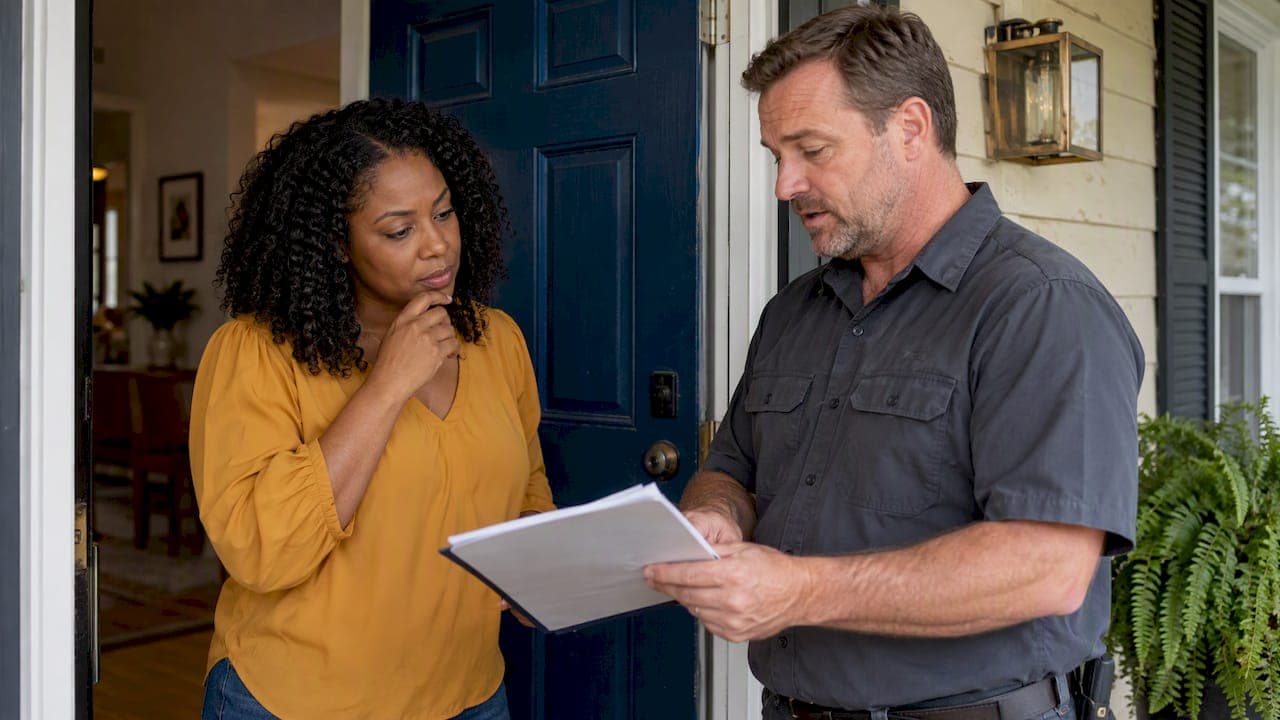
Assignment of Benefits in Louisiana: What the Law Says

In Louisiana, a contractor, public adjuster or other repair provider cannot lawfully take an assignment of benefits on your homeowners or commercial property claim. Act 364 of 2023 made those agreements against public policy and null and void, and the Louisiana Department of Insurance repeated that position in 2025. If someone hands you an assignment form after a storm, you do not have to sign it, and you should call your agent and your insurer first.
We are Steve Root’s agency in Baton Rouge, and we have walked families through claims after storms for more than 20 years. This guide explains what an assignment of benefits (AOB) is, what Louisiana law does about it, where the rule has exceptions, and what to do when a roofer is standing in your yard with a clipboard.
TL;DR
- An AOB hands your claim rights, and often your claim payment, to a third party such as a repair company.
- Louisiana’s La. R.S. 22:1275 bars soliciting or accepting post-loss assignments on residential and commercial property policies, with a short list of exceptions.
- The Department of Insurance’s 2025 advisory letter says these agreements are void and unenforceable.
- You never need to sign an AOB to get a claim processed or your home repaired. Call your insurer directly.
- Health and auto claims follow different rules, so do not assume the property answer applies to them.
Table of Contents
- What an assignment of benefits is
- What Louisiana law says about property claims
- A short history: why Louisiana courts mattered
- What you may be asked to sign after a storm
- Your first calls after property damage
- Is a damaged house a reason to sell instead?
- How AOBs differ for auto and health insurance
- Commercial property owners
- Why the policy you carry matters more than the paper you sign
- Perspective: what we have seen after the storms
- Talk to the agency that picks up after the storm
- FAQ
- Sources
What an assignment of benefits is
An assignment of benefits is a signed document that transfers your rights under an insurance policy to someone else. In a property claim, that someone is usually a service provider: a roofer, a water mitigation crew, a restoration contractor or a public adjuster.
The Florida Department of Financial Services, which has dealt with AOBs at scale, describes the arrangement this way: the third party may file the claim, make repair decisions and collect the insurance payment without the homeowner being involved. Depending on the wording, the insurer may talk only to the contractor, you may lose rights such as mediation and the say over repairs, the contractor may endorse the check, and the contractor may sue your insurer.
That last point is what made AOBs controversial. A contractor with a signed assignment steps into your shoes. The claim becomes their dispute, on their timeline, and your house sits in the middle of it.
Why contractors like them
From a repair company’s side, an AOB removes the risk of waiting on a homeowner. It lets them bill the insurer directly and, if the insurer pays less than they want, pursue the difference in court. That is convenient for the contractor. For you, it can mean repair delays, fights over the payment amount and a claim you no longer steer. Washington State’s insurance commissioner warns of the same pattern: delays, payment disputes, lawsuits by the third party and reduced control over your own claim.
What Louisiana law says about property claims
Louisiana took a hard line. Act 364 of 2023, codified at La. R.S. 22:1275, says no one may solicit or accept an assignment of post-loss benefits, proceeds or rights of action under a residential or commercial property insurance policy when the assignee is a service provider. The statute defines that provider broadly: anyone who inspects, protects, repairs, restores, replaces or mitigates property damage.
The statute also declares such an assignment against public policy and null and void. Violations are treated as unfair or deceptive trade practices, subject to the penalties in R.S. 22:1969.
The Louisiana Department of Insurance put the message in plain terms on June 20, 2025, in Advisory Letter 2025-02: AOB agreements are prohibited in Louisiana and legally void and unenforceable. The same letter says contractors, public adjusters, appraisers and other service providers must not use them as part of their business practices.

Exceptions to know
The ban is not a ban on every transfer of insurance rights. According to the statute, the exceptions cover:
- Transfers to a federally insured financial institution.
- Transfers to a mortgagee.
- Transfers to a subsequent purchaser of the property.
- Assignments involving liability coverage.
In plain terms, your mortgage company having a claim on the insurance proceeds, or a buyer inheriting the policy rights when a house is sold, is not the problem the law targets. A roofer asking you to sign over your claim is.
What “void” means for you
Research on this question points to one answer. Under R.S. 22:1275, an AOB of this kind is null and void. That means you do not need a special revocation procedure to “cancel” it the way you might cancel a gym contract. Still, a void paper can create a real mess: a contractor may contact your insurer, claim authority and cause delays while it gets sorted out. If you already signed something, send your insurer and your agent a copy right away, and consider reporting it to the Department of Insurance.
A short history: why Louisiana courts mattered
Before Act 364, Louisiana courts had already weighed in on assignments. In the 2011 Katrina Canal Breaches Litigation, the Louisiana Supreme Court held that state public policy did not categorically stop an anti-assignment clause in a policy from applying to a post-loss assignment. The court also restated that insurance policies are contracts, and that ambiguities in policies drafted by the insurer are construed strictly against the insurer.
Two takeaways for homeowners. First, the exact language of your policy matters, and we read it with clients before a storm, not after. Second, the legislature later went further than the courts by making these assignments void by statute for property claims.
What you may be asked to sign after a storm
After a hurricane or a hailstorm, door-knockers appear within days. Some are honest, licensed local crews. Others are out-of-state storm chasers. Whoever they are, the paperwork is where trouble hides. Watch for these:
- A “work authorization” that contains assignment language. The title may be harmless. The body may say you assign proceeds, benefits or rights under your policy.
- A direction to pay. This is different from an assignment, but it can have a similar effect if it lets the contractor control payment. Ask your agent to read it.
- A letter of representation or contract with a public adjuster that you did not have time to read. Take the time.
- Pressure to sign today. A reputable contractor will give you a day to have the form reviewed.
- A request to let the contractor deal only with your insurer. You are entitled to stay in the conversation.
The Department of Insurance advises policyholders, insurers and service providers to be cautious with claim-related documents and to report suspicious, unfair, deceptive or fraudulent conduct to the Department. The Florida regulator adds a point worth remembering: you do not need to sign an AOB to get your claim processed or your home repaired, and you can contact your insurer directly. That guidance comes from Florida, whose statutes do not govern Louisiana, but the practical lesson holds anywhere.
The National Association of Insurance Commissioners notes that an AOB can let a repair company deal with the insurer and receive payment, and that consumers should understand which rights they are giving up and make sure the repair company is trustworthy. In Louisiana, for property claims, the answer is simpler: you should not be signing one at all.
Your first calls after property damage
Here is the order we recommend to clients. It keeps you in control of the claim.
- Make the home safe. Stop active water, cover openings and keep receipts for reasonable temporary protection. Take photos and video before and after.
- Call your insurer or your agent to report the claim. For our clients, that is a phone call to us, and our claims support is available around the clock.
- Read your deductible before you hire anyone. Hurricane and wind deductibles are often a percentage of your dwelling coverage rather than a flat dollar amount. Our guide to Louisiana deductible types explains how they work.
- Get written estimates from licensed contractors. Compare scope, not just the bottom line.
- Let your insurer’s adjuster inspect. You may have your own contractor present to point out damage.
- Sign only a plain repair contract. Have your agent review any form containing words like assign, transfer, proceeds, benefits or direction to pay.
- Pay attention to who is on the check. Your name, your mortgage company and sometimes the contractor may appear; ask your agent why before endorsing.
If the damage involves rising water, know the difference between flood and other water damage before you file, because the coverage and the carrier may differ. We cover that in flood versus water damage, including the waiting-period gap that catches people off guard.
Is a damaged house a reason to sell instead?
Sometimes a storm-damaged house, an aging roof and a long repair queue push owners to ask whether to fix or sell. If you are weighing as-is versus repaired sales, talk to your agent and mortgage servicer first. An open claim, unpaid proceeds and a lender’s interest all affect what you can do and when. Selling does not remove the need to settle the claim properly.
How AOBs differ for auto and health insurance
Much of the talk about assignment of benefits is about property, but the term shows up elsewhere, and the rules are not interchangeable.
Property. This is the lane Louisiana restricted. Act 364 covers residential and commercial property policies and service providers who repair or mitigate damage.
Auto. Body shops sometimes ask you to sign paperwork letting them bill your insurer or collect payment directly. The property ban in R.S. 22:1275 is written around property policies, so do not assume it settles an auto repair form. Ask your agent or insurer to explain what you are signing, and remember that you generally choose where your car is repaired.
Health. Medical providers commonly ask patients to sign forms directing insurance payment to the provider. Health insurance is regulated separately, and Louisiana’s health insurance rules sit in different parts of the code. For a specific medical bill, call your health insurer or the Louisiana Department of Insurance consumer line rather than relying on property law.
The short version: never assume a rule from one line of insurance carries over to another. Ask before you sign.

Commercial property owners
The statute covers commercial property policies as well as residential ones. A business owner with storm damage faces the same pressure: a restoration company wants to start immediately and wants the paperwork signed. Business interruption, equipment and inventory add complexity to the claim, and the contractor’s schedule is rarely your cash flow’s schedule. If you own a business or rental property, our commercial insurance team and our landlord insurance page explain how we review those policies, including liability limits.
Why the policy you carry matters more than the paper you sign
The AOB debate is really a debate about who controls your claim when you are tired, displaced and in a hurry. The best protection is built before the storm: limits that match what it costs to rebuild, deductibles you understand, and an agent who answers the phone.
People who have been through a loss tell us the same thing. The cheap policy looked fine until the claim. Then came the surprise about a roof schedule, a wind deductible, a coverage gap, or ordinance and law costs. Our article on building code upgrade coverage covers one of those, and what triggers coverage explains why the facts of a loss decide the outcome. If you have been frustrated with a carrier’s handling of claims, read common complaints Louisiana carriers face as well.
Perspective: what we have seen after the storms
We have sat at kitchen tables with families the week after a hurricane. The pattern is consistent. The homeowner is overwhelmed, a stranger offers to take care of everything, and the stranger’s form looks like the quickest way out. We understand that pull. It is also exactly when you should slow down.
Louisiana sits in the bullseye for hurricanes, and our clients know it. Our view is simple. Your claim belongs to you. The person you pay to fix your roof should fix your roof, not run your insurance dispute. The person who helps with your claim should be your agent, who knew your policy before the storm and will still be here after it.
That is why our catastrophe response unit deploys RVs directly into disaster zones, and why we keep claims support running 24/7. We stayed in Louisiana when other carriers and agents left, and we plan to keep standing next to our clients when the water recedes. Our 356 Google reviews at 4.9 stars come from people who called us at the worst moment and got a person.
If you take one thing from this article: before you sign anything after a loss, call us. It costs nothing to ask.
— Steve Root
Talk to the agency that picks up after the storm
The Root Agency is an Allstate exclusive agency in Baton Rouge serving Louisiana and Mississippi. We offer auto, home, flood, life, boat, motorcycle, renters, condo, golf cart, umbrella and commercial insurance, with bilingual service in English and Spanish. A policy review before hurricane season is the best time to check your limits, deductibles and roof terms. Start with home insurance or flood insurance, or call (225) 926-0160.
Our office is at 8676 Goodwood Blvd Ste 303, Baton Rouge, LA 70806. You can also browse all of our coverage options.
FAQ
Is assignment of benefits legal in Louisiana?
For residential and commercial property claims, no. Under La. R.S. 22:1275, soliciting or accepting a service-provider assignment of post-loss benefits is prohibited, and the agreement is void. The listed exceptions include federally insured financial institutions, mortgagees, subsequent purchasers and liability coverage assignments.
Can a roofer or contractor take over my insurance claim in Louisiana?
Not through an assignment. The Department of Insurance’s Advisory Letter 2025-02 says contractors and other service providers must not use AOB agreements. A contractor can give you an estimate and repair your home, but you remain the one dealing with your insurer.
What if I already signed an AOB after a storm?
The statute declares such agreements null and void, but do not just wait. Send a copy to your insurer and your agent, tell the contractor in writing that you are dealing with your insurer directly, and report suspicious conduct to the Louisiana Department of Insurance. Call us if you want help sorting out next steps.
Does the AOB ban apply to health or auto insurance?
The statute is written for property policies and property service providers. Health and auto claims involve different rules, so ask your health insurer, your auto insurer or your agent what a specific form does before you sign it.
Do I need an AOB to get my home repaired?
No. Consumers do not need to sign an AOB to get a claim processed or a residence repaired, and can contact their insurer directly. In Louisiana, you should simply report the claim, get estimates and hire a licensed contractor under an ordinary repair contract.
Sources
- Louisiana Laws, La. R.S. 22:1275 (Act 364 of 2023)
- Louisiana Department of Insurance, Advisory Letter 2025-02
- Louisiana Supreme Court, In re Katrina Canal Breaches Litigation (2011)
- Florida Department of Financial Services, Assignment of Benefits
- Washington Insurance Commissioner, caution on assignment of benefits
- NAIC, Consumer Insight: Assignment of Benefits
- As-is vs. repaired home sales