

The cheapest way to lower your car insurance in Louisiana is to reduce the factors you control — raise your deductible, bundle your policies, claim every discount, keep a clean record, and right-size your coverage — not to strip away protection you'll need later. Louisiana is one of the most expensive states in the country for auto insurance, but rates finally began falling in 2025, which makes right now a smart time to review your policy.
If you're hunting for cheap car insurance in Louisiana, start here: the cheapest real way to lower your premium is to reduce the things you can control — not to drop coverage you'll regret the day you need it. This guide covers why rates are so high here, every honest lever that brings your premium down (with the discounts most drivers miss), the coverage minimums that trip people up, and the “cheap” traps that quietly cost more. The team at The Root Agency in Baton Rouge walks drivers through these tradeoffs every day — and you have more control than you'd think.

Why is car insurance so expensive in Louisiana?
It usually isn't your driving. Louisiana has ranked at or near the top of the most-expensive-states list for years, and the reasons are baked into the state, not into your record.
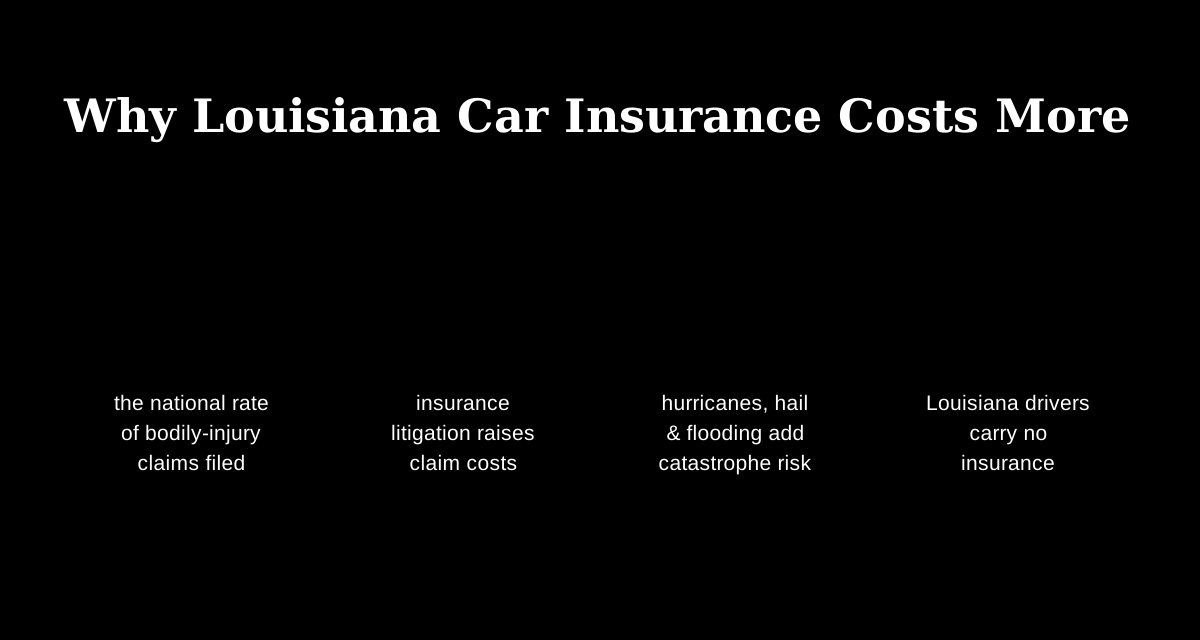
Two forces drive it. First, claims here are costly: Louisiana drivers file bodily-injury claims at more than twice the national rate, and the state's heavy insurance litigation raises the legal and medical costs insurers pay after a crash — a pattern the Insurance Information Institute has tracked closely. Second, severe weather and a high share of uninsured drivers pile risk on top of that, and responsible drivers help absorb the cost.
This matters because it tells you where savings actually live. You can't change Louisiana's litigation climate or its hurricane exposure, but you can change the factors on your own policy — and that's where the rest of this guide focuses. We go deeper in our guide to why insurance is so expensive in Louisiana.
Are Louisiana car insurance rates going down?
Yes — for the first time in several years, they started to. The Louisiana Department of Insurance reported that statewide rates fell roughly 0.4% in 2025 after several years of steady increases, and multiple auto insurers filed rate decreases — driven mainly by a drop in accident frequency.
That won't erase a high premium overnight, but it means it's worth reviewing your policy now instead of assuming rates only climb. If your carrier filed a decrease, you want to be sure you're actually getting it — you can check filings through the state's rate filing search.
What can you control — and what you can't?
Your premium is built from dozens of rating factors. Sorting them into “fixed” and “flexible” shows where to spend your energy.
- Mostly fixed: your age, where you live, the litigation and weather risk of the state, and your vehicle's make and model.
- Flexible — where you win: your coverage limits and deductibles, the discounts you qualify for, your driving record over time, your annual mileage, and your insurance score.
Don't fixate on what you can't move. A focused push on the flexible factors is what actually lowers the bill. For the full breakdown, see how car insurance rates are calculated in Louisiana.
Every honest way to lower your Louisiana premium
Here are the levers that genuinely reduce a Louisiana premium — without leaving you exposed.
- Raise your deductible. Moving to a higher deductible lowers your premium, often noticeably. Only do it if you could comfortably cover that amount out of pocket after a claim.
- Bundle your policies. Carrying auto with your home or renters insurance under one roof typically earns one of the largest discounts available — and it's the one drivers most often leave on the table.
- Keep a clean driving record. Your record is one of the biggest flexible factors. A single at-fault accident or major violation can raise your rate for years, so safe driving pays back slowly but steadily.
- Be strategic about small claims. For minor damage that's close to your deductible, paying out of pocket can be cheaper long-term than filing and losing a claims-free discount. Run the math before you file.
- Protect your insurance score. The same habits that build good credit — paying on time, keeping balances low, disputing errors — tend to improve the insurance score carriers use, and a stronger score can lower your rate.
- Consider usage-based coverage. If you drive few miles or drive safely, pricing based on your actual habits can lower your rate. Allstate's telematics option is one example — see our Drivewise discount guide.
- Right-size coverage on an older car. Once a car's value drops far enough, full comprehensive and collision may cost more than it's worth. Dropping to liability can make sense — but understand exactly what you're giving up first.
- Review your policy every year. Rates, discounts, and your own situation change. An annual review catches new discounts and makes sure you're getting any rate decrease your carrier filed.
The single most reliable move is comparison itself: the Insurance Information Institute recommends getting at least three quotes, because the price for the same driver and coverage varies widely from carrier to carrier.
Which discounts do most Louisiana drivers miss?
Discounts are where “cheap” gets real — and most drivers qualify for more than they claim. Common ones worth asking about:
- Multi-vehicle — insuring more than one car on the same policy.
- Multi-policy (bundling) — auto plus home, renters, or condo.
- Good driver / claims-free — for a clean record over a set period.
- Defensive-driving course — a state-approved course can earn a credit (and can offset points).
- Good student — for younger drivers keeping strong grades.
- Low mileage — if you drive well under the average.
- Anti-theft and safety features — alarms, tracking, and modern safety tech.
- Paperless, autopay, and pay-in-full — small but easy stacking discounts.
No single driver gets all of these, but most qualify for several they've never been asked about. Stacking three or four is often the difference between an average rate and a genuinely competitive one — which is exactly what a policy review is for.
What's the minimum car insurance in Louisiana — and is it enough?
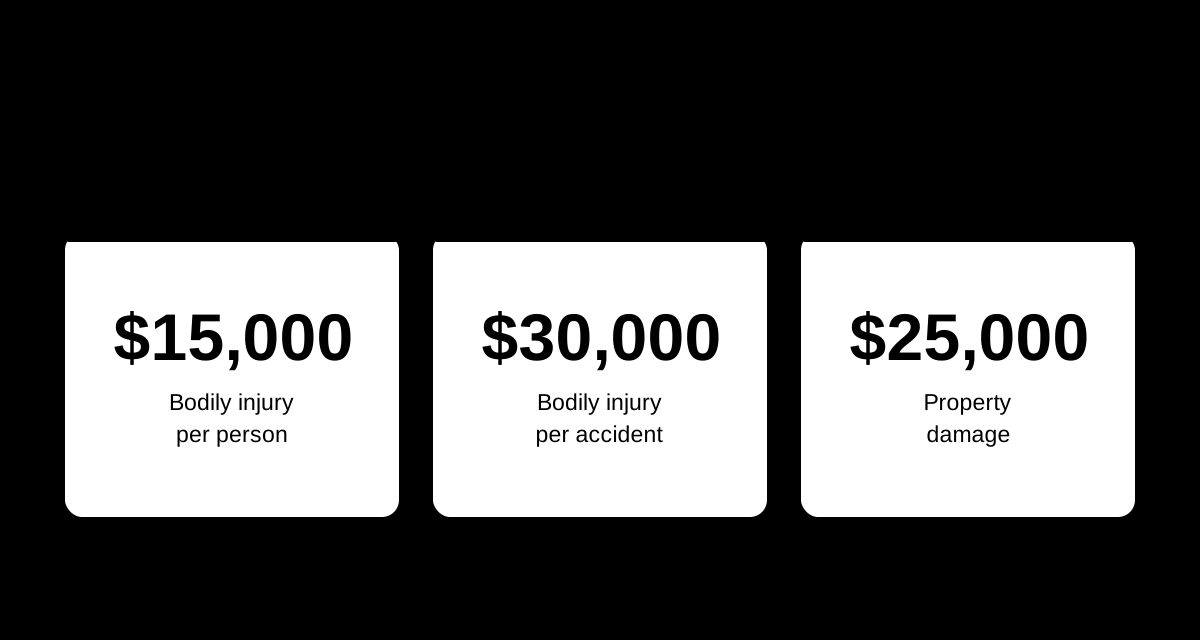
Louisiana law requires liability limits of 15/30/25 — that's $15,000 in bodily-injury coverage per person, $30,000 per accident, and $25,000 for property damage, per the Louisiana Department of Insurance. Carrying at least that much is the law.
Here's the catch: those minimums are thin for how expensive Louisiana accidents actually get. A single serious injury or a totaled newer vehicle can blow past $25,000–$30,000 in minutes — and anything above your limits comes out of your pocket. Buying the state minimum is the cheapest sticker price, but in a state with high accident and litigation costs, it's often the riskiest bet on this list. For most drivers, higher liability limits (and uninsured-motorist coverage, given how many uninsured drivers are on Louisiana roads) are worth far more than the small premium difference.
Is the cheapest policy actually the cheapest?
The lowest sticker price is not always the cheapest policy — and in Louisiana that gap can be brutal.
Two mistakes do the most damage. The first is buying state-minimum liability only: as above, minimum limits can be exhausted fast, and you're personally on the hook for the rest. The second is dropping comprehensive on a car you'd actually need to replace — a risky bet in a state that sees hail, flooding, and hurricanes. Cheap coverage that doesn't pay when it counts isn't a saving; it's a deferred, bigger bill. The goal isn't the smallest premium. It's the lowest price that still protects you — a very different target.
How a local agent finds discounts you'd miss
This is where a local agent earns their keep. Across the policies we review in the Baton Rouge area, the most common reason someone is overpaying isn't a bad carrier — it's missed discounts and mismatched limits. A good agent reviews your full picture — vehicles, drivers, home, and habits — stacks every discount you qualify for, then sizes your limits to your real risk instead of a generic default.
Because we're based in Baton Rouge and licensed across Louisiana, we know the local risks that should shape your coverage — flood and wind exposure, uninsured-driver rates, the vehicles common on our roads — not just your price. The right coverage in Louisiana looks different than it does in a low-risk state, and a local set of eyes catches that.
Key takeaways
You have more control over a Louisiana car-insurance premium than the state's reputation suggests — the savings live in the factors you can actually change, not in stripping away protection.
| Point | Details |
|---|---|
| High rates aren't about you | Louisiana ranks among the most expensive states mostly because of claims and litigation costs, not your driving. |
| Rates finally turned | Statewide rates fell about 0.4% in 2025 — the first decline in years, per the Louisiana Department of Insurance. |
| The biggest honest savings | A higher deductible, bundling, stacking every discount, usage-based programs, and a healthy insurance score. |
| The minimum is thin | Louisiana's 15/30/25 minimum is legal but often too little to actually protect you. |
| Cheapest can cost more | A policy that skimps on liability or comprehensive can cost far more after a single claim. |
Ready to lower your premium?
If you want to see where your rate can come down, a quick policy review is the easiest first step. The team at The Root Agency will look at your current coverage, find the discounts you're missing, and right-size your limits — with no pressure to drop protection you need. When you're ready, start on our auto insurance page or contact your Baton Rouge team, and we'll take it from there.
This article is general information, not a quote or insurance advice. Coverage, discounts, and savings vary by your specific situation — talk with a licensed agent about your policy.