

Homeowners Insurance Cobertura: What Louisiana Homeowners Need to Know

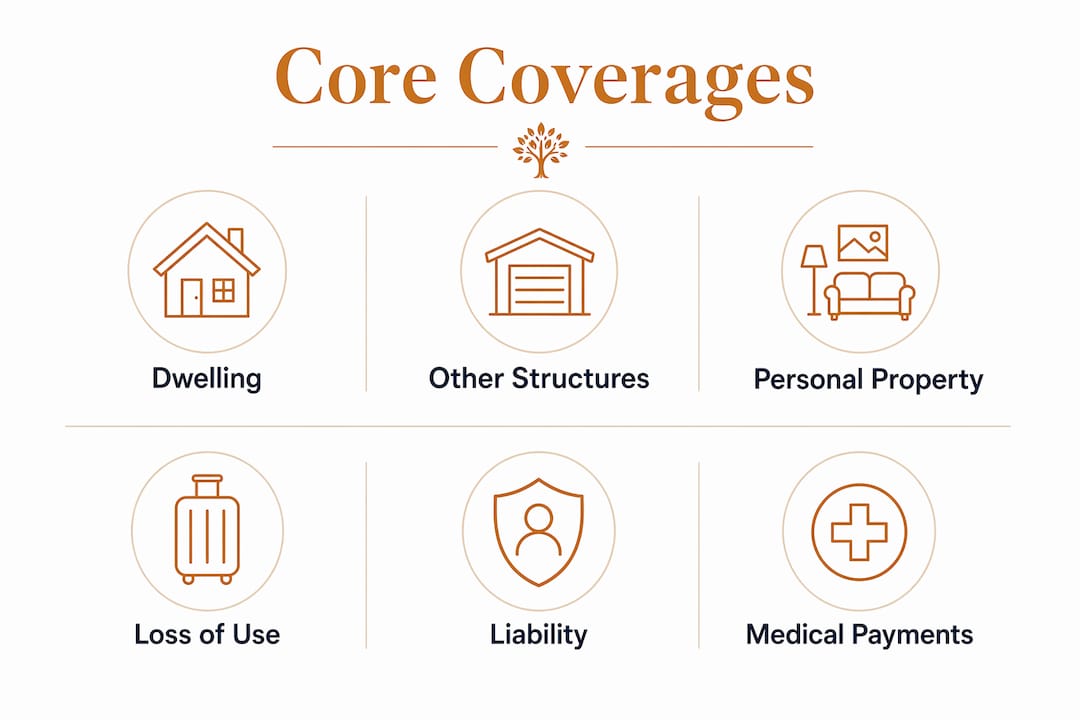
Homeowners insurance, known in Spanish as seguro para propietarios de vivienda or simply cobertura, is a package policy that protects your home, your belongings, and your financial security when something goes wrong. A standard homeowners policy bundles six core coverages: Dwelling (A), Other Structures (B), Personal Property ©, Loss of Use (D), Personal Liability (E), and Medical Payments to Others (F). Together, they cover the structure you live in, what’s inside it, and your legal exposure if someone gets hurt on your property.
Here’s what a standard policy typically pays for, and what it doesn’t:
- Covered: Fire, windstorm, hail, theft, vandalism, lightning, and most sudden accidental damage
- Not covered: Flood, earthquake, routine wear and tear, maintenance failures, and sewer backup (unless you add an endorsement)
Pro Tip: Always choose replacement cost (RC) coverage over actual cash value (ACV) for your dwelling. ACV subtracts depreciation from your payout, which can leave you tens of thousands short after a total loss. In Louisiana, where rebuild costs spike after major storms, that gap can be devastating.
Table of Contents
- What do the six core homeowners insurance coverages actually pay for?
- Which homeowners policy form fits your situation?
- How does your insurer calculate what it pays you after a claim?
- What does homeowners insurance usually not cover?
- What optional coverages and endorsements are worth adding?
- How much homeowners insurance should you buy?
- How does filing a homeowners insurance claim actually work?
- Why a local agent makes a real difference for Louisiana homeowners
- Key Takeaways
- What I’ve seen after 20 years of Louisiana storms
- Ready for a coverage review with The Root Agency?
- Authoritative sources and further reading
What do the six core homeowners insurance coverages actually pay for?
Understanding each coverage part helps you spot gaps before a claim, not after. Here’s how each one works, with realistic examples.
Coverage A: Dwelling
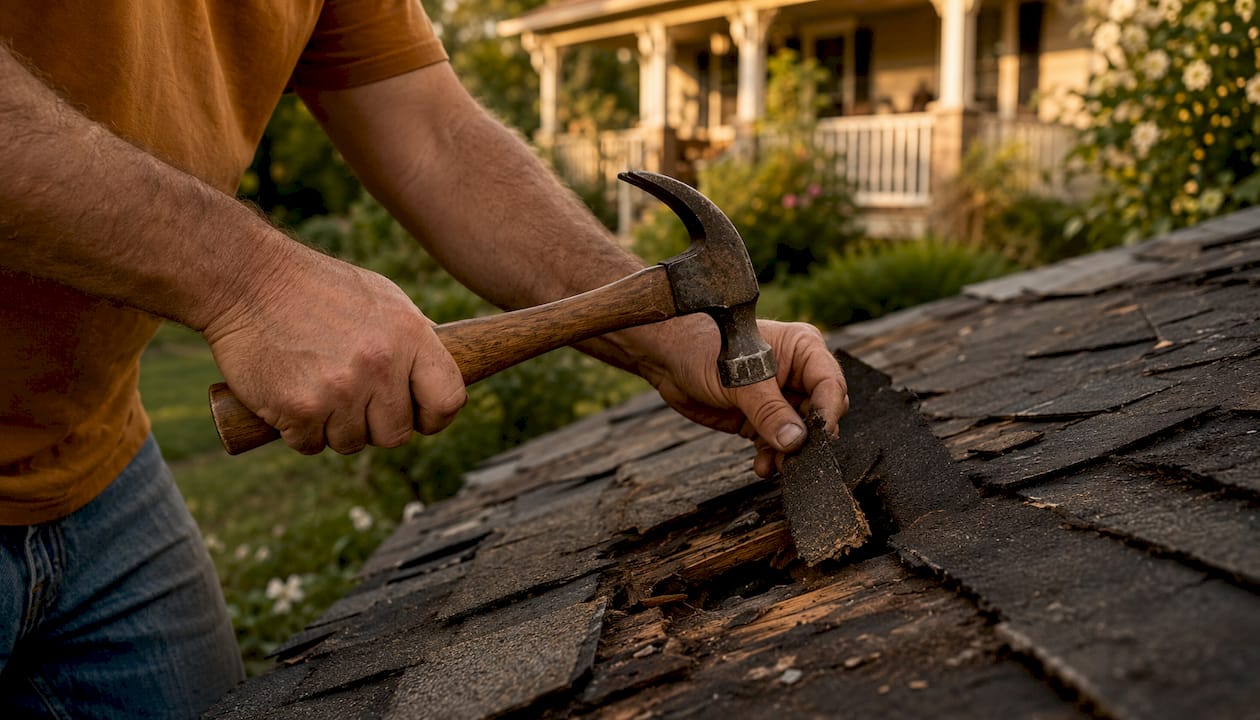
Coverage A pays to repair or rebuild the physical structure of your home after a covered loss, including walls, roof, floors, built-in appliances, and attached garages. The critical point: your dwelling limit should reflect what it costs to rebuild, not what your home would sell for on the market. Market value includes land, which insurance never covers. After a major hurricane, local construction costs can surge, so your limit needs room to absorb that.
Coverage B: Other structures
This covers detached structures on your property, such as a fence, storage shed, or detached garage. Personal property limits for other structures typically default to about 10% of your dwelling coverage. If your home is insured for $300,000, that gives you $30,000 for other structures, which is usually adequate unless you have a large workshop or guest cottage.
Coverage C: Personal property
Coverage C pays for your furniture, clothing, electronics, and other belongings if they’re stolen, damaged, or destroyed by a covered peril. Limits are commonly set at a significant portion of your dwelling coverage. One important detail: most standard policies cover personal property on a named-peril basis, meaning only the perils specifically listed in the policy apply. Coverage also extends off-premises, so your laptop stolen from your car is typically covered. High-value items like jewelry, art, and collectibles often have sub-limits, which is where a scheduled personal property endorsement becomes necessary.
Coverage D: Loss of use (additional living expenses)
If a covered loss makes your home uninhabitable, Coverage D pays your additional living expenses while repairs are underway. That includes hotel stays, restaurant meals above your normal food budget, and other costs you wouldn’t have if you were still at home. Policies commonly cap this at a portion of the dwelling limit, and coverage typically runs until your home is repaired or for a set time period. After a major storm, when contractors are booked months out, that time limit matters.
Coverage E: Personal liability
Coverage E protects you financially if someone is injured on your property or if you accidentally damage someone else’s property and are found legally responsible. It pays medical bills, lost wages, legal defense costs, and court judgments. Liability coverage typically starts at $100,000, but that ceiling can be reached quickly in a serious lawsuit. If you have significant assets, a personal umbrella policy layered on top of your homeowners policy is worth serious consideration.
Coverage F: Medical payments to others
This is a no-fault coverage, meaning it pays the medical bills of a guest injured on your property regardless of who was at fault. It also covers some injuries that happen away from home, such as your dog biting someone at a park. Typical limits run $1,000–$5,000. It’s not designed for catastrophic injuries; that’s what Coverage E handles. Think of Coverage F as a goodwill payment that can prevent a small incident from turning into a lawsuit.
| Coverage | What It Pays | Typical Limit |
|---|---|---|
| A: Dwelling | Rebuild or repair the home structure | Set by replacement cost estimate |
| B: Other structures | Fences, sheds, detached garages | ~10% of Coverage A |
| C: Personal property | Furniture, clothing, electronics | 50–70% of Coverage A |
| D: Loss of use | Hotel, meals, extra living costs | ~20% of Coverage A |
| E: Personal liability | Legal defense, judgments, settlements | Starts at $100,000 |
| F: Medical payments | Guest medical bills, no fault required | $1,000–$5,000 |
The Insurance Information Institute (III) and state Department of Insurance guidance both confirm this A–F structure as the standard framework for homeowners policies across the U.S.
Which homeowners policy form fits your situation?
Not every home qualifies for the same policy, and not every policy offers the same protection. The form number on your declarations page tells you a lot about what you actually have.
-
HO-3 (Special Form): The most widely used policy in the U.S. It covers your dwelling on an open-peril basis, meaning all causes of loss are covered unless specifically excluded. Personal property is covered on a named-peril basis. This is the standard for owner-occupied single-family homes and what most lenders require.
-
HO-5 (Comprehensive Form): Broader than HO-3 because it extends open-peril coverage to personal property as well. If your laptop is damaged by a cause not listed in a standard policy, HO-5 likely covers it. Best suited for higher-value homes where the contents are worth protecting at the same level as the structure.
-
HO-4 (Renters Insurance): Covers a renter’s personal belongings and personal liability but does not cover the building itself. That’s the landlord’s responsibility. If you’re renting in Louisiana and haven’t looked at renters vs. homeowners coverage, the difference in what’s protected is significant.
-
HO-6 (Condo Unit Owners): Covers the interior of your condo unit, your personal property, and your personal liability. The condo association’s master policy covers the building exterior and common areas. HO-6 condo coverage also typically includes loss assessment coverage, which pays your share of a special assessment the HOA levies after a covered loss. Understanding your HOA governing documents is the first step to knowing where the master policy ends and your HO-6 begins.
-
HO-8 (Modified Coverage Form): Designed for older homes where the replacement cost far exceeds market value. Instead of paying to rebuild with original materials, HO-8 pays to repair with functionally equivalent materials. Payouts are often on an ACV basis. If you own a historic home in New Orleans or an older shotgun house in Baton Rouge, this form may apply, but it’s worth asking whether you can qualify for an HO-3 with extended replacement cost instead.
Quick glossary:
- Named peril: Only losses caused by perils specifically listed in the policy are covered.
- Open peril: All losses are covered unless the policy specifically excludes them.
- Endorsement: An add-on that modifies your base policy to add, remove, or change coverage.
- Floater: A type of endorsement that covers specific high-value items (jewelry, cameras, musical instruments) for their full appraised value.
How does your insurer calculate what it pays you after a claim?
The difference between replacement cost and actual cash value isn’t just a technicality. It’s the difference between getting your roof replaced and getting a check that barely covers half of it.
Replacement cost vs. actual cash value
Actual Cash Value (ACV) pays the replacement cost of an item minus depreciation. Insurers use an age-and-condition formula to calculate that depreciation, and the results can be jarring. A 10-year-old roof that costs $15,000 to replace might yield an ACV payout of $7,500 or less after depreciation is applied.
Replacement Cost (RC) pays what it actually costs to repair or replace the damaged item at today’s prices, with no depreciation deduction. RC coverage is the standard recommended by the Insurance Information Institute and is usually worth the higher premium.
Worked example:
| Scenario | Roof Replacement Cost | Depreciation (50%) | ACV Payout | RC Payout |
|---|---|---|---|---|
| 10-year-old roof | $15,000 | $7,500 | $7,500 | $15,000 |
The $7,500 gap in that example is money out of your pocket. After a major storm when every contractor in the state is booked, that shortfall gets worse.
The 80% rule (insurance-to-value)
Most insurers require you to insure your home for at least 80% of its replacement cost. If you fall below that threshold, the insurer can reduce your claim payment on a partial loss using this formula:
Here’s what that looks like in practice:
- Your home’s replacement cost is $400,000.
- The 80% requirement means you need at least $320,000 in coverage.
- You’re only carrying $240,000.
- A kitchen fire causes $50,000 in damage.
- Payout = ($240,000 ÷ $320,000) × $50,000 = $37,500, minus your deductible.
That’s a $12,500 shortfall on a partial loss, and you haven’t even hit your deductible yet. The 80% rule is one of the most common sources of underinsurance surprises after a claim.
Deductibles and catastrophe deductibles
Your standard deductible is the amount you pay out of pocket before insurance kicks in. Higher deductibles lower your premium but increase your exposure on every claim. In Louisiana, many policies carry a separate hurricane or windstorm deductible expressed as a percentage of your dwelling limit, commonly 1–5%. On a $300,000 home, a 2% hurricane deductible means you pay the first $6,000 on any wind-related claim. That’s not a small number after a storm.
Pro Tip: Ask your agent for a replacement-cost estimator or use a local contractor’s square-footage rebuild cost to verify your dwelling limit every two to three years. Construction costs in Louisiana have risen sharply since 2020, and an inflation guard endorsement can automatically adjust your limit annually to keep pace.
What does homeowners insurance usually not cover?
Standard homeowners policies have clear exclusions. Knowing them before a storm hits is the only way to close the gaps in time.
-
Flood damage: Flood is excluded from every standard homeowners policy. Period. You need a separate flood policy through the National Flood Insurance Program (NFIP) or a private flood insurer. If your property is in a designated flood zone, your lender requires it. If you’re not in a flood zone, you’re still at risk. Louisiana has proven that repeatedly.
-
Earthquake damage: Also excluded from standard policies. A separate earthquake policy or endorsement is required. Less common in Louisiana than flood, but not zero risk.
-
Routine wear and tear: Insurers expect you to maintain your home. A roof that fails because it was 25 years old and never serviced is a maintenance issue, not a covered loss. State regulators and the NAIC are explicit: homeowners insurance is not a substitute for upkeep.
-
Mold from long-term leaks: If a slow leak behind a wall goes unaddressed for months and causes mold, that’s typically excluded as a maintenance failure. A sudden pipe burst that causes mold within days is a different story.
-
Sewer and drain backup: This is one of the most common sources of claim denials. Standard policies exclude it unless you add a water backup endorsement. Older neighborhoods in Baton Rouge and New Orleans are particularly vulnerable.
-
Wind exclusions in coastal policies: Some policies in high-risk coastal areas exclude windstorm entirely, requiring a separate wind policy or coverage through the Louisiana Citizens Property Insurance Corporation.
What to buy instead:
| Exclusion | Solution |
|---|---|
| Flood | NFIP policy or private flood insurance |
| Earthquake | Separate earthquake policy |
| Sewer/drain backup | Water backup endorsement |
| Coastal wind | Separate wind policy or Citizens |
| Maintenance/wear & tear | Regular upkeep + documentation |
The best defense against a maintenance-related denial is a paper trail. Keep receipts for roof repairs, HVAC servicing, plumbing work, and any contractor visits. If you ever file a claim, that documentation shows the insurer you were doing your job as a homeowner.
What optional coverages and endorsements are worth adding?
A base HO-3 policy is a solid foundation, but several endorsements fill gaps that matter in Louisiana.
-
Water/sewer backup endorsement: Covers damage from backed-up drains, sewers, or sump pump failures. Given the age of infrastructure in many Louisiana neighborhoods, this is close to mandatory.
-
Ordinance and law coverage: After a major loss, local building codes may require upgrades that go beyond simply restoring what was there. This endorsement pays for those code-required upgrades. In disaster-prone areas, extended replacement cost and ordinance-and-law coverage are highly recommended by state regulators to avoid gaps from construction-cost spikes and code-upgrade expenses.
-
Scheduled personal property (floater): Standard policies cap coverage on jewelry, art, firearms, and collectibles at relatively low sub-limits. A floater covers each item for its full appraised value, typically with no deductible and broader perils.
-
Extended or guaranteed replacement cost: Standard dwelling coverage pays up to your policy limit. Extended replacement cost adds a buffer, commonly 10–25% above your limit, for situations where post-disaster construction costs exceed your coverage. Guaranteed replacement cost is the gold standard but isn’t available from every insurer; extended replacement cost is the practical alternative in most states.
-
Loss assessment coverage: For condo owners, this pays your share of a special assessment levied by the HOA after a covered loss to common areas. Understanding HOA assessment responsibilities can help you size this coverage correctly.
-
Personal property replacement cost endorsement: Upgrades Coverage C from ACV to RC so your belongings are replaced at today’s prices, not yesterday’s depreciated value.
-
Personal umbrella policy: When your Coverage E liability limit isn’t enough, an umbrella policy extends your protection, typically starting at $1 million in additional liability coverage. It’s one of the most cost-effective ways to protect significant assets.
Pro Tip: High-value homeowner checklist: jewelry, fine art, firearms, musical instruments, wine collections, and camera equipment almost always exceed standard sub-limits. Get each item appraised and scheduled separately. One claim on an unscheduled piece can cost more than years of endorsement premiums.
How much homeowners insurance should you buy?
Getting the dwelling limit right is the single most important coverage decision you’ll make.
-
Start with replacement cost, not market value. Your dwelling limit should reflect what it costs to rebuild your home from the ground up at current local construction rates. Land value is excluded from this calculation entirely.
-
Use a replacement-cost estimator. Many insurers provide one. You can also ask a local contractor for a square-footage rebuild estimate using current material and labor costs in your area.
-
Apply local construction cost multipliers. Rebuild costs in Louisiana vary by parish and by home type. A custom home with high-end finishes costs significantly more per square foot to rebuild than a standard frame house.
-
Set personal property limits based on a home inventory. The standard benchmark is 50–70% of your dwelling coverage, but that’s a starting point. Walk through your home and document what you own. If your actual belongings exceed that percentage, adjust upward.
-
Review limits every two to three years. Construction costs have risen sharply in recent years. A limit that was adequate in 2021 may leave you underinsured today.
Scenario examples:
- New home, standard finishes, $350,000 rebuild cost: Insure for $350,000 dwelling, $175,000–$245,000 personal property, $100,000+ liability. Consider extended replacement cost.
- Older home with custom millwork, $500,000 rebuild cost: Insure for full replacement cost, add ordinance and law coverage, schedule high-value items separately.
- High-end finishes, custom kitchen, $700,000 rebuild cost: HO-5 or HO-3 with extended replacement cost, guaranteed replacement cost if available, umbrella policy for liability.
Choosing your deductible: A higher deductible lowers your annual premium but raises your out-of-pocket exposure on every claim. A practical rule: set your deductible at an amount your household could cover from savings without financial strain. Don’t trade a $500 annual premium savings for a $5,000 deductible you couldn’t pay after a storm.
How does filing a homeowners insurance claim actually work?
Knowing the process before you need it prevents costly mistakes in the middle of a stressful situation.
-
Prioritize safety and stop further damage. If a storm blows out a window, cover it with a tarp. If a pipe bursts, shut off the water. Insurers expect you to take reasonable steps to prevent additional loss. Failure to mitigate can reduce your payout.
-
Document everything before cleanup. Photograph and video every room, every damaged item, and every structural issue. Don’t throw anything away until the adjuster has seen it.
-
Notify your insurer promptly. Late notice is one of the most common reasons claims are delayed or denied. Call your agent or the insurer’s claims line as soon as it’s safe to do so.
-
Receive your claim number and adjuster assignment. The insurer will assign a claim number and schedule an adjuster to inspect the damage. Write down every name and date.
-
Gather your documentation. Pull together your home inventory, receipts for damaged items, maintenance records, and any contractor estimates. This is where a pre-loss home inventory pays off.
-
Review the estimate and settlement offer. The adjuster’s estimate may be lower than contractor bids. You have the right to negotiate and to bring in a public adjuster if needed.
-
Understand depreciation holdback on RC policies. If you have replacement cost coverage, the insurer typically pays ACV first, then releases the depreciation holdback once repairs are completed and receipts are submitted. Don’t spend the initial check without accounting for that second payment.
Common reasons claims are denied or reduced:
- Damage attributed to maintenance failure or wear and tear
- Late notice to the insurer
- Failure to mitigate further damage
- No documentation of the loss or pre-loss condition
- Damage caused by an excluded peril (flood, sewer backup without endorsement)
Pro Tip: After a major storm, The Root Agency’s mobile catastrophe response unit deploys directly to affected areas. Our bilingual team, fluent in English and Spanish, can help you document damage, navigate the claims process, and communicate with adjusters on the spot. You don’t have to figure it out alone.
Why a local agent makes a real difference for Louisiana homeowners
There’s a version of homeowners insurance shopping that happens entirely online, in 10 minutes, with no conversation. That approach works fine until a Category 4 storm takes your roof off and you realize the policy you bought has a 5% wind deductible, no flood coverage, and an ACV clause on personal property.
A local agent who knows Louisiana’s specific risks brings something no algorithm offers: the knowledge of what claims actually look like here.
What The Root Agency provides that matters after a loss:
- Catastrophe response on the ground. The agency operates one of the only mobile catastrophe response units in Louisiana, deploying RVs directly to disaster zones so clients have a local contact when they need one most.
- Local rebuild cost knowledge. Steve Root has been working Louisiana insurance for more than 20 years, with a 40-year family legacy in the state. He knows what it costs to rebuild in Baton Rouge, Metairie, and the surrounding parishes.
- NFIP and private flood placement. Louisiana homeowners need flood coverage. The Root Agency places both NFIP and private flood policies and can help you understand which option fits your flood zone and budget.
- Coastal wind claim experience. Wind claims in Louisiana are not the same as wind claims in Ohio. Local experience with adjusters, contractors, and the claims process here is a real advantage.
- 356 five-star Google reviews at 4.9 stars. That’s not a marketing number; it’s the record of clients who called after storms and got answers.
Questions to ask when you call an agent:
- What is my current dwelling limit, and does it reflect today’s rebuild costs?
- Am I covered for replacement cost or actual cash value on my dwelling and personal property?
- Do I have flood coverage, and is it adequate for my flood zone?
- What endorsements make sense for my home’s age, location, and contents?
- How does your agency handle claims after a major storm?
A short conversation with the right agent can close gaps that would otherwise cost you tens of thousands of dollars after a loss. That’s the local agent advantage that no direct-to-consumer platform replicates.
Key Takeaways
A homeowners policy’s real value comes down to three decisions: the right form, the right payout method (replacement cost, not ACV), and the right endorsements for the risks your specific home and location actually face.
| Point | Details |
|---|---|
| Six core coverages | Every standard policy includes Dwelling, Other Structures, Personal Property, Loss of Use, Liability, and Medical Payments. |
| Replacement cost vs. ACV | RC pays today’s rebuild price; ACV subtracts depreciation and can leave a significant gap after a total loss. |
| The 80% rule | Insuring below 80% of replacement cost lets the insurer reduce partial-loss payouts using a proportional formula. |
| Louisiana-specific gaps | Flood, sewer backup, and coastal wind are commonly excluded and require separate policies or endorsements. |
| The Root Agency | Steve Root’s team offers local rebuild cost expertise, a mobile catastrophe response unit, and bilingual claims support for Louisiana homeowners. |
What I’ve seen after 20 years of Louisiana storms
Most people don’t think about their homeowners policy until they need it. By then, the decisions are already made. What I’ve watched happen in this state, storm after storm, is homeowners discovering they were underinsured at exactly the moment they could least afford to be.
The pattern is almost always the same: a policy bought on price, an ACV clause buried in the declarations, a flood exclusion nobody explained, and a dwelling limit that hadn’t been updated in a decade. The claim comes in, the adjuster does the math, and the homeowner gets a check that doesn’t come close to covering what it costs to rebuild.
That’s not bad luck. It’s a coverage decision made years earlier, usually without full information.
The right policy costs more than the cheapest one. In Louisiana, that difference is worth every dollar. Replacement cost coverage, a current dwelling limit, flood insurance, and a water backup endorsement aren’t extras. They’re the baseline for a home that actually gets rebuilt after a loss.
If you haven’t reviewed your coverage since your last renewal, that review is overdue. Call us. It takes 20 minutes and it could change everything about what happens after the next storm.
Ready for a coverage review with The Root Agency?
After a storm, the homeowners who recover fastest aren’t the ones with the cheapest policies. They’re the ones who worked with an agent who knew what they needed before the storm hit.

The Root Agency is an Allstate exclusive agency based in Baton Rouge, serving all of Louisiana and Mississippi. We offer home insurance coverage tailored to Louisiana’s specific risks, including replacement cost dwelling coverage, private flood placement, water backup endorsements, and coastal wind guidance. Our mobile catastrophe response unit deploys after major storms, and our bilingual team is available 24/7 in English and Spanish.
Steve Root has been doing this for more than 20 years. The agency has 356 Google reviews at 4.9 stars and was named to The Advocate’s 2025 Best of Baton Rouge. We also offer flood insurance for homeowners in and out of designated flood zones, because in Louisiana, flood risk doesn’t stop at the flood zone boundary.
Call us at (225) 926-0160 or visit steverootagency.com to request a coverage review. Tell us what you have, and we’ll tell you what you’re missing.
Authoritative sources and further reading
These are the primary sources used throughout this article. Each one is worth bookmarking for your own reference.
- NAIC: Homeowners Insurance Topics — The National Association of Insurance Commissioners’ consumer overview of standard policy structure, the A–F coverage framework, and maintenance-related claim guidance.
- NAIC Consumer Guide to Home Insurance — Detailed consumer publication covering the 80% rule, flood and earthquake exclusions, endorsements, and how to calculate adequate coverage limits.
- Insurance Information Institute (III) — Industry reference for policy form comparisons (HO-3 through HO-8), RC vs. ACV explanations, and endorsement guidance.
- III Homeowners Insurance Handbook (2023) — The most comprehensive consumer-facing guide to homeowners insurance decisions, including the case for replacement cost and common coverage mistakes.
- III: Types of Homeowners Policies — Explains guaranteed and extended replacement cost options and when each applies.
- The Root Agency: Home Insurance Baton Rouge — Local homeowners coverage options, replacement cost guidance, and coverage review requests for Louisiana residents.
- The Root Agency: Flood Insurance Louisiana — NFIP and private flood placement for Louisiana homeowners in and out of designated flood zones.