

What Does Liability Coverage Mean for You?

Liability coverage is defined as the portion of an insurance policy that pays for bodily injuries or property damage you cause to another person, plus your legal defense costs, up to your policy limits. It does not cover your own injuries or your own property. This distinction matters more than most people realize. Whether you own a home in Baton Rouge, rent an apartment in Biloxi, or run a business in Metairie, liability coverage protects your savings, home equity, and future earnings from third-party claims that can follow a single accident for years.
What does liability coverage mean in an insurance policy?
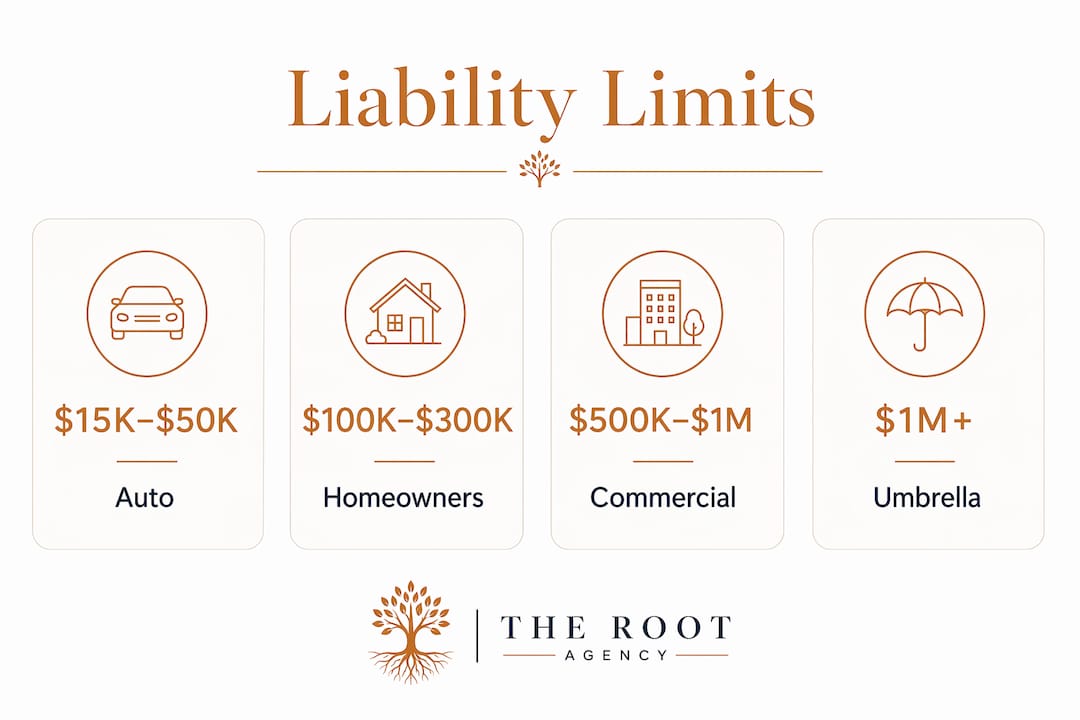
Liability coverage pays out when you are legally responsible for someone else’s loss. That means if a guest slips on your front steps, if you rear-end another driver, or if a customer is injured at your business, your liability coverage steps in to pay their medical bills, repair costs, and any legal fees your insurer incurs defending you.

Every liability policy carries two key numbers: a per-occurrence limit and an aggregate limit. The per-occurrence limit is the maximum your insurer pays for a single incident. The aggregate limit is the total your insurer will pay across all claims during one policy period. Per-occurrence and aggregate limits interact in ways that catch many policyholders off guard. Once the aggregate is exhausted, no further coverage exists even if individual claims fall below the per-occurrence cap.
One feature that often goes unnoticed is the duty to defend. Legal defense costs include attorneys, investigators, court expenses, and expert witnesses, and your insurer covers these even if the claim against you turns out to be groundless. That protection alone can be worth tens of thousands of dollars in a single lawsuit.
The table below shows typical liability limits across the most common policy types.
| Policy Type | Typical Per-Occurrence Limit | Typical Aggregate Limit |
|---|---|---|
| Personal Auto | $15,000–$100,000 | N/A (per-claim basis) |
| Homeowners | $100,000–$500,000 | $100,000–$500,000 |
| Renters | $100,000–$300,000 | $100,000–$300,000 |
| Commercial General Liability | $1,000,000 | $2,000,000 |
Pro Tip: Review your aggregate limit every renewal. A business that files two mid-size claims early in the year may have little coverage left for a third incident before the policy resets.
How does liability coverage differ across policy types?
Liability coverage appears in nearly every personal and commercial insurance product, but its scope changes depending on the policy.
Auto liability covers bodily injury and property damage you cause to others in a collision. It does not pay for your own vehicle repairs or your own medical bills. Those require collision coverage and personal injury protection, respectively. Louisiana drivers can explore auto liability options that go well beyond state minimums.
Homeowners liability covers injuries that happen on your property and damage you or your household members cause to others. If your dog bites a neighbor or a tree from your yard falls on their fence, your homeowners policy responds. It also covers incidents that occur away from your home in many cases.
Renters liability works the same way as homeowners liability but is designed for tenants. It covers guest injuries inside your rental unit and property damage you accidentally cause to others, including the building itself.
Commercial general liability (CGL) is the foundation of business coverage. It pays for bodily injury and property damage claims arising from your operations, products, or completed work. Some commercial policies also include Self-Insured Retentions, which require the business to manage and fund the initial phase of a claim before the insurer steps in. That is a meaningful operational responsibility that many small business owners in Louisiana and Mississippi do not anticipate.
| Policy Type | Covers Third-Party Injuries | Covers Third-Party Property Damage | Covers Your Own Injuries | Covers Your Own Property |
|---|---|---|---|---|
| Auto Liability | Yes | Yes | No | No |
| Homeowners Liability | Yes | Yes | No | No |
| Renters Liability | Yes | Yes | No | No |
| Commercial General Liability | Yes | Yes | No | No |
Why state minimums often leave you exposed
State-mandated minimums represent the floor, not the ceiling. Common minimums like $25,000 per person for bodily injury can be exhausted by a single emergency room visit, before surgery, rehabilitation, or lost wages are even calculated. Louisiana and Mississippi both set relatively low baseline requirements for auto liability. Meeting those minimums keeps you legal. It does not keep you protected.
When a judgment exceeds your policy limits, the difference comes from you personally. That means wage garnishment, liens on your home, and claims against savings accounts. These are not hypothetical outcomes. They happen regularly to people who assumed their policy was sufficient because it met the state requirement.
Choosing the right limits means looking at your actual financial exposure. Consider these factors:
- Net worth and assets: The more you own, the more a plaintiff’s attorney can pursue.
- Income: Future earnings can be garnished in a judgment, not just current savings.
- Risk exposure: A pool, a dog, a teenage driver, or a home-based business each raises your liability profile.
- Business operations: Commercial risks often require higher limits than personal policies provide.
- Umbrella coverage: An umbrella policy adds $1,000,000 or more in coverage above your underlying limits at a relatively low annual cost.
Adequate liability limits depend on individual assets, income, and risk exposure rather than legal minimums. That principle holds whether you are a first-time renter in Gulfport or a commercial property owner in New Orleans.
Pro Tip: If your net worth exceeds your liability limits, you are self-insuring the gap. An umbrella policy is typically the most cost-effective way to close that exposure.
What liability coverage does not protect against
Understanding what liability coverage excludes is just as important as knowing what it covers. Several exclusions catch policyholders off guard at the worst possible time.
- Your own injuries and property: Liability insurance never covers your own medical bills, vehicle repairs, or personal property damage. Collision, health, and property coverage handle those separately.
- Intentional acts: All standard liability policies exclude coverage for harm you deliberately cause. If a claim stems from an intentional act rather than an accident, your insurer will deny it.
- Professional errors: General liability does not cover mistakes made in a professional capacity. A contractor who builds a faulty structure may have CGL coverage, but a financial advisor who gives bad advice needs professional liability (errors and omissions) coverage instead.
- Workers’ compensation: Injuries to your employees are not covered under general liability. A separate workers’ compensation policy is required in Louisiana and Mississippi for most employers.
- Defense counsel control: Insurers generally select legal counsel for liability claims. Some policies allow independent counsel, but that requires specific policy language. Reviewing this provision before a claim arises gives you a clearer picture of your rights.
Complementary coverages like medical payments, umbrella policies, and workers’ compensation fill the gaps that standard liability leaves open. No single policy covers everything, and the gaps between policies are where financial damage tends to occur.
Why local expertise matters for louisiana and mississippi residents
Louisiana sits in the bullseye for hurricanes, flooding, and severe weather events that drive up liability claims and complicate coverage decisions. Mississippi residents face similar storm exposure along with rising litigation costs. In this environment, working with an agent who understands local property values, court environments, and risk patterns is not a luxury. It is a practical advantage.
The Root Agency has served Louisiana and Mississippi residents for more than 20 years under Steve Root’s direct leadership, building on a 40-year family legacy in Louisiana insurance. The agency holds 356 Google reviews at 4.9 stars and was named to The Advocate’s 2025 Best of Baton Rouge. That track record reflects something specific: clients who called during a storm and got a real answer.
For business owners, The Root Agency offers commercial liability coverage tailored to Louisiana and Mississippi operations, including guidance on CGL limits, umbrella layers, and industry-specific exposures. For homeowners and renters, the agency reviews actual asset exposure before recommending limits, not just what satisfies a lender or a lease requirement.
Pro Tip: Ask your agent to walk through a worst-case claim scenario with your current limits. If the number makes you uncomfortable, that is the right conversation to have before a claim, not after.
Steve root’s take: the coverage gap nobody talks about
I have had this conversation more times than I can count. A client comes in after an accident or a lawsuit, and the first thing they say is, “I thought I was covered.” What they mean is they had a policy. What they did not have was enough coverage.
The most common misunderstanding I see is treating liability limits like a formality. People pick the state minimum, pay the lower premium, and assume the policy will handle whatever comes up. It will not. Medical costs in Louisiana and Mississippi have risen sharply. A single hospitalization can exceed $100,000 before any legal action begins. If your bodily injury limit is $25,000, you are personally responsible for the rest.
The other thing I tell clients is this: the duty to defend is one of the most valuable features in any liability policy. Even a frivolous lawsuit costs real money to fight. Your insurer handles that cost when you have proper coverage. Without it, you are hiring an attorney out of pocket while the claim is still being decided.
I have also seen clients surprised by the insurer’s right to select defense counsel. That is standard in most policies. If you want more control over who represents you, that requires a specific policy provision and a conversation with your agent before anything happens. Review your policy language now, not the day you get served.
Proper liability coverage is not about fear. It is about protecting what you have built. The clients I worry about are the ones who have a lot to lose and the thinnest policies. That gap is fixable, and it costs less to fix than most people expect.
— Steve Root
Get the right liability coverage with the root agency

The Root Agency offers personal and commercial liability coverage across 11 lines of insurance, including auto, home, renters, umbrella, and commercial policies for Louisiana and Mississippi residents. Steve Root and his team review your actual assets and risk exposure before recommending limits, not just the minimum required by law. The agency’s mobile catastrophe response unit deploys directly to disaster zones, and 24/7 claims support means you reach a real person when it matters. With 356 five-star Google reviews and more than 20 years of local experience, The Root Agency is the team that stayed in Louisiana when others left. Call (225) 926-0160 or visit steverootagency.com to get a personalized coverage review today.
Key takeaways
Liability coverage protects your assets, income, and future earnings from third-party claims, but only up to your policy limits and only for accidental harm.
| Point | Details |
|---|---|
| Core definition | Liability coverage pays for injuries or property damage you cause to others, plus legal defense costs. |
| Limits matter | Per-occurrence and aggregate limits cap your insurer’s payout; exceeding them leaves you personally liable. |
| State minimums fall short | Minimums like $25,000 per person are often exhausted by a single medical event before legal costs begin. |
| Key exclusions apply | Intentional acts, your own injuries, professional errors, and employee injuries are not covered under standard liability. |
| Umbrella policies fill gaps | An umbrella policy adds $1,000,000 or more above standard limits and is one of the most cost-effective protections available. |
FAQ
What is the liability coverage definition in simple terms?
Liability coverage is the part of your insurance policy that pays for injuries or property damage you accidentally cause to someone else, including your legal defense costs. It does not cover your own injuries or your own property.
How does liability coverage work when a claim is filed?
When a third party files a claim against you, your insurer investigates, selects defense counsel, and pays covered damages up to your policy limits. Defense costs are typically covered even if the claim is ultimately dismissed.
What is the difference between per-occurrence and aggregate limits?
The per-occurrence limit is the maximum paid for a single incident. The aggregate limit is the total paid across all claims in a policy period. Once the aggregate is reached, no further coverage is available until the policy renews.
Does liability coverage apply to both personal and business policies?
Yes. Liability coverage appears in auto, homeowners, renters, and commercial general liability policies. The scope and limits differ by policy type, and business owners typically need higher limits and additional coverage types like professional liability or workers’ compensation.
When should i consider an umbrella policy in louisiana or mississippi?
Consider an umbrella policy when your net worth exceeds your underlying liability limits, when you have significant assets like a home or business, or when your risk profile includes a pool, rental property, teenage drivers, or commercial operations.
Recommended
- Liability-Only Car Insurance in Louisiana — Who It’s Right For | The Root Agency
- Life Insurance Baton Rouge LA | Term & Whole Life | The Root Agency
- Umbrella Insurance Louisiana | Extra Liability Coverage | The Root Agency
- Commercial Insurance Baton Rouge LA | Business & BOP Coverage | The Root Agency