
Vacant Home Insurance in Louisiana: What Your Policy Does
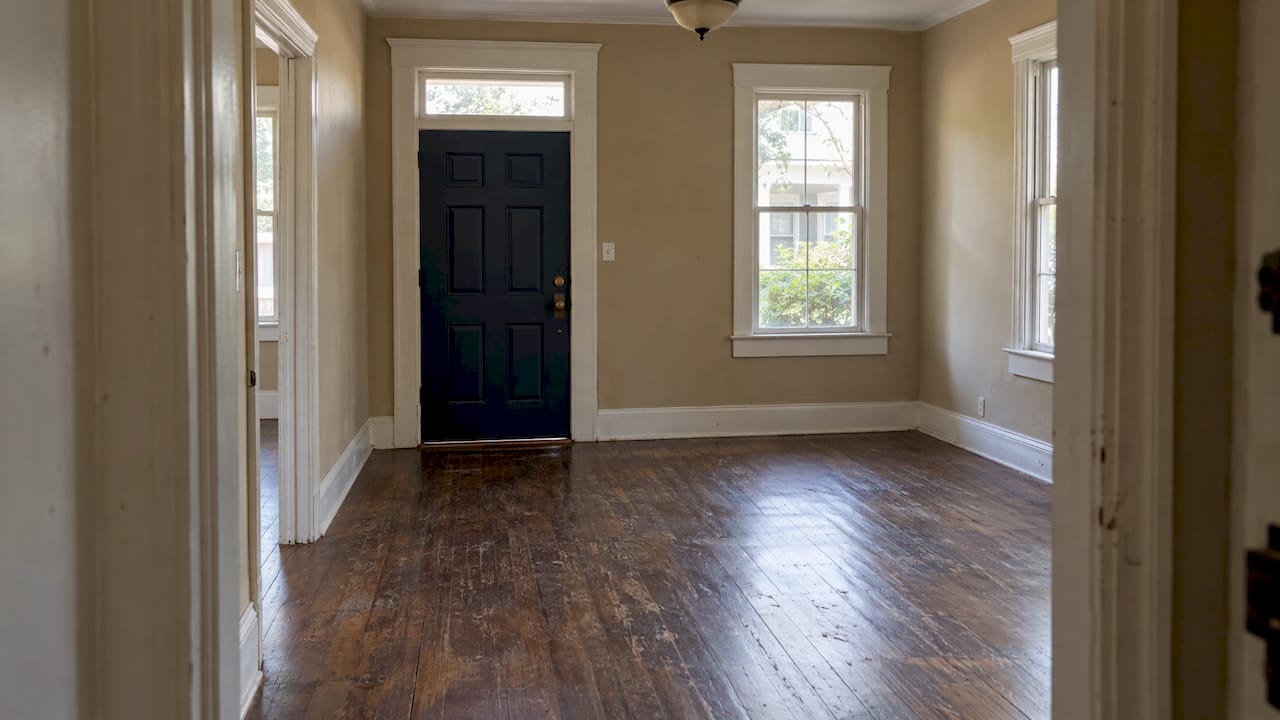
If a Louisiana house sits empty for more than 60 consecutive days, your standard homeowners policy may stop paying for certain losses. That includes the fire, vandalism or storm damage you bought the policy to cover. The fix is simple but it has to happen before the house goes quiet: tell your agent, get the right coverage in place, and keep the property in a condition an insurer can stand behind. I’m Steve Root, and after more than 20 years running this agency, I can tell you the worst claim conversations start with the words “nobody told me.”
TL;DR
- Louisiana’s Standard Fire Policy language suspends the insurer’s liability for loss while a building is vacant or unoccupied beyond 60 consecutive days.
- “Unoccupied” means furnished but nobody lives there. “Vacant” means essentially empty. Both can trigger restrictions.
- Flood is never covered by a standard homeowners policy, occupied or not, and hurricane deductibles run as a percentage of the home’s insured value.
- Call your agent before the house is empty, not after the loss. Inheritance, a move, a renovation or a long stay elsewhere all count.
Table of Contents
- Vacant vs. unoccupied: the difference that decides claims
- The 60-day rule in Louisiana
- Situations that put an owner in the vacant zone
- What a standard policy leaves exposed while the house is empty
- Vacant-home coverage: what to ask for
- Keep the property in shape
- What recent Louisiana law changes mean for you
- What this costs
- The Root Agency promo
- Perspective
- FAQ
- Sources
Vacant vs. unoccupied: the difference that decides claims
Insurance people use these two words differently from everyday speech, and the difference matters.
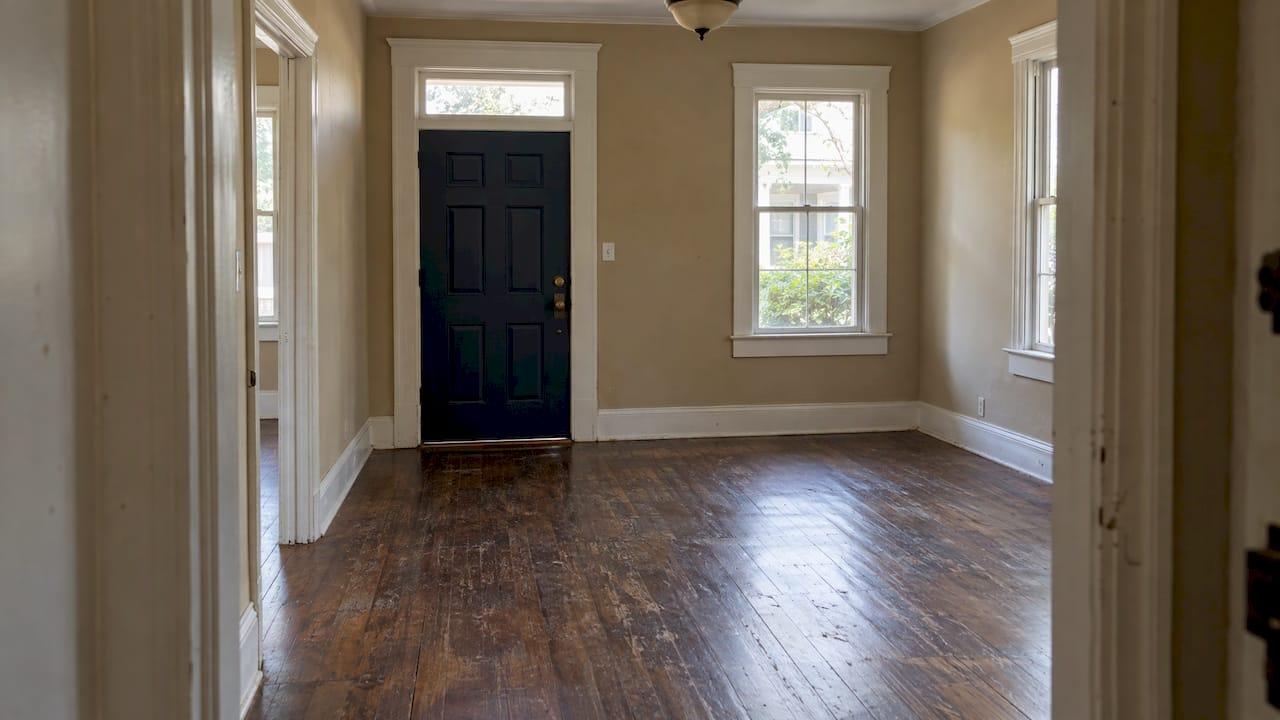
A Louisiana federal court, applying a state rating bureau rule, described the distinction this way: an unoccupied home has contents but nobody dwells in it, while a vacant home has no contents. A home can be unoccupied without being vacant, but it cannot be vacant without also being unoccupied.
Here is what that looks like on a real street:
- Unoccupied: You inherited your mother’s house in Baton Rouge. The furniture is still there, the lights work, and family comes by on weekends. Nobody lives there.
- Vacant: A rental house after the tenants moved out, emptied of furniture, between leases and listed for sale.
- Neither: You are away for three weeks on a trip and your things are in the house. You still live there.
Many owners assume that leaving furniture in place keeps them safe. In one Louisiana case, Doucette v. Louisiana Citizens, the court upheld the denial of a fire claim on a home that was still furnished and visited by family, because no one regularly lived in it. Furniture alone did not make it occupied.
The 60-day rule in Louisiana
The Louisiana Standard Fire Policy, found in La. R.S. 22:1311(F), says the insurer is not liable for loss while a described building is vacant or unoccupied beyond a period of 60 consecutive days. The court in Doucette applied that clause.
Three practical points follow from it:
- The clock counts consecutive days. A short stay back at the house may or may not reset the count, which is a question for your policy language and your agent, not a guess.
- The days are not the only trigger. Your own policy may carry its own vacancy or unoccupancy wording, and that wording can be stricter than the statute. Read it, or have it read with you.
- Arranging for someone else to live there can matter. In an older Louisiana appeals case, a family went on a six-month sabbatical and arranged for others to stay in the house. The court found it was still occupied. That outcome depended on the facts, so do not plan around it without talking to your agent first.
When this clause applies, you do not get a partial payment on a bad day. The coverage for the loss can simply be suspended. That is why the conversation has to happen early.
Situations that put an owner in the vacant zone
Most people do not set out to own a vacant house. It happens to them. These are the cases we hear about most from Louisiana families:
- An inherited home during probate, while relatives decide whether to sell or keep it.
- A house that failed to sell after the owner already bought and moved into another one.
- A rental between tenants. If you own rental property, our landlord insurance page covers how that coverage is built.
- A storm-damaged home where the family is living elsewhere during repairs.
- A major renovation that makes the house unlivable for months.
- A seasonal or second home that is closed up for long stretches.
- A parent in assisted living whose house sits furnished but empty.
Each of these can quietly cross 60 days. After a hurricane, repairs and contractor schedules routinely stretch past two months, so a storm-damaged house is the one we watch most closely.
What a standard policy leaves exposed while the house is empty
Even an occupied Louisiana home has gaps. An empty one has more, because the risks that hit hardest are the ones nobody is there to catch: a slow leak, a break-in, a tree through the roof after a storm.
Flood is separate, always
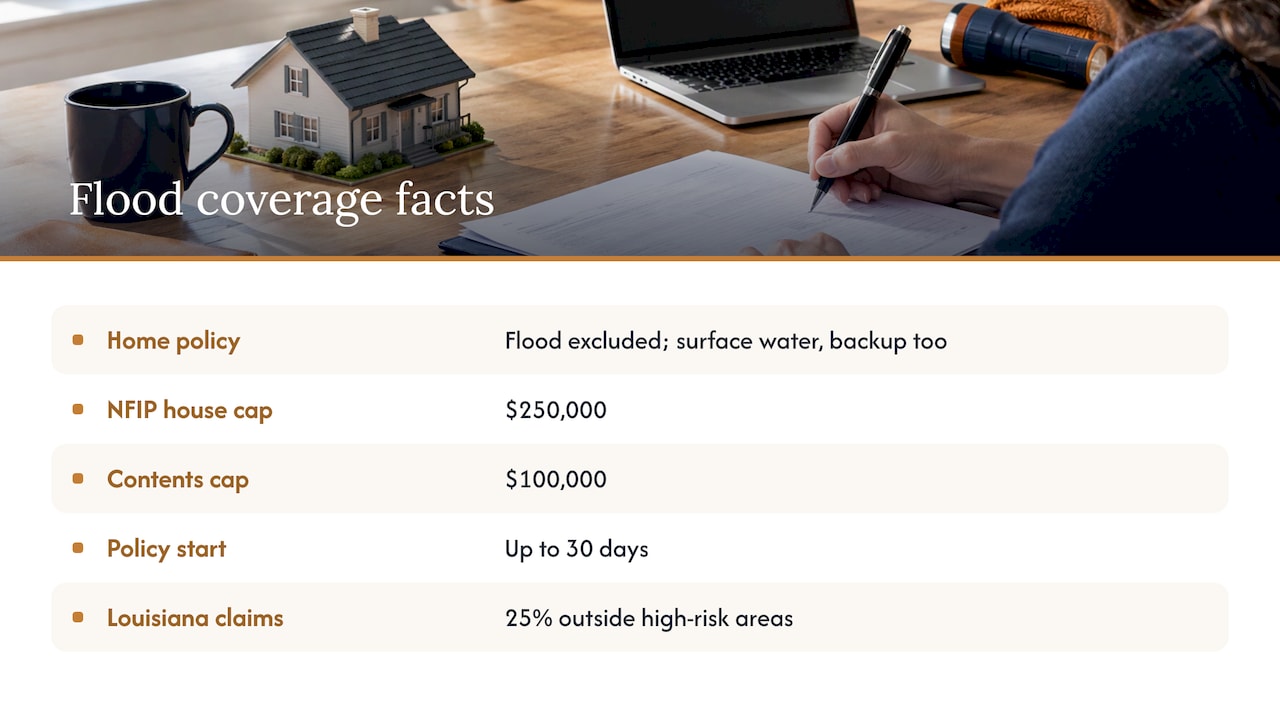
The Louisiana Department of Insurance states plainly in its Consumer’s Guide to Homeowners Insurance that homeowners policies do not cover damage from floods, and that surface water and sewer or drain backup are generally excluded too. Flood needs its own policy.
The same guide says the National Flood Insurance Program (NFIP) does not provide coverage above $250,000 for the house and $100,000 for contents, that excess flood coverage can be bought through private insurers, and that a flood policy may take 30 days to go into effect. If a house will be empty during hurricane season, do not wait until a storm is in the Gulf to start that clock. Our guides on private versus NFIP flood insurance and the 30-day NFIP gap explain the options, and our flood insurance page is where to start a policy.
The LDI’s post-disaster guide adds two numbers worth knowing: owners outside high-risk flood areas account for 25 percent of NFIP claims in Louisiana, and only one in four single-family Louisiana homes carries flood insurance. A house outside a FEMA high-risk zone is not a house outside the water’s reach.
Wind, hail and hurricane deductibles
Wind-driven rain is generally covered under a homeowners policy, according to the same LDI guide, but the deductible is not the flat figure many owners remember. Separate hurricane, named-storm and wind-and-hail deductibles became common after Katrina and Rita, and they typically run two to five percent of the insured value. On a home insured for $300,000, a two percent deductible is $6,000 and a five percent deductible is $15,000.
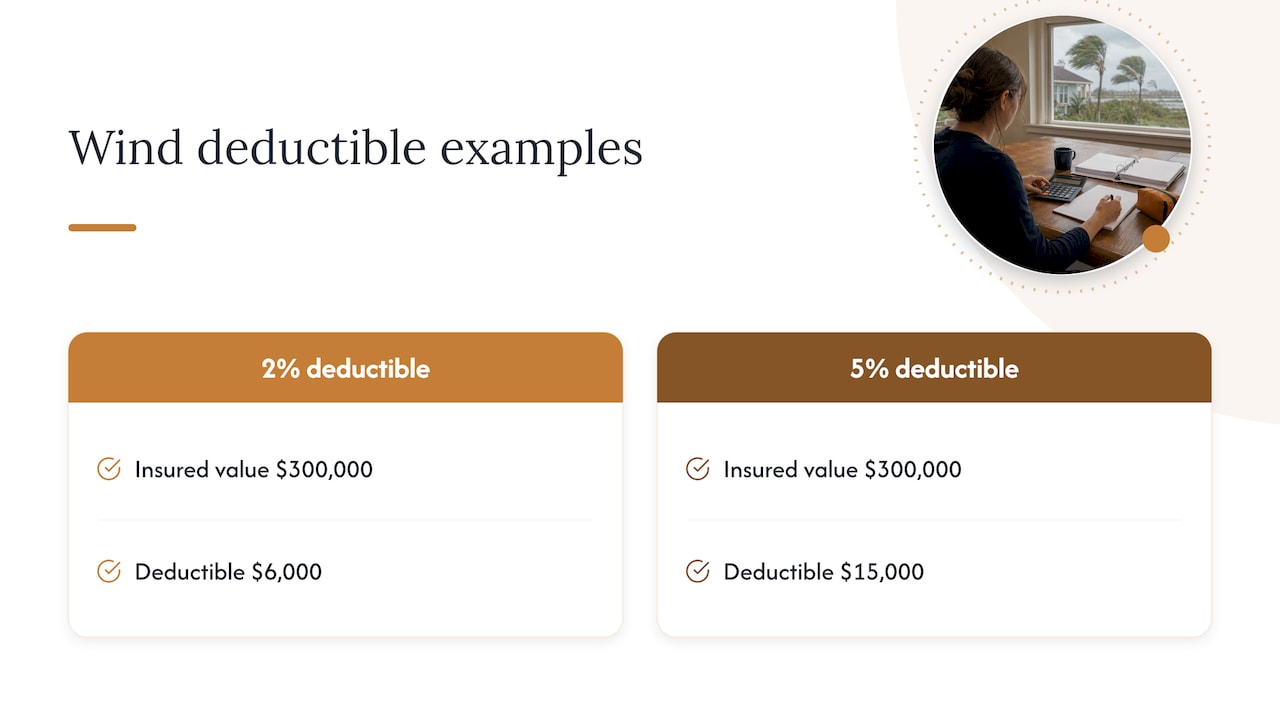
An empty house makes this arithmetic worse, because you are paying that deductible on a property earning you nothing and possibly not under your daily watch. We break it down further in our guides on hurricane deductibles and the other deductible types on Louisiana homes.
Vandalism, theft and water damage
These are the claims where vacancy language is most often cited. A burst pipe in a closed-up house can run for weeks before anyone notices. A break-in at an empty property can mean stripped copper and fixtures. When you review your policy, ask directly how each of these is treated once the home is vacant or unoccupied. Do not assume the answer matches what the policy says when the house is lived in.
Vacant-home coverage: what to ask for
When a house will be empty longer than a normal trip, the question is no longer whether your regular policy is enough. It is what coverage is built for the situation. Whatever policy is in front of you, work through these questions:
- Which causes of loss are covered? Fire, lightning, windstorm and hail are the usual starting list. Get the exact perils in writing.
- Is vandalism covered, and under what conditions?
- Is liability included? If someone is hurt on an empty property, you are still the owner.
- Is the settlement replacement cost or actual cash value? The difference can be thousands of dollars on a roof.
- What is the wind or named-storm deductible? Ask for it in dollars, not only as a percentage.
- What do you have to do to keep coverage in force? Inspections, utilities left on and winterizing or storm preparation are common conditions.
- What happens at the 60-day mark? Get the answer before day 55.
A good agent walks you through these line by line. That is the part of this work we are proudest of: a policy review where you leave knowing what is and is not paid for, not a certificate in your inbox.
Keep the property in shape
Insurers want to see a house that someone is looking after, and the owner who documents that is in a stronger position when a claim comes. Reasonable habits:
- Visit on a set schedule and keep a log with dates and photos.
- Keep utilities on where your policy requires it, and know where the water shutoff is.
- Maintain the yard and remove debris, so the house does not look abandoned.
- Fix the roof issues and loose shingles now. An aging roof is the first thing a hurricane finds.
- Consider security measures for an empty property, such as monitoring, lighting and access control, in the way that suits the house.
- Forward the mail, or have someone collect it.
If a house is hard to insure in the regular market at all, because of its age, location or storm history, coastal owners facing the same squeeze are advised to put mitigation work first, which tends to widen the choices available to you.
What recent Louisiana law changes mean for you
Two 2026 acts are worth knowing about. According to the 2026 legislative summary, Act 848 (HB 850), effective June 8, 2026, raises the Standard Fire Policy cancellation notice from 30 to 60 days. Act 319 (HB 825), effective May 22, 2026, is the Stated Value Homeowner’s Policy Act. It allows coverage based on a value the homeowner declares, requires a written mortgage payoff statement, and prohibits a policy below the verified outstanding balance of all mortgages and liens.
Neither act repeals the 60-day vacancy clause. If you have a mortgage on a house you plan to leave empty, tell your lender and your agent both. Your policy has to protect the loan balance, and an unannounced vacancy puts that protection at risk.
What this costs
Vacant-home premiums are set by the carrier and depend on the house’s age, location, roof condition, flood exposure, how long it will be empty, the dwelling value and the deductible you choose. We do not publish a figure for it, and we will not guess at one here. The honest way to find your number is to have the house reviewed and quoted for its actual situation.
What you can weigh is the other side of the ledger. A single uncovered fire or storm loss on an empty house can run into six figures. A premium difference of $30 a month looks small against that.
The Root Agency promo
We are an Allstate exclusive agency in Baton Rouge, operated personally by Steve Root for more than 20 years, with 356 Google reviews at 4.9 stars. If you own a home that is about to be empty, or already is, bring us the policy and the plan. We offer policy reviews, home insurance for Louisiana homeowners, and 24/7 claims support. We also have a mobile catastrophe response unit that deploys RVs to disaster zones, and we serve clients in English and Spanish.

Call (225) 926-0160 or stop by 8676 Goodwood Blvd Ste 303, Baton Rouge, LA 70806. You can see everything we write at steverootagency.com.
Perspective
Louisiana sits in the bullseye for hurricanes, and the families we serve know that. They have filed claims. They have sat across from adjusters. What they tell us afterward is the same thing every time: the policy was only as good as the person they could call.
Vacant and unoccupied houses are where that lesson gets expensive. Nobody is watching the roof, the pipes or the door, and a clause most owners never read decides whether a loss is paid. A cheaper premium does not change what that clause says.
My family has been in Louisiana insurance for 40 years, and I have run this agency personally for more than 20. We stayed in the state when other carriers and agents left after the storms. I would rather spend an hour with you before the house goes empty than meet you afterward. That is what we mean by coverage built for the real situation, and it is worth more than saving a few dollars a month.
Steve Root
FAQ
Is unoccupied the same as vacant for insurance?
No. Unoccupied generally means furnished but nobody lives there, and vacant means essentially empty of contents. A Louisiana federal court has described it this way: a home can be unoccupied without being vacant, but never vacant without being unoccupied. Either can restrict coverage, so tell your agent about both.
How long can a house sit empty in Louisiana before coverage is affected?
The Louisiana Standard Fire Policy clause, La. R.S. 22:1311(F), says the insurer is not liable for loss while a building is vacant or unoccupied beyond 60 consecutive days. Your own policy may add its own conditions. Contact your agent before the 60-day mark approaches, not after it.
Does a vacant house need flood insurance?
It needs it as much as an occupied one, and arguably more, since nobody is there to respond. Homeowners policies exclude flood, and a flood policy may take 30 days to start, according to the Louisiana Department of Insurance. Start that policy well ahead of hurricane season.
Does my mortgage lender need to know the house will be empty?
Yes, tell them. Louisiana’s 2026 Stated Value Homeowner’s Policy Act requires that a policy not fall below the verified balance of all mortgages and liens, so the loan and the coverage are tied together. Your agent can coordinate the change with the lender.
Sources
- Hemenway v. American Casualty Co. of Reading (1963)
- Doucette v. Louisiana Citizens Coastal Plan (2012)
- General Accident Fire & Life Assurance Corp. v. Cherokee Insurance (1979)
- Louisiana Department of Insurance, Consumer’s Guide to Homeowners Insurance
- Louisiana Department of Insurance, Post-Disaster Guide
- Louisiana 2026 Legislative Summary
- Vacant building security
- Coastal property insurance and mitigation