
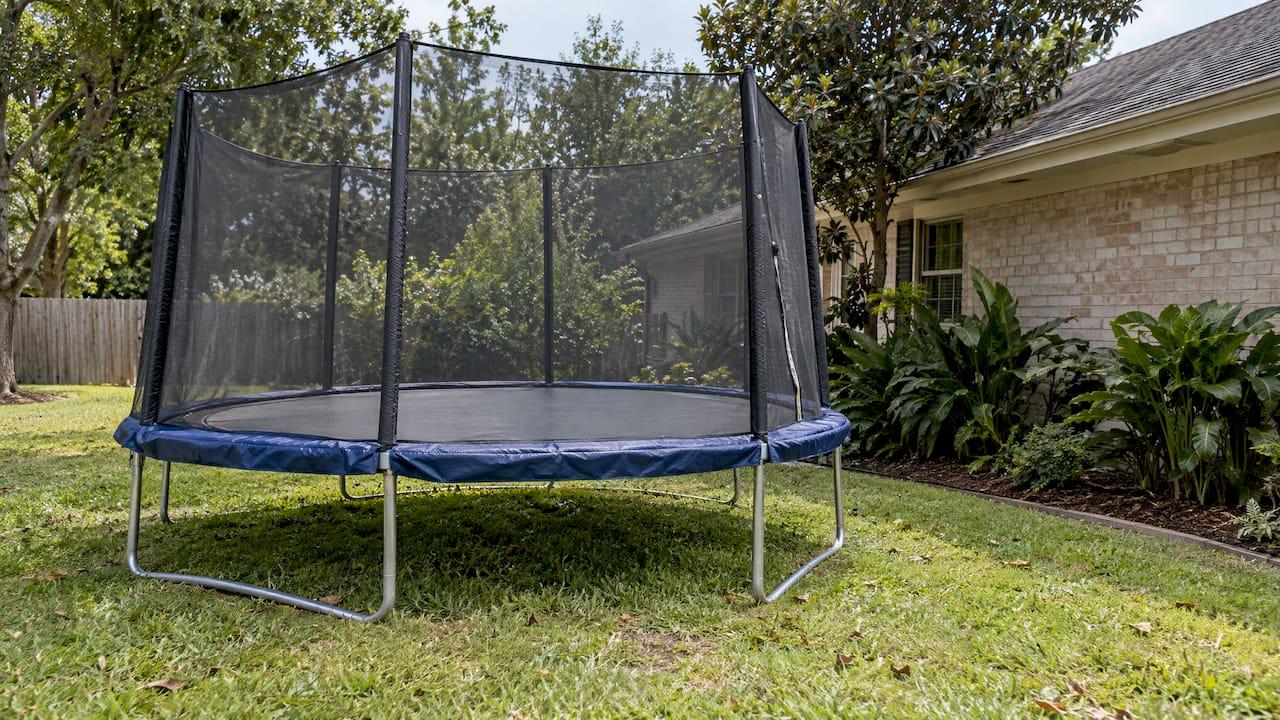
Trampoline Insurance and Your Louisiana Homeowners Policy

A trampoline in the backyard is a liability question before it is a property question. Whether your homeowners policy covers it depends on the wording of your own policy: some insurers cover trampolines only with conditions, some exclude injuries on them entirely, and some will not insure the home at all with one on the property. The protection that holds up is a policy that names the trampoline, a safety setup your insurer accepts in writing, and enough liability limits to absorb a serious injury claim. At The Root Agency, Steve Root and his team review homeowners policies for exactly this kind of gap before a neighbor’s child gets hurt, not after.
TL;DR
- Homeowners policies do not all treat trampolines the same way. Some exclude liability for injuries on them, some require safety measures, and some limit coverage to certain conditions.
- A trampoline is a rating factor. Insurance regulators list it with pools and pets among the things an insurer weighs when pricing your policy.
- Tell your insurer before you install one. An insurer can deny a claim or cancel a policy when a required safety measure was skipped or the addition went unreported.
- Umbrella coverage adds liability protection on top of your home policy. Ours starts at $150 per year.
- Call us at (225) 926-0160 and we will read your policy language with you.
Table of Contents
- Why insurers treat a trampoline differently from a swing set
- Are trampolines covered by homeowners insurance?
- What your insurer may require before or after you install one
- How a trampoline can affect your premium
- A worked example
- When the home policy limits are not enough: umbrella coverage
- Before you buy or install a trampoline: a checklist
- If someone is hurt: what to do next
- Perspective: why this is a conversation, not a form
- Talk to a Louisiana agent about your trampoline coverage
- FAQ
- Sources
Why insurers treat a trampoline differently from a swing set
Louisiana families know what a cheap policy costs when something goes wrong. A trampoline is the same lesson in a smaller yard. The home itself is not what an insurer worries about. The worry is someone getting hurt on your property, because that is a liability claim, and liability claims can be large.
Your homeowners policy has two jobs. It protects the structure and your belongings, and it protects you when someone else is hurt or their property is damaged because of something on your land. The Mississippi Insurance Department’s consumer guide describes a standard policy as covering your house and other buildings, personal property, personal liability and medical payments for others accidentally hurt on your property, and additional living expenses while the home is repaired.
Those last two liability pieces are where a trampoline lives. If a neighbor’s child lands badly, the claim does not go to the dwelling coverage. It goes to personal liability and medical payments. That is the part of the policy an insurer can limit, condition or exclude when it sees a trampoline.
The same Mississippi guide says plainly that a homeowners policy may not cover claims related to swimming pools or trampolines, tells consumers to ask about exclusions, and notes that a separate policy may be available for events the home policy leaves out. We say the same thing to every family who walks in: the question is never “do I have homeowners insurance?” It is “what does my policy say about this specific thing in my yard?”
Are trampolines covered by homeowners insurance?
The honest answer is: sometimes, with conditions. Here are the four ways we see policies handle them.
- Covered with no special conditions. Some policies treat the trampoline like any other backyard item, and a injury falls under ordinary personal liability.
- Covered with safety conditions. The insurer asks for specific measures, such as a safety net enclosure, a fence of a certain height or a locked gate.
- Liability excluded by endorsement. An endorsement is a page added to your policy that changes its terms. A trampoline exclusion endorsement removes personal liability coverage for injuries tied to the trampoline.
- Not insurable with the trampoline on site. The Oklahoma Insurance Department notes that some companies might not insure a property with a trampoline or may exclude liability for trampoline injuries.
The most useful detail is in the middle. Many exclusion endorsements are not absolute. Some restore a limited amount of liability coverage when a safety net is in use at the time of the loss. That wording matters enormously after an injury, because “in use at the time” means the net was actually up and secure, not stored in the garage. If you want to see how endorsements like this create common insurance policy gaps, the pattern is the same one property owners face on rentals: the base policy looks complete until an endorsement quietly narrows it.
This is why we do not give a one-word answer to the question. Your policy is the answer, and it can differ from your neighbor’s even on the same street.
What your insurer may require before or after you install one
Insurers that accept trampolines often attach conditions. The National Association of Insurance Commissioners, the group of state insurance regulators, advises policyholders to check with their provider about safety guidelines such as a fence or locked gate. The Oklahoma Insurance Department adds that homeowners should find out whether their policy specifies required measures like fences of a certain height or locked gates.
In practice, conditions tend to fall into a few groups:
- Enclosure. A net around the jumping surface, sometimes with padding over the springs and frame.
- Access control. A fenced yard, a locked gate or a removable ladder so young children cannot climb on unsupervised.
- Placement. Away from trees, fences, structures and the pool, so a bad bounce does not end on a hard object.
- Use rules. One jumper at a time, or a minimum age, if your insurer puts that in writing.
The key point is the consequence of ignoring them. The Oklahoma guidance warns that an insurer can deny coverage or cancel the policy if safety guidelines are not followed or the addition is not reported. That rule is written about one state, but the logic applies anywhere: a policy is a contract, and an unreported change to the risk is where disputes start.
How a trampoline can affect your premium
A trampoline is not a free addition to your risk profile. The Mississippi Insurance Department lists whether you have a swimming pool or trampoline among the property factors an insurer considers when setting your homeowners premium, alongside pets, protection devices and home-based business operations.
So expect one of three outcomes after you disclose it: no change, a change in terms (an endorsement or a safety requirement), or a change in price. We never recommend hiding it to avoid any of the three. A premium adjustment is a known cost. A denied claim after a child is injured is not.

Louisiana homeowners already weigh premiums against storm risk, wind deductibles and flood exposure. We would rather you spend your attention on the whole picture than on one yard item, which is why a policy review looks at the entire policy and not only the trampoline question.
A worked example
Here is a made-up scenario to show how the pieces fit. It is an illustration, not a real claim.
A family in the Baton Rouge area buys a trampoline for the backyard in April. They do not call their insurer. In June, a friend’s child comes over, climbs on without a parent watching and breaks an arm. The friend’s parents send a medical bill and ask the family’s homeowners policy to respond.
Three things now decide the outcome:
- Does the policy exclude trampoline injuries? If an endorsement says so, personal liability may not respond at all.
- Was a condition attached? If the policy required a net or a locked gate and neither was in place, the insurer may point to that.
- Was the trampoline disclosed? If the insurer was never told, the conversation starts from a weaker position.
Now the same family calls first. The agent reads the policy, finds a trampoline condition, and the family installs the net before the first jump. Nothing about the trampoline changed. What changed is that the claim, if it ever comes, starts from a documented, accepted setup.
That is the kind of difference a phone call to a local agent makes.
When the home policy limits are not enough: umbrella coverage
A serious injury can produce a bill larger than the personal liability limit on a homeowners policy. The NAIC’s advice on conditional coverage includes considering an umbrella policy on top of your homeowners coverage.
An umbrella policy sits above your home and auto liability. When a claim exceeds those limits, it can pick up the difference, subject to its own terms. It does not replace the need to read your home policy, because an exclusion in the base policy is not erased by simply owning more limits. The two work together: the home policy defines what is covered, the umbrella adds height.
Our umbrella insurance starts at $150 per year. If you want to understand how the layers stack, we have written plainly about how an umbrella policy covers your liability gap, real coverage examples in Louisiana and who needs umbrella insurance. For the basics of the liability piece that sits underneath, see our guide to liability insurance explained simply.
Families who host the neighborhood kids, own a pool as well as a trampoline, or have significant assets to protect are the ones who benefit most. If your yard has both, our article on pool liability and your homeowners policy in Louisiana covers the other half of the same conversation.
Before you buy or install a trampoline: a checklist
Work through these in order. It takes one phone call and one read of your policy.
- Find your liability section. Look for personal liability and medical payments to others in your declarations page, the summary page at the front of your policy.
- Look for endorsements. Any page titled with words like “exclusion,” “restriction” or “trampoline” changes what the base policy says.
- Ask what safety measures are required. Fence height, locked gate, net, padding, placement. Get the answer in writing.
- Report the trampoline. Tell your insurer before it goes up, not after the first jump.
- Confirm your liability limit. Decide whether it matches what you would need if a claim went wrong.
- Consider an umbrella. Extra liability limits sit above both home and auto.
- Install it the way you described. Use the net, keep the gate locked, and keep photos of the setup.
We do all seven with clients as part of a policy review, and the policy language is the starting point, not a sales pitch.
If someone is hurt: what to do next
After an injury, the first priority is medical care for the person, and an emergency service if it is serious. The insurance steps come after. The Mississippi Insurance Department’s guide tells claimants to call the insurer and speak to the claims adjuster, protect the property from further damage, document the loss with receipts and pictures, and check the policy’s appraisal clause if values are disputed. The same guide says to contact the state insurance department for help with claims problems.
For a trampoline injury, that translates to:
- Photograph the trampoline, the net, the fence, the gate and the surrounding yard exactly as they were.
- Write down who was present, what happened and when, while it is fresh.
- Keep any medical bills or messages that come from the injured person’s family.
- Do not promise to pay anything on your own before you talk to your insurer, because that can complicate the claim.
- Report it promptly. Delays make everything harder.
If you are a client, call our 24/7 claims support line rather than waiting for office hours. If a liability dispute turns into a lawsuit, you will need a licensed attorney, and your insurer may assign one under the policy’s defense terms.
Perspective: why this is a conversation, not a form
I have worked in Louisiana insurance for more than 20 years, and my family has been in it for 40. The trampoline question is the same one I hear about pools, golf carts and boats: people assume a homeowners policy covers anything that happens on their land. It covers a lot. It does not cover everything, and the gaps usually sit in the pages nobody reads until a claim.
After the storms, I watched families find out what a cheaper policy really bought them. The lesson carries over to liability. Saving a few dollars a month by leaving an exclusion unexamined is a bad trade when a child’s injury is on the line.
That is why our agency reads your policy with you, tells you what your insurer needs to hear about the trampoline, and builds the right liability layer, including umbrella coverage, around the whole household. When a claim does happen, you get a local agent who picks up the phone, backed by 24/7 claims support and a catastrophe response team that shows up in person when a storm hits. Our 356 Google reviews at 4.9 stars come from families who wanted that kind of agent.
A trampoline should be a summer of good memories. The right coverage is what lets you enjoy it without wondering.
Steve Root
Talk to a Louisiana agent about your trampoline coverage
The Root Agency is an Allstate exclusive agency in Baton Rouge serving all of Louisiana and Mississippi. We offer 11 lines of personal and commercial insurance, including home insurance and umbrella insurance, and we offer bilingual service in English and Spanish. Bring your current policy, tell us what is in your backyard, and we will go through the liability section line by line. You can also see everything we write on our products page, or call (225) 926-0160. Our office is at 8676 Goodwood Blvd Ste 303, Baton Rouge, LA 70806.

FAQ
Are trampolines covered by homeowners insurance?
It depends on your insurer and your policy. Some policies cover trampoline injuries with safety conditions, some exclude trampoline liability by endorsement, and some insurers decline to cover a home with one. The Mississippi Insurance Department says a homeowners policy may not cover claims related to pools or trampolines, so the safe step is to read your policy and ask before installing.
Do I need a separate trampoline insurance policy?
Not necessarily. Many families handle it through their homeowners liability coverage, with a safety net or fence where the insurer requires it. The Mississippi guide notes that a separate policy may be available for events your home policy does not cover. An umbrella policy is another way to add liability protection above your home limits.
Will a trampoline raise my homeowners premium?
It can. Regulators list a trampoline among the property features an insurer considers when pricing a homeowners policy. The result may be no change, a new endorsement, a safety requirement or a different price. Disclose it so the terms are settled before anyone gets hurt.
What happens if I don’t tell my insurer about my trampoline?
An insurer can deny coverage or cancel a policy when safety guidelines are not followed or an addition is not reported, according to the Oklahoma Insurance Department. Rules differ by company and state, so check your own policy language. Reporting it upfront is the simplest protection.
Does a safety net make a difference?
In many policies, yes. Some exclusion endorsements restore limited liability coverage when a safety net is in use at the time of the loss, while others require nets or fences as a condition of coverage. Your policy’s exact wording controls, so we read it with you.
Sources
- Consumer’s Quick Guide to Homeowner’s Insurance, Mississippi Insurance Department
- Play It Safe and Insure for Summer Fun That Is Secure, Oklahoma Insurance Department
- Consumer Insight: Summer Safety, NAIC
- Common rental property insurance gaps