
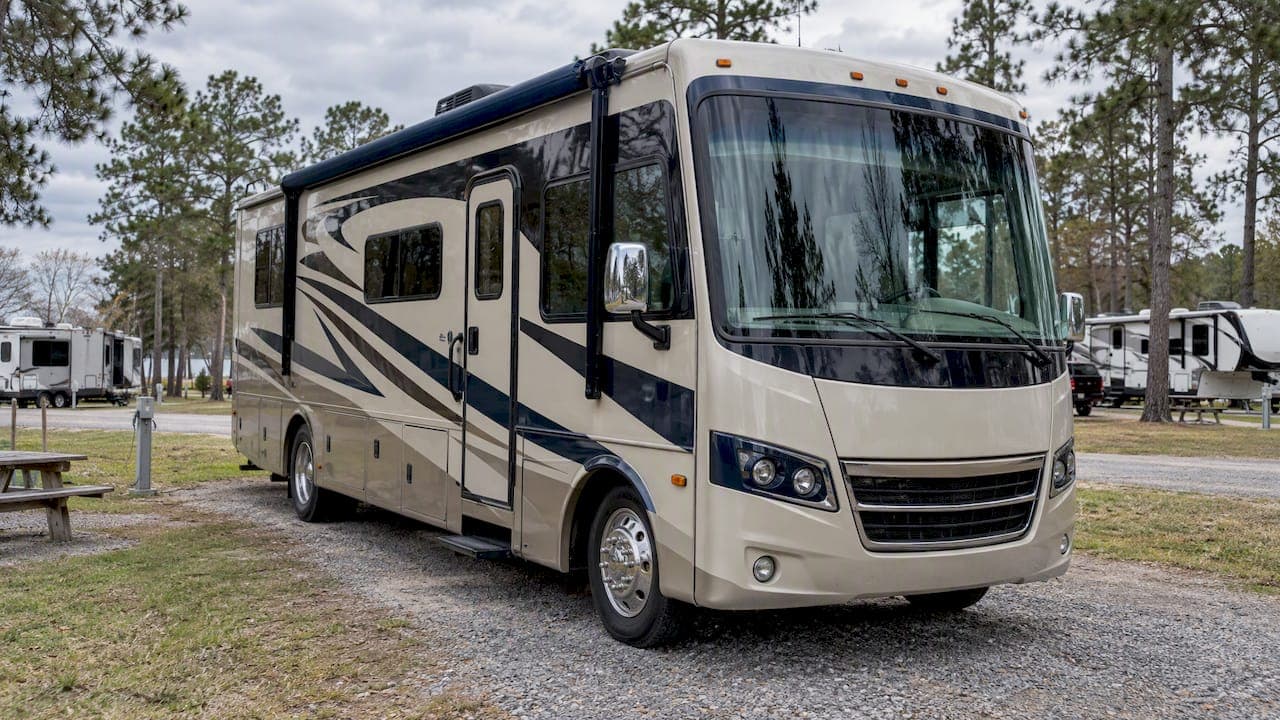
Motorhome Insurance: What to Cover Before You Hit the Road

Motorhome insurance is a specialty policy that protects a vehicle you drive and, in most cases, the place you sleep. A good policy pays to repair or replace the coach, covers injuries and property damage you cause, and handles what is inside it. The right one depends on how the claim is valued, how often you use the coach and where it sits when a storm comes. Price comes last.
We are The Root Agency, an Allstate exclusive agency in Baton Rouge. A note up front: motorhome is not one of the 11 lines listed on our products page, so call us at (225) 926-0160 before you assume anything. What we can do is show you what to look for, and review the auto, home, flood and umbrella coverage around your coach so nothing sits uncovered.
TL;DR
- Motorhome insurance combines vehicle coverage (collision, comprehensive) with liability and, usually, coverage for belongings and living-space items.
- How your coach is valued in a total loss, actual cash value or an agreed amount, matters more than a $30 difference in monthly premium.
- In Louisiana, storm exposure should shape where you store the coach and how you set comprehensive coverage and deductibles.
- Your umbrella, auto and home policies interact with your motorhome. Review them together.
- Pick an agent who answers the phone during a claim, not only at quoting time.
Table of Contents
- What motorhome insurance actually is
- The coverages that matter
- How your claim gets valued
- What affects the price
- Louisiana and Mississippi: where storms change the plan
- Your motorhome and the rest of your coverage
- What to do when something goes wrong
- Our perspective on motorhome coverage
- Talk to a local agent before you buy
- Questions to ask any insurer before you sign
- FAQ
- Sources
What motorhome insurance actually is
A motorhome is two things at once: a vehicle and a dwelling. Standard auto insurance treats it as neither well. Specialty RV policies are written for motorized coaches, which the industry sorts into three classes:
- Class A: the large, bus-style coaches. Highest values and the most to lose.
- Class B: camper vans. Smaller, easier to park, often used for shorter trips.
- Class C: the cab-over style built on a truck or van chassis. A common family choice.
Values vary widely. Kiplinger’s RV insurance guide notes that RVs range from under $10,000 for a travel trailer to $500,000 or more at the top end. That spread is the reason a policy should be built around your coach rather than picked off a shelf.
The coverages that matter
The building blocks resemble a car policy, with extras for life on the road. The National Association of Insurance Commissioners explains that what an auto policy covers depends on the coverage you choose, and that the law may require certain types depending on where you live. Apply the same thinking to a motorhome.
- Liability. Pays for injuries and property damage you cause to others. This is the coverage that protects your savings, and it is where state minimums are thinnest compared with what a serious accident can cost.
- Collision. Pays to repair or replace the coach after a crash, whoever is at fault.
- Comprehensive. Covers non-collision losses: wind, falling trees, hail, fire, theft, vandalism. For Louisiana owners this is the coverage that gets tested.
- Uninsured and underinsured motorist. Protects you when the other driver has too little insurance, or none.
- Medical payments. Helps with medical bills for you and your passengers after an accident, regardless of fault.
- Personal belongings. Covers what you carry: clothes, electronics, cookware, camping gear. Ask what the limit is, because a fully stocked coach holds more than people expect.
- Attached items and awnings. Awnings, satellite dishes, solar panels and custom equipment often need to be listed or carry their own limits.
- Roadside and towing. Useful on a heavy vehicle that cannot be towed by any truck that shows up.
The Mississippi Insurance Department has also reminded travelers to check that their boat, RV or car coverage fits how they actually use it. Good advice, and the conversation to have before your first trip of the season, not after.
How your claim gets valued
This is the part cheap policies hide. When a coach is totaled, the insurer pays by one of two methods.
| Valuation | What it means | Who it suits |
|---|---|---|
| Actual cash value | Replacement cost minus depreciation. Pays what the coach was worth the day before the loss. | Older coaches where the difference is small |
| Agreed or stated amount | You and the insurer set a value in advance, and that is what a total loss pays. | Newer or well-kept coaches, custom builds |
| Replacement cost | Pays to replace with a new equivalent, usually for newer models within an age window. | Owners who financed recently |
The NAIC publishes a plain explanation of the difference between actual cash value and replacement cost. It is written about homeowners policies, but the principle holds for any vehicle: depreciation comes out of an actual cash value payment, so your out-of-pocket cost after a loss will vary with the method.
If you owe more on the coach than it is worth, ask about gap coverage. Without it, a total loss can leave you paying a lender for a coach you no longer have.
What affects the price
We do not publish a motorhome rate, and we will not guess one for you. Any number you see online is an average of other people’s coaches. These are the factors that move a quote, and the questions your agent should ask:
- Class and value. A Class A costs more to insure than a Class B because it costs more to replace.
- Use. Weekend trips, seasonal travel and full-time living are different risks, and a full-timer needs different protection than a part-timer. Say so honestly. A claim denied over misstated use costs far more than any premium.
- Storage. A covered or enclosed space is a different risk than a driveway or an open lot.
- Driving record and experience. Driving a coach is not driving a sedan.
- Deductibles. A higher comprehensive deductible lowers the premium but raises what you pay after a storm. Set it at a number you could write a check for tomorrow.
- Mileage and travel area. How far and where you go.
Louisiana and Mississippi: where storms change the plan
Louisiana sits in the bullseye for hurricanes. If you own a coach here, the policy should be built around three storm questions.
Where will it be parked? A coach in an open lot near Lake Pontchartrain faces different risks than one in an enclosed building inland. Wind, falling limbs and rising water are the usual culprits. Before storm season, decide where the coach goes when a named storm enters the Gulf, and write down who moves it.

Is comprehensive set properly? Storm damage to a motor vehicle generally falls under comprehensive, not collision. Check your deductible. Many Gulf Coast policies carry separate wind or hurricane deductibles, often a percentage of the insured value. On a high-value coach that percentage can be a surprising number. Ask for it in dollars.
What about flood? This is a common point of confusion. Floodsmart, the National Flood Insurance Program’s site, states that most homeowners and renters insurance does not cover flood damage. If your coach is parked at your house, do not assume your home policy or flood policy extends to it. Ask your agent, in writing, which policy responds to which loss. Flood damage to a motor vehicle is typically a comprehensive question on the vehicle policy, so confirm that your motorhome coverage includes it. Meanwhile, your home and its contents may need their own protection. See our flood insurance page and home insurance page for how we approach that.
Your motorhome and the rest of your coverage
The coach does not sit alone on your insurance map. Look at the connections.
Umbrella insurance. A coach adds liability exposure: its size, its weight and the passengers it carries. An umbrella policy sits above your auto, home and recreational vehicle liability limits. Insurers usually require you to carry minimum underlying limits first, so confirm those before you expect an umbrella to respond. We offer umbrella coverage starting from $150 per year.
Your home policy. Items you store in the coach during the off-season, and items you move between house and coach, may fall under different policies. Know which.
Your tow vehicle and toad. If you tow a car behind the coach, that car has its own coverage needs. Check how your auto policy treats it while it is hooked up.
Other toys. Many motorhome owners also have a boat, motorcycles or a golf cart. We have written on boat insurance in Louisiana, motorcycle insurance and golf cart insurance. Putting your recreational vehicles in front of one agent who knows the whole picture catches the gaps that separate policies create. If you own a manufactured or park-model home, see our mobile home insurance page.

What to do when something goes wrong
The steps are the same whether the cause is a collision or a tree limb.
- Make everyone safe and call emergency services if anyone is hurt.
- Document everything. Photos from every angle, the damage, the surroundings, the other vehicle and plates. Take more than you think you need.
- Protect the coach from further damage. Tarp a broken window or roof opening if it is safe. Keep receipts, because reasonable temporary repairs are typically part of what you are expected to do.
- Call your agent and report the claim promptly. Do not wait for the weekend to end.
- Keep a log. Names, dates, claim numbers and what was said.
- Review the estimate before you agree. The first number is not always the final one.
A deductible can be the hurdle after a loss, even when the coverage is right. This guide on auto claim steps and keeping repairs moving without bad debt covers how to plan around a deductible so repairs are not delayed. It is written for cars, but the same logic applies to the coach.
Our perspective on motorhome coverage
We have watched Louisiana families learn what underinsurance means. A policy chosen for the lowest premium looks fine until the day a storm, a crash or a total loss turns it into a conversation about what was never covered. Customers who lived through that do not go back to shopping on price alone.
Our agency has a 40-year family legacy in Louisiana insurance, and I have run it personally for more than 20 years. We stayed after the hurricanes, when other carriers and agents left. We carry 356 Google reviews at 4.9 stars, and we run a mobile catastrophe response unit that sends RVs directly into disaster zones. We know, from the inside, what a coach is worth to a family and how fast that value can change.
That is why we tell you the plain thing about a motorhome. Do not buy it as a commodity. Pick the valuation method that protects what you paid, set a storm deductible you can live with, tell the truth about how you use the coach, and choose an agent who answers when you call at 2 a.m. after a loss. A $30 monthly difference vanishes the first time a claim goes sideways.
That is the standard we hold ourselves to, and it is what I would want for my own family.
— Steve Root
Talk to a local agent before you buy
We serve all of Louisiana and Mississippi, with bilingual service in English and Spanish and 24/7 claims support. If you own or plan to buy a motorhome, call us at (225) 926-0160 and we will tell you what we can place for the coach itself and review the coverage around it: auto, home, flood, umbrella and the rest. See everything we offer on our products page, or visit us at 8676 Goodwood Blvd Ste 303, Baton Rouge, LA 70806.
Questions to ask any insurer before you sign
Take this list to every conversation, ours included.
- Is the total loss paid at actual cash value, agreed value or replacement cost?
- What is the hurricane or named-storm deductible, in dollars, on my coach?
- Does comprehensive cover flood damage to the coach?
- What is the limit for personal belongings, and for attached equipment like awnings and solar panels?
- How does the policy treat full-time versus seasonal use?
- What happens if the coach is in a repair shop for weeks? Is there coverage for temporary lodging or vacation expenses?
- Who do I call after hours, and will a person answer?
A clear answer in writing to each one tells you more than a quote ever will.
FAQ
How much is insurance for a motorhome?
It depends on the class, value, use, storage and your driving record, so any single number is an average of other people’s coaches. A Class A costs more to insure than a Class B or C because it costs more to replace. We do not publish a motorhome price, so call us and we will walk through what drives a quote for your coach.
What type of insurance do I need for my motorhome?
At minimum, liability, plus collision and comprehensive if the coach has value you cannot afford to lose. Add uninsured motorist, medical payments, personal belongings and, for full-time living, coverage designed for that use. Your state may require certain coverages, so confirm the rules with your agent.
Does my homeowners policy cover my motorhome?
Generally no. A home policy is built for a dwelling and its contents, while a motorhome is a motor vehicle that needs its own policy. Ask your agent which policy responds to items you store in the coach and to damage while it is parked at your house.
Does motorhome insurance cover hurricane damage?
Storm damage to a vehicle generally falls under comprehensive coverage, but the details vary by policy. Check for separate wind or named-storm deductibles and confirm whether flood damage is included. Ask for the deductible in dollars before you buy.
Sources
- Kiplinger: RV Insurance, Everything You Must Know
- NAIC: What Does Auto Insurance Cover?
- NAIC: Actual Cash Value vs. Replacement Cost Coverage
- Mississippi Insurance Department: Choose the Right Insurance This Summer
- FloodSmart: Buy a Flood Insurance Policy