

Loss of Use Coverage: What It Pays and How Limits Work

Loss of use coverage, also called Coverage D or additional living expenses (ALE), pays your reasonable extra living costs when a covered peril makes your home unlivable. It only kicks in after an approved property claim for something your policy actually covers, and it’s not unlimited: most policies cap it as a percentage of your dwelling coverage, commonly in a mid-range percentage.
TL;DR:
- Loss of use coverage is limited to a percentage of your dwelling coverage, commonly around 20%, which impacts the maximum reimbursement amount.
- Reimbursements only cover the difference between normal living costs and displaced expenses, such as hotel stays, meals, storage, and transportation, not the full bill.
- Most policies pay loss of use for a fixed period aligned with repair timelines, which can vary widely depending on the damage cause and rebuilding factors.
- Flood, earthquake, elective upgrades, and mortgage payments are typically not covered under loss of use policies, focusing only on displacement due to covered perils.
- Proper documentation, including receipts and proof of normal costs, accelerates claim processing, and reviewing coverage limits before disaster strikes prevents underinsurance.
Table of Contents
- What Does Loss of Use Coverage Pay For?
- How Do Dollar and Time Limits Work?
- How Do You File a Loss of Use Claim?
- Renters, Condo Owners, and Landlords: Know Your Coverage
- How Much Loss of Use Coverage Do You Actually Need?
- What Louisiana Homeowners Learn the Hard Way About Displacement
- Why Adequate Coverage Beats the Cheapest Premium
- Get a Loss of Use Policy Review From The Root Agency
- Sources
What Does Loss of Use Coverage Pay For?
Loss of use pays for the gap between what you normally spend to live and what it costs to live somewhere else while your home gets rebuilt. That gap, not your entire hotel bill, is what insurers reimburse. Once a fire, wind damage, or another covered peril forces you out, this coverage is designed to keep your household running without draining your savings.
According to NerdWallet’s breakdown of loss of use coverage, the expenses that typically qualify include:
- Hotel stays or a short-term rental home
- Restaurant meals or grocery costs above what you’d normally spend
- Storage fees for furniture and belongings pulled from the damaged home
- Pet boarding while your rental doesn’t allow animals
- Extra laundry costs if you’re living out of a hotel room
- Parking and added transportation costs, like a longer commute from temporary housing
The “excess over normal” rule trips people up more than any other detail in this coverage. Say your family typically spends a certain amount a month on groceries. If you’re displaced and spending more a month eating out and buying essentials, your policy reimburses the difference, not the full amount. The logic is straightforward: your policy replaces the cost of displacement, not your entire cost of living, since you’d be spending money on food and shelter either way.
Staying with a relative instead of a hotel doesn’t disqualify you from reimbursement. If you’re paying that family member rent or covering a reasonable share of their utilities and groceries, document it and submit it. Adjusters generally accept these arrangements when the numbers are reasonable and backed by proof.
One more thing worth knowing: whether you own a house, rent an apartment, or own a condo, your policy almost certainly includes this protection in some form. The label changes (loss of use, Coverage D, or ALE), and so do the limits, but the core promise stays the same across renters, homeowners, and condo policies alike.
How Do Dollar and Time Limits Work?
Your loss of use limit is almost never a flat number you choose outright. It’s calculated automatically as a percentage of your dwelling coverage (Coverage A), and that math matters more than most homeowners realize until they need to use it.
If your home is insured for $300,000 in dwelling coverage and your policy sets loss of use at 20%, you have a budget to cover displacement equal to 20% of that limit. Spread across a nine-month rebuild after a major storm, that’s roughly $6,600 a month, which sounds generous until you’re paying for a hotel, restaurant meals, and storage on top of a still-existing mortgage.
That range isn’t arbitrary. Insurers set it based on your dwelling limit because rebuilding timelines tend to track home size and construction complexity, according to NerdWallet’s analysis of loss of use limits.
Time caps matter just as much as dollar caps. Most policies pay loss of use for a set number of months, often tied to the “shortest reasonable time” to repair or rebuild, and some insurers will pause or adjust payments if repairs stall for reasons outside their control. In some cases, an insurer may offer an alternative remedy, such as temporary repairs that restore habitability, instead of continuing to pay for a hotel indefinitely.
Certain scenarios fall outside this coverage entirely:
- Flood damage, which requires a separate flood policy
- Earthquake damage, typically excluded from standard homeowners policies
- Elective renovations or upgrades you chose to make, not damage-driven repairs
- Your ongoing mortgage payment, which Bankrate confirms is never reimbursed under loss of use, even though you’re paying for two places at once
There’s no separate deductible for loss of use itself. Your underlying property claim deductible applies once, and loss of use reimbursement flows from the same approved claim.
How Do You File a Loss of Use Claim?
Getting reimbursed quickly comes down to documentation, and the sooner you start building that paper trail, the smoother the process goes.
- Document the damage first. Photograph everything before cleanup begins and call your agent the same day, if possible.
- Start a receipts folder immediately. Keep both a physical folder and a digital backup (a phone folder or cloud drive works fine) for every hotel folio, restaurant receipt, and moving invoice.
- Track your baseline costs. Insurers need to know what you normally spend on groceries and utilities to calculate the “excess” amount they owe you.
- Submit itemized proof as you go. Hotel folios, storage bills, and mileage logs all count. Landlords need proof of lost rental income too, which falls under a related but distinct coverage.
- Ask about advances. Many insurers offer partial payments upfront rather than making you wait for the full claim to close, especially after widespread disasters when processing slows down.
- Escalate when needed. If payments stall past a reasonable point, your agent should be your first call, not the insurer’s general claims line.
NAIC’s consumer guidance on additional living expenses stresses that itemized, contemporaneous records make the difference between a fast approval and a drawn-out back-and-forth.
Pro Tip: Save a copy of your normal monthly budget (rent or mortgage, groceries, utilities) alongside your declarations page right now, before you ever need it. Having that baseline ready the day disaster strikes can shave weeks off your reimbursement timeline.
Renters, Condo Owners, and Landlords: Know Your Coverage
The terminology shifts depending on what you own, and mixing these up leads to confusion at claim time.
- Renters carry ALE, usually calculated as a percentage of your personal property limit rather than a dwelling limit, since you don’t own the structure. Investopedia’s explanation of ALE notes this is the standard structure for renters policies.
- Condo owners typically have loss of use tied to their dwelling coverage for the unit’s interior, similar to homeowners, though it’s worth confirming with your agent since master association policies vary.
- Landlords don’t get loss of use at all. Instead, they carry fair rental value coverage, which reimburses lost rental income while a property sits vacant during repairs, a distinct protection under a landlord policy.
A renter displaced by a kitchen fire claims ALE. A landlord whose rental property just lost its tenant to that same fire claims fair rental value instead.
How Much Loss of Use Coverage Do You Actually Need?
Forbes Advisor recommends sizing your ALE limit around realistic repair timelines in your area, and after a major storm, contractor backlogs can stretch rebuilds well past what a 10% limit covers.
Build your own estimate with simple math: add your expected rent or hotel cost, meals, storage, and transportation, then multiply by your realistic repair timeline in months. For homes in flood- and wind-prone parishes, budgeting for 12 months of displacement isn’t excessive; it’s realistic.
- Review your current dwelling limit and loss of use percentage together, not separately
- Ask your agent for a same-visit quote on raising the percentage or adding a specific dollar endorsement
- Expect a modest premium increase, typically far smaller than the exposure you’re closing
More detail on setting realistic limits lives in The Root Agency’s guide to additional living expenses.
What Louisiana Homeowners Learn the Hard Way About Displacement
Steve Root has spent more than 20 years writing policies for Louisiana families, and hurricane season teaches the same lesson every time: the households with adequate loss of use limits recover faster, financially and emotionally, than those relying on the bare default.
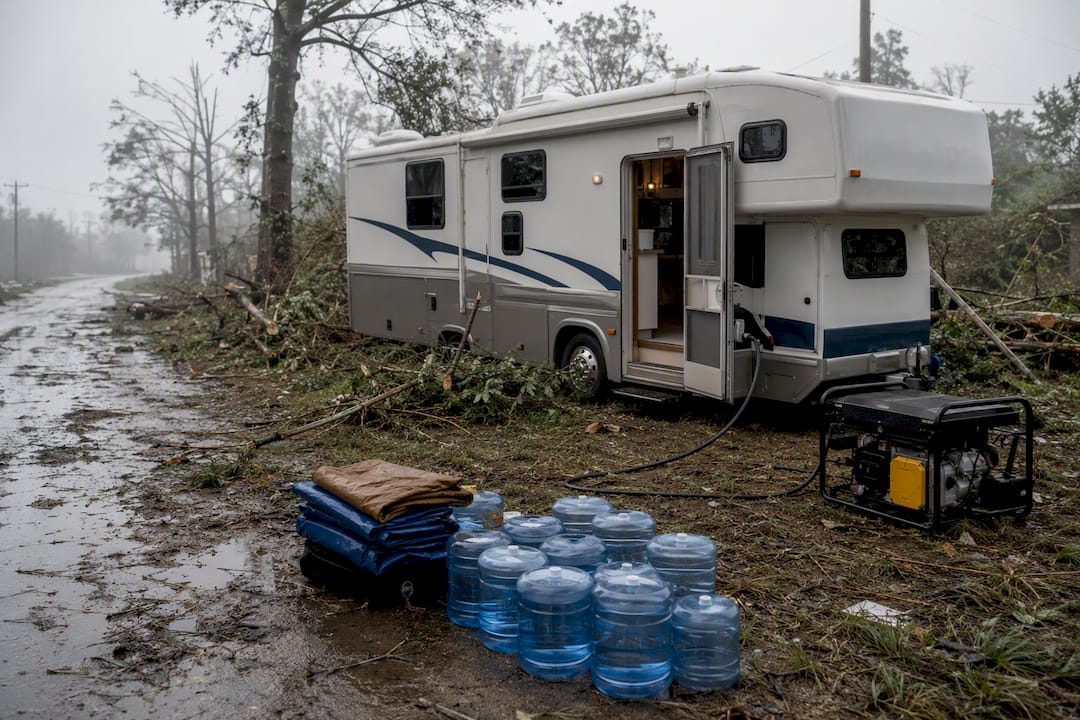
The Root Agency’s mobile catastrophe response unit deploys RVs directly into disaster zones, and the team offers 24/7 claims support in English and Spanish. Bring your declarations page and any receipts you’ve already collected to a post-storm review; the agency helps expedite documentation and advance requests so families aren’t waiting weeks for a check while paying for a hotel out of pocket.
Why Adequate Coverage Beats the Cheapest Premium
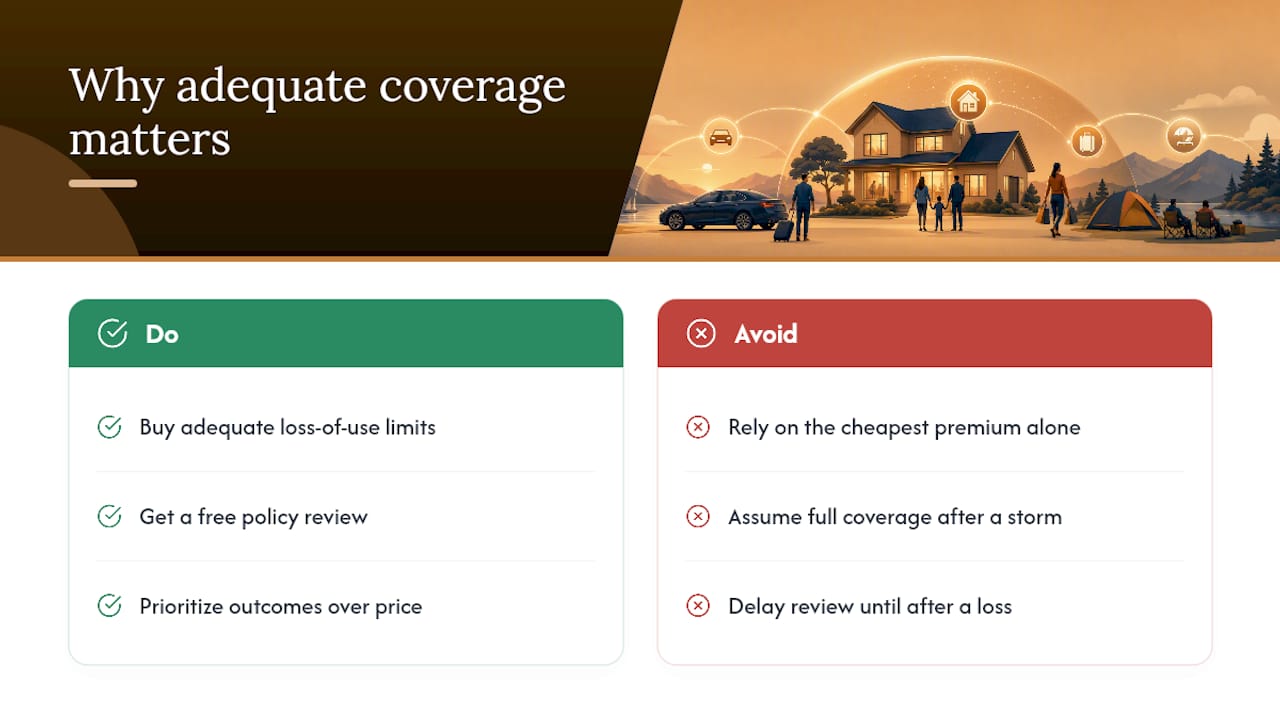
Underinsured displacement is one of the most financially painful surprises a homeowner can face, and it’s almost always discovered at the worst possible moment, mid-storm recovery, when there’s no time left to fix it. That’s the gap adequate loss of use limits are built to close.
Steve Root built this agency on a 40-year family legacy in Louisiana insurance, and the agency’s 356 five-star Google reviews and its 2025 Best of Baton Rouge recognition from The Advocate reflect what happens when clients get outcomes, not just a lower monthly bill. A policy review costs nothing and often reveals a gap worth far more than the premium saved.
— Steve Root
Get a Loss of Use Policy Review From The Root Agency
The Root Agency is the local alternative to shopping premiums online and hoping the default limits are enough. As a longtime Allstate exclusive agency serving Louisiana and Mississippi, The Root Agency reviews your loss of use, homeowners, flood, renters, condo, and landlord coverage together, so nothing gets left at a default percentage that won’t survive a real hurricane season.

A policy review takes one conversation. Bring your current declarations page and any recent repair estimates, and Steve Root’s team will walk through whether your loss of use limit actually matches your parish’s typical repair timeline. The agency also offers flood insurance referrals for the gap standard policies leave open, plus bilingual claims support around the clock. Start with a home insurance quote and review or call (225) 926-0160 to talk through your current limits with someone who’ll still be answering the phone after the next storm.
Sources
For deeper detail beyond this overview, NAIC’s consumer guidance covers documentation requirements directly, while Investopedia and Bankrate break down how ALE and loss of use differ by policy type. Roman Insurance’s overview of loss of use coverage offers another consumer-facing explanation worth a look.
- What are additional living expenses — NAIC
- Loss of use coverage — NerdWallet
- Loss of use coverage — Bankrate