

Liability Insurance Explained Simply for Louisiana Residents

Liability insurance is defined as coverage that pays for injuries or property damage you cause to someone else, including their medical bills, repair costs, legal defense fees, and any settlement or judgment against you. This is the core of what is liability insurance explained simply: it protects your finances when you are legally responsible for harm to another person or their belongings. Liability coverage appears in auto insurance policies, homeowners policies, renters policies, and commercial policies. Without it, a single lawsuit can wipe out savings, garnish wages, and follow you for years.
What does liability insurance cover and what does it exclude?
Liability insurance pays for third-party medical expenses, property repairs, legal defense costs, and settlements when your negligence causes harm. The word “third-party” is the key. The injured person is the third party. You are the policyholder. Your insurer steps in to cover the other person’s losses, not your own.
Common personal liability scenarios include:
- A guest slips on your wet porch in Baton Rouge and breaks a wrist. Your homeowners liability pays their medical bills.
- You rear-end another driver on I-10. Your auto liability pays for their vehicle repairs and medical treatment.
- Your dog bites a neighbor’s child. Your homeowners personal liability covers the resulting claim.
- A pipe you accidentally burst floods your downstairs neighbor’s apartment. Liability coverage in your renters policy handles their losses.
Common business liability scenarios include:
- A customer trips over a display in your Metairie retail store. General liability insurance covers their injury claim.
- A contractor damages a client’s property while working on a job. General liability insurance covers the repair costs and legal fees.
- A client claims your company’s advice caused them financial harm. Professional liability coverage responds to that type of claim.
Liability insurance does not cover your own injuries or damage to your own property or vehicle. Your own losses require separate coverages like collision, comprehensive, or medical payments. Liability also excludes intentional acts and criminal conduct. If you deliberately cause harm, your insurer will not defend or pay for it.
Pro Tip: Review your homeowners or renters policy for the personal liability limit. Many policies default to $100,000, which sounds like a lot until you face a serious injury claim. Ask your agent whether that limit reflects your actual exposure.
How do the duty to defend and duty to indemnify work?
These two insurer obligations are the engine behind every liability claim, and most policyholders have never heard of either one.

The duty to defend activates the moment a lawsuit is filed and the allegations might fall within your policy’s coverage. Your insurer assigns an attorney and pays legal fees from day one. This duty is broader than the duty to indemnify because it kicks in based on allegations alone, not proven facts.
The duty to indemnify is different. It requires a final outcome. Your insurer pays a settlement or judgment only after the case resolves and only if the claim is actually covered under your policy. A claim can trigger the duty to defend and still not trigger indemnity if the final facts fall outside coverage.
The duty to defend can cost an insurer significant money over a long litigation process. But the duty to indemnify only applies after the case outcome and a coverage evaluation. These are two separate obligations, and understanding the difference protects you as a policyholder.
One critical detail: prompt claim notification is not optional. Most liability policies require you to notify your insurer as soon as practicable after a lawsuit or incident. Waiting too long can result in denial of both defense and coverage. If someone threatens legal action or you receive any legal paperwork, call your agent the same day.
Pro Tip: Never try to resolve a liability claim on your own before calling your insurer. Even a casual apology or informal payment can complicate your coverage position. Report first, then let your insurer guide the process.
Why do policy limits matter, and when does umbrella insurance help?
Liability coverage pays only up to your policy limit. If damages exceed that limit, you pay the difference out of pocket. That means your savings, your home equity, and your future income are all at risk.
Here is a realistic example. A serious car accident in New Orleans results in $400,000 in medical bills and lost wages for the other driver. Your auto liability limit is $100,000. You are personally responsible for the remaining $300,000.
This is exactly where umbrella insurance fills the gap.
| Coverage type | Typical limit | What it covers |
|---|---|---|
| Auto liability | $25,000–$300,000 | Injuries and property damage from car accidents |
| Homeowners liability | $100,000–$500,000 | Injuries and damage on your property |
| Personal umbrella | $1,000,000+ | Excess liability above home and auto limits |
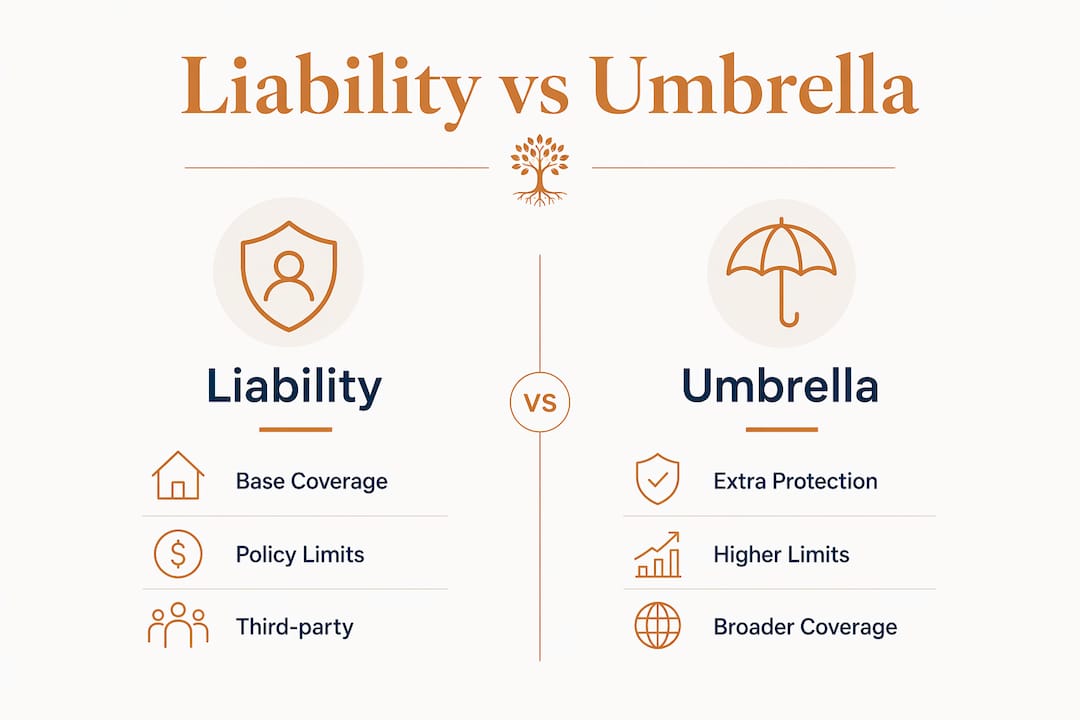
Personal umbrella insurance provides excess liability coverage beyond your home and auto policy limits, starting at $1 million. It activates only after your underlying policy limits are exhausted. Umbrella policies also require you to maintain minimum underlying limits on your home and auto policies before the umbrella can attach.
Situations where umbrella coverage protects Louisiana and Mississippi residents:
- A multi-vehicle accident on a rural Mississippi highway with serious injuries to multiple parties
- A pool or trampoline on your property that leads to a catastrophic injury claim
- A dog bite that results in permanent disfigurement and a large civil lawsuit
- A defamation claim arising from something posted online
Pro Tip: An umbrella policy is one of the most affordable ways to add significant protection. For most families, a $1 million umbrella policy costs less per year than a single car payment. The coverage details are worth reviewing with your agent before you need them.
What are the liability insurance requirements in Louisiana and Mississippi?
Both states require drivers to carry auto liability insurance. This is not optional. Driving without it exposes you to fines, license suspension, and personal financial liability for any accident you cause.
Louisiana’s minimum auto liability limits are $15,000 per person for bodily injury, $30,000 per accident, and $25,000 for property damage. Mississippi requires $25,000 per person, $50,000 per accident, and $25,000 for property damage. These minimums are a legal floor, not a recommended coverage level. Most agents, including those at The Root Agency, recommend limits well above the state minimums.
Steps for personal and commercial buyers in the region:
- Confirm your auto liability limits. Check whether your current limits exceed the state minimums. If you own significant assets, your limits should reflect that exposure. The Louisiana auto insurance guide explains how to read your declarations page.
- Review your homeowners or renters liability. Homeowners personal liability is not state-mandated, but most mortgage lenders require it. Renters often overlook the liability component in their policy entirely.
- Assess your need for umbrella coverage. If you own a home, have savings, or carry any significant assets, a personal umbrella policy is worth serious consideration. Review umbrella insurance options with a local agent.
- Evaluate commercial liability if you own a business. General liability insurance protects business finances during lawsuits regardless of fault. Many contracts and commercial leases in Louisiana and Mississippi require proof of general liability coverage before work begins.
- Work with a local agent who knows the region. Coverage needs in coastal Louisiana differ from those in central Mississippi. A local agent understands the litigation environment, the court system, and the specific risks that come with operating here.
The Root Agency serves all of Louisiana and Mississippi and offers commercial liability coverage alongside personal lines. Steve Root has spent more than 20 years helping families and business owners in this region get coverage that actually holds up when a claim arrives.
Key takeaways
Liability insurance is the single most important coverage for protecting your personal finances and business assets when you cause harm to someone else.
| Point | Details |
|---|---|
| Liability pays others, not you | Coverage goes to injured third parties, not your own medical bills or property repairs. |
| Duty to defend activates early | Your insurer provides legal representation from the moment a covered lawsuit is filed. |
| Policy limits are a ceiling | Damages above your limit become your personal financial responsibility. |
| Umbrella policies extend protection | A $1 million umbrella policy adds coverage above your home and auto limits at low cost. |
| State minimums are not enough | Louisiana and Mississippi minimums are legal floors, not adequate protection for most families. |
What 20 years of claims has taught me about liability coverage
After more than two decades working with Louisiana and Mississippi families, I have seen the same mistake repeat itself. People choose the minimum liability limits because it keeps the premium down. Then something goes wrong, and the minimum is nowhere near enough.
A $15,000 bodily injury limit in Louisiana does not cover a single night in the ICU. A $100,000 homeowners liability limit sounds reasonable until a serious pool accident produces a $600,000 judgment. I have sat across from clients who did everything right except pick adequate limits, and watching that conversation is something I never get used to.
The other mistake I see constantly is ignoring umbrella insurance. People assume it is for wealthy families. It is not. It is for anyone who owns a home, drives a car, and has something to lose. A $1 million umbrella policy costs a fraction of what people spend on streaming subscriptions each year.
My honest advice: do not shop for the cheapest liability limit. Shop for the limit that would actually protect your family if the worst happened. That is the conversation I have with every client who walks through our door, and it is the reason The Root Agency holds a 4.9-star rating across 356 Google reviews. Coverage that holds up when you need it is worth every dollar.
— Steve Root
Reliable liability coverage starts with the right agent
The Root Agency offers personal and commercial liability coverage across all of Louisiana and Mississippi, backed by more than 20 years of local expertise and a 40-year family legacy in Louisiana insurance.

Whether you need auto liability coverage that exceeds state minimums, a homeowners policy with strong personal liability limits, or commercial liability protection for your business, The Root Agency builds coverage around your actual exposure. We offer 24/7 claims support, bilingual service in English and Spanish, and a catastrophe response team that deploys directly to disaster zones. Call us at (225) 926-0160 or visit us at 8676 Goodwood Blvd Ste 303, Baton Rouge, LA 70806.
FAQ
What is liability insurance in simple terms?
Liability insurance pays for injuries or property damage you cause to someone else, including their medical bills, repair costs, and legal fees. It protects your finances when you are legally responsible for harm to another person.
Does liability insurance cover my own injuries?
No. Liability coverage pays third parties, not the policyholder. Your own injuries require separate coverage such as health insurance, medical payments coverage, or personal injury protection.
How much liability insurance do I need in Louisiana?
Louisiana requires minimum auto liability limits of $15,000 per person and $30,000 per accident, but most agents recommend limits well above those minimums. Your total asset exposure, including home equity and savings, should guide your coverage decision.
What is the difference between liability and umbrella insurance?
Liability insurance is the base coverage in your auto or homeowners policy. Umbrella insurance provides additional coverage above those base limits, typically starting at $1 million, and activates only after your underlying limits are exhausted.
Does my renters insurance include liability coverage?
Yes. Most renters insurance policies include personal liability coverage that protects you if a guest is injured in your apartment or if you accidentally damage someone else’s property. Reviewing the liability limit in your renters policy is worth doing annually.