

Liability Coverage in a Renters Policy: What It Means for You

Liability coverage in a renters insurance policy is defined as personal liability protection that pays for bodily injury or property damage you cause to others, covering legal fees, medical bills, and settlements that could otherwise wipe out your savings. This is not the same as personal property coverage, which protects your belongings. Personal liability protection is the part of your renters policy that stands between you and a lawsuit. For renters in Louisiana and Mississippi, where landlords routinely require proof of coverage and where a single slip-and-fall claim can reach six figures, understanding what is liability coverage in a renters policy is not optional. It is the financial foundation your lease and your future depend on.
What is liability coverage in a renters policy?
Liability coverage in a renters policy is personal liability insurance. The industry term is “personal liability coverage,” and it appears as a distinct section on your renters insurance declarations page. Liability coverage protects your finances by paying for the injuries or property damage you cause to other people, not your own losses.
Standard policies typically start at $100,000 in liability limits. That number sounds large until you consider that a single hospitalization from a guest injury can exceed it. The coverage pays for medical expenses, legal defense costs, and any court-ordered judgment or settlement up to your policy limit.

One detail most renters miss: defense costs are covered separately from your liability limit. Your $100,000 limit stays intact for damages. The insurer pays attorney fees on top of that. This distinction matters enormously if a claim goes to court.
How does liability coverage work in a renters insurance policy?
Personal liability coverage activates when you are legally responsible for an incident that harms someone else or damages their property. Covered incidents include guest falls and accidental damage to a neighbor’s property. The coverage does not activate for your own injuries or your own belongings.
Here is what renters liability coverage typically pays for:
- Medical bills for a guest injured at your apartment
- Legal defense fees if the injured party files a lawsuit
- Court judgments or settlements up to your policy limit
- Property damage you accidentally cause to someone else’s belongings or unit
What it does not cover is equally important:
- Your own medical bills after an accident
- Damage to your own furniture, electronics, or clothing
- Intentional acts or criminal behavior
- Certain dog breeds that your insurer has excluded
Pro Tip: Document every incident at your rental immediately. Photos, witness contact information, and a written account of what happened significantly improve claim outcomes and speed up processing.
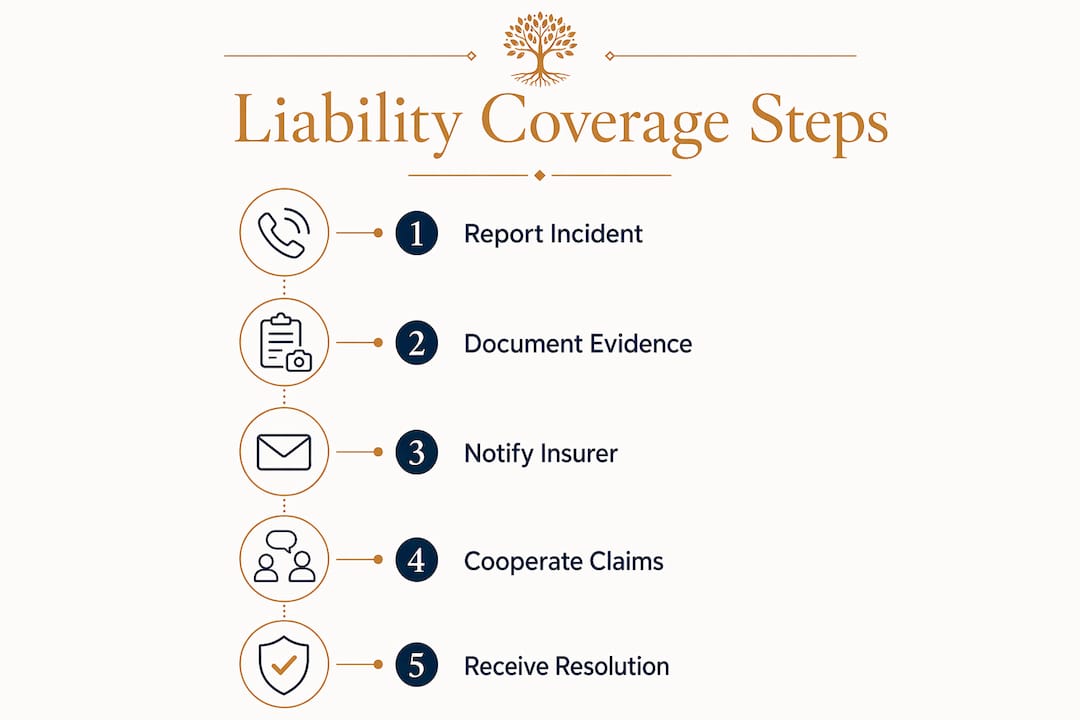
The claims process requires your cooperation. You report the incident to your insurer, provide documentation, and allow the insurer to manage the legal defense. Trying to handle a liability claim on your own, without notifying your insurer, can void your coverage.
Why is liability coverage important for renters in Louisiana and Mississippi?
Louisiana and Mississippi renters face a specific set of risks that make personal liability protection non-negotiable. Landlords in both states commonly require renters insurance as a lease condition. State law does not mandate it, but your lease almost certainly does. Signing without coverage puts you in breach of contract from day one.
The financial stakes are high. Consider these four scenarios that play out regularly in rental properties across Baton Rouge, New Orleans, and the Gulf Coast:
- Slip and fall. A guest trips on a wet floor in your apartment and breaks a wrist. Emergency care, surgery, and physical therapy easily exceed $50,000.
- Dog bite. Your dog bites a neighbor’s child. Medical costs, potential litigation, and a settlement can reach six figures.
- Accidental fire. A grease fire spreads from your kitchen to an adjacent unit. You are liable for the neighbor’s property damage.
- Balcony or stair incident. A visitor falls from a shared space and holds you responsible for negligence.
Without sufficient liability coverage, a judgment against you becomes your personal debt. That means wage garnishment, liens on assets, and seizure of savings. Louisiana courts can and do enforce these judgments aggressively.
Young renters in Louisiana and Mississippi often assume their parents’ homeowners policy covers them. It does not. Parental homeowners policies provide limited coverage for adult children living in separate rental units. A dedicated renters policy with personal liability protection is the only reliable solution.
How to choose the right amount of liability coverage
The standard $100,000 liability limit is a starting point, not a finish line. Increasing coverage from $100,000 to higher limits typically costs $200–$400 more per year. That is a modest price for protection against judgments that can reach $300,000 or more.
Factors that determine how much coverage you need
Your lifestyle drives your liability exposure. Ask yourself these questions honestly:
- Do you host guests regularly? Parties, cookouts, and gatherings increase the chance of an incident.
- Do you have a dog? Breed and temperament affect both your risk and your insurer’s willingness to cover you.
- Do you have significant savings or assets? The more you have, the more a plaintiff’s attorney has reason to pursue.
- Do you rent in a high-traffic building or a complex with shared amenities like pools or gyms?
When to add an umbrella policy
An umbrella policy is an affordable way to extend liability protection beyond your renters policy limit. A $1 million umbrella policy typically costs less than $200 per year and kicks in after your renters liability limit is exhausted. For renters with growing assets or active social lives, an umbrella policy is worth serious consideration.
Liability risks increase as your lifestyle changes. Experts recommend reviewing your coverage limits annually or whenever your circumstances shift. A new pet, a new roommate, or a raise that builds your savings are all triggers for a coverage review.
Pro Tip: Talk to your agent about your actual assets before settling on a limit. The right number is not the cheapest option. It is the amount that fully protects what you have built.
Working with a knowledgeable agent, rather than buying a policy online without guidance, is the most reliable way to get this right. The role of an insurance agent is to match your specific situation to the right limits, not to sell you the minimum.
Common misconceptions about renters liability coverage
Liability coverage does not pay for your own injuries or your own damaged belongings. Those require the personal property section of your renters policy or a separate health insurance policy. Confusing these two sections leads renters to believe they are covered when they are not.
Here are the most common misunderstandings worth correcting:
- “My liability coverage pays my medical bills.” It does not. It pays the medical bills of others you injure.
- “Defense costs eat into my liability limit.” They do not. Defense costs are covered separately, preserving your full limit for damages.
- “All dog breeds are covered.” Some insurers exclude specific breeds. Confirm your dog is covered before assuming you have protection.
- “Intentional damage is covered.” It is not. Liability coverage applies to accidents and negligence, not deliberate acts.
- “My renters policy covers everything in one bucket.” A renters policy has three distinct sections: personal property, personal liability, and medical payments to others. Each has its own limit and purpose.
Liability coverage is often the most critical and least understood part of a renters policy. A single liability claim can exceed the total value of your personal property. That reality alone justifies treating this section of your policy with the attention it deserves.
Key Takeaways
Liability coverage in a renters policy is the single most financially consequential protection a renter carries, because one lawsuit can exceed the value of everything you own.
| Point | Details |
|---|---|
| Core definition | Personal liability coverage pays for others’ injuries and property damage you cause, not your own losses. |
| Defense costs | Legal defense fees are paid separately from your liability limit, preserving the full amount for damages. |
| Standard vs. recommended limits | Policies start at $100,000, but higher limits cost only $200–$400 more per year and provide far greater protection. |
| Louisiana and Mississippi lease requirements | Most landlords in both states require renters insurance; relying on a parent’s homeowners policy leaves you unprotected. |
| Umbrella policies | Adding an umbrella policy extends coverage beyond your renters limit for less than $200 per year. |
Steve Root’s take on liability coverage for Louisiana and Mississippi renters
Liability coverage is the part of a renters policy I talk about most, because it is the part people understand least until something goes wrong. I have seen renters in Baton Rouge face lawsuits from a neighbor’s injury that wiped out years of savings. The claim was legitimate, the judgment was real, and the renter had the minimum coverage their lease required. That minimum was not enough.
The $100,000 standard limit made sense when it was written. Medical costs, attorney fees, and jury awards have all increased significantly since then. I tell every renter I work with to think about what they have to lose, not just what the lease requires. If you have a savings account, a car, and a steady income, you have assets worth protecting.
The other thing I see constantly is renters assuming their parents’ homeowners policy covers them. It does not provide meaningful protection once you are living in your own rental unit. You need your own policy, with limits that reflect your actual life.
Working with a local agent who knows Louisiana and Mississippi law, local court tendencies, and the real cost of claims in this region gives you an edge that an online quote tool simply cannot. The cost of renters insurance in Louisiana is already affected by our regional risk environment. Getting the right coverage, not just the cheapest coverage, is the decision that protects you when it counts.
— Steve Root
Renters insurance coverage from The Root Agency
The Root Agency has served renters across Louisiana and Mississippi for more than 20 years, with 356 Google reviews at 4.9 stars and a reputation built on showing up when it matters most.

We review your actual situation, including your assets, your lease requirements, and your lifestyle, before recommending a liability limit. We do not hand you a minimum and call it done. Our team offers 24/7 claims support, bilingual service in English and Spanish, and a catastrophe response unit that deploys directly to disaster zones. When you are ready to get your renters insurance coverage right, call us at (225) 926-0160 or visit our office at 8676 Goodwood Blvd Ste 303, Baton Rouge, LA 70806. You can also review our full range of coverage options to build a protection plan that fits your life.
FAQ
What does liability cover in a renters policy?
Liability coverage in a renters policy pays for bodily injury or property damage you cause to others, including medical bills, legal defense fees, and court judgments. It does not cover your own injuries or your own belongings.
How much liability coverage do renters in Louisiana need?
Most policies start at $100,000, but financial experts recommend higher limits. Increasing your limit costs roughly $200–$400 more per year and protects you against judgments that can far exceed the standard amount.
Is renters insurance liability coverage required in Louisiana and Mississippi?
State law does not require it, but most landlords in Louisiana and Mississippi include renters insurance as a lease requirement. Failing to carry it puts you in breach of your lease agreement.
Does renters liability coverage pay my own medical bills?
No. Personal liability coverage pays the medical expenses of others you injure. Your own medical bills require health insurance or the medical payments section of your renters policy, which is a separate and smaller coverage.
Can I increase my liability limits beyond my renters policy?
Yes. An umbrella policy extends your liability protection beyond your renters policy limit, typically providing $1 million in additional coverage for less than $200 per year.