
Avoid Tens of Thousands: Louisiana Insured Value vs Market Value
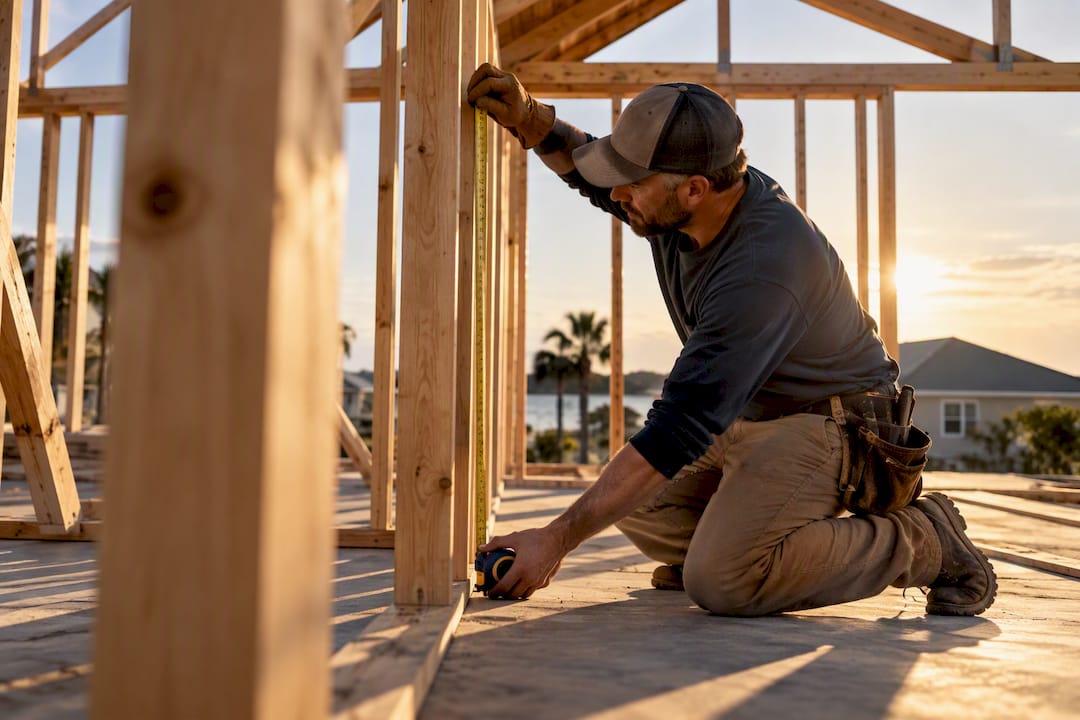
Your insurance company uses replacement value, also called insurable or insured value, to set your dwelling coverage. That number covers what it costs to rebuild your house with similar materials and quality, and it has nothing to do with what your home would sell for. If you insure based on market value or your purchase price, you risk paying the gap out of pocket after a total loss. Start by finding your Coverage A limit on your declarations page and asking your agent to confirm it reflects current rebuild cost.
TL;DR:
- Insuring based on market value risks significant underinsurance, as rebuild costs can be much lower or higher than the home’s sale price.
- Replacement cost estimates exclude land and account for current local labor, materials, permits, and demolition costs to accurately determine dwelling coverage limits.
- Regional factors like demand surge after storms and building code updates can cause rebuild costs to outpace estimates from even recent appraisals, requiring frequent updates.
- Underinsured homes face coinsurance penalties that reduce claim payouts, especially if coverage falls below 80% of the actual rebuild cost.
- A local agent can help verify that Coverage A reflects current rebuild expenses and suggest endorsements like guaranteed replacement cost for better protection.
Table of Contents
- What Does Replacement or Insurable Value Actually Mean?
- What Does Market Value Mean, and Why Does It Differ?
- How Do Insured Value and Market Value Compare Side by Side?
- Actual Cash Value vs. Replacement Cost Value: How Payouts Differ
- How Do Insurers Calculate Your Replacement Value?
- What Mistakes Lead to Underinsured Homes?
- How Do You Check Your Policy and What Should You Ask Your Agent?
- Why Louisiana Homeowners Need a Local Perspective on Coverage
- What’s the Bottom Line on Insured Value vs Market Value?
- An Editorial Take on Getting This Right
- How The Root Agency Helps You Get This Right
- Sources
- FAQ
What Does Replacement or Insurable Value Actually Mean?
Insurers define replacement cost as the amount it takes to rebuild your home with materials and workmanship of similar kind and quality, without subtracting for depreciation. That distinction, drawn directly by the National Association of Insurance Commissioners, is the foundation of how Coverage A limits get set on nearly every homeowners policy written in Louisiana.
A proper replacement cost estimate accounts for:
- Labor and materials priced at current local rates
- Permit fees required to rebuild legally
- Demolition and debris removal after a total loss
- Builder overhead and profit margins
Land is deliberately left out of this figure. Your lot doesn’t burn down in a fire or wash away in wind damage, so insurers separate the dirt from the structure sitting on it. That’s the single biggest reason your dwelling limit can look nothing like your home’s sale price.
What Does Market Value Mean, and Why Does It Differ?
Market value is what a buyer would actually pay for your property on the open market right now. It bundles the structure, the land, the location, and every subjective factor a buyer weighs, from school district quality to curb appeal. The Appraisal Foundation’s professional appraisal standards govern exactly this kind of valuation, and they rely on comparable sales data, not construction estimates.
Market value drivers include:
- Recent comparable home sales in your neighborhood
- Desirability of the school district or lot location
- Local buyer demand and inventory levels
A modest Baton Rouge home on a sought-after street can carry a market value well above its rebuild cost, purely because of land scarcity. Flip that scenario in a rural parish with cheap land and older, larger construction, and rebuild cost can exceed market value by a wide margin. Either way, replacement cost and market value measure different things and were never meant to match.
How Do Insured Value and Market Value Compare Side by Side?
| Factor | Replacement/Insurable Value | Market Value |
|---|---|---|
| Includes land | No | Yes |
| Primary use | Setting dwelling coverage limits | Buying, selling, or property tax assessment |
| Key drivers | Construction costs, labor, materials, permits | Comparable sales, location, buyer demand |
| Total loss payout | Full cost to rebuild the structure | Not used to calculate insurance payouts |
| Who benefits from accuracy | The homeowner, when a claim is filed | The seller or buyer, during a transaction |
Consider two real scenarios. A historic New Orleans cottage on a small lot might have a market value of $450,000 driven almost entirely by location, while its rebuild cost runs closer to $280,000 because the structure itself is modest. Insuring that home for its market value would waste premium dollars on land you’ll never need to rebuild.
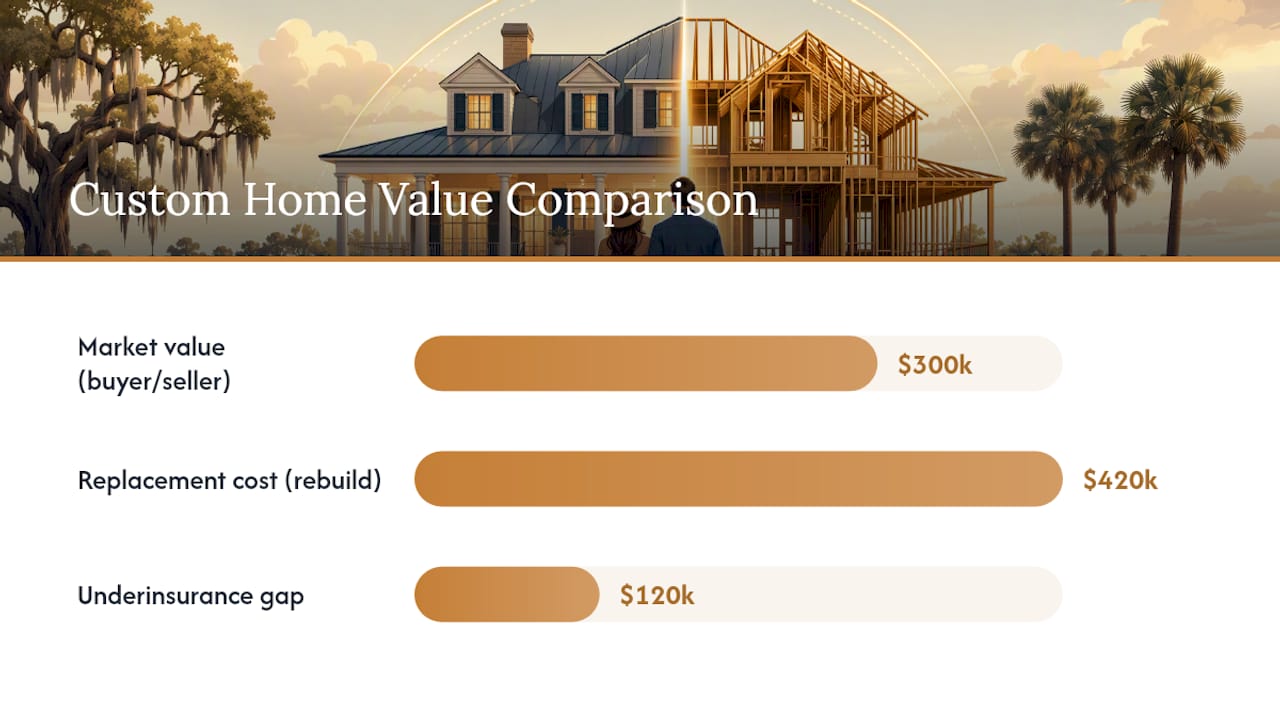
Now reverse it. A large custom home on cheap rural acreage might carry a market value of $300,000 but cost $420,000 to rebuild once you account for custom finishes and current labor rates. Erie Insurance’s consumer guidance confirms this second scenario is exactly where underinsurance disasters happen. Insuring to the lower market number leaves a six-figure gap the day a hurricane levels the house.
Actual Cash Value vs. Replacement Cost Value: How Payouts Differ
Actual cash value, or ACV, pays the replacement cost minus depreciation for age and wear. Replacement cost value, or RCV, pays the full cost to rebuild with no depreciation deducted, provided you actually repair or rebuild. The NAIC’s own comparison makes this distinction the single most important line item to check on your policy.
Here’s how the payment process typically works:
- Insurers often issue an initial ACV payment right after the claim is approved.
- Once you complete repairs and submit documentation, they release the recoverable depreciation, bringing the total up to full RCV.
- Skip the rebuild entirely, and you may never collect that withheld depreciation.
A 15-year-old roof damaged by hail might have a replacement cost of $18,000 but an ACV of $11,000 after depreciation. That $7,000 gap is real money, and it’s why the policy type printed on your declarations page matters more than most homeowners realize.
How Do Insurers Calculate Your Replacement Value?
Insurers and their estimating software build your replacement cost from concrete line items, not guesswork. Industry guidance from Vantage Point Risk lays out the core inputs clearly.
- Square footage and construction class of your home
- Roofing material, finishes, and attached structures like garages or porches
- Permit fees and demolition or debris removal costs
- Local labor and material pricing at current market rates
Two factors catch homeowners off guard every time. Demand surge happens when a major hurricane damages thousands of homes at once, driving up contractor and material costs regionally for months. Building-code upgrades, sometimes called ordinance and law costs, force you to rebuild to current code even if your original home was grandfathered in under older standards.
Pro Tip: Get a professional replacement cost estimate every two to three years, and immediately after any major renovation. Rebuild costs in Louisiana have shifted enough after recent storm seasons that a five-year-old estimate can undersell your real exposure by tens of thousands of dollars.
What Mistakes Lead to Underinsured Homes?
Fall below that threshold, and insurers can reduce your claim payout proportionally, even for a partial loss.
Here’s a simple example: if your home’s true replacement cost is $400,000 but you’re only insured for $280,000, that’s 70% of value against an 80% requirement. On a $50,000 claim, coinsurance penalties could cut your payout by thousands, leaving you to cover the shortfall yourself.
Common mistakes that create this gap:
- Insuring to purchase price instead of rebuild cost
- Relying on the tax-assessed value, which usually runs well below replacement cost
- Forgetting to update coverage after a kitchen remodel or room addition
Endorsements worth asking about include extended replacement cost, guaranteed replacement cost, and ordinance and law coverage, all of which Policygenius recommends as protection against demand surge and code-upgrade costs.
How Do You Check Your Policy and What Should You Ask Your Agent?
- Pull your declarations page and locate Coverage A, the dwelling limit, and confirm whether it’s written on an RCV or ACV basis.
- Ask your agent for a current replacement cost estimate and whether extended or guaranteed replacement cost is available on your policy.
- Report any renovations, additions, or upgrades, and ask specifically about ordinance and law coverage if your home is older.
Pro Tip: Photograph every major renovation and keep contractor invoices in a folder with your policy documents. When you request a coverage update, that documentation lets your agent adjust your dwelling limit accurately instead of estimating on the spot.
If your home sits near flood-prone areas, pair this review with a look at flood coverage versus standard homeowners protection, since dwelling coverage never includes flood damage regardless of how it’s valued.
Why Louisiana Homeowners Need a Local Perspective on Coverage
Steve Root has spent more than 20 years helping Louisiana families get coverage right, backed by 356 Google reviews at 4.9 stars and recognition on The Advocate’s 2025 Best of Baton Rouge list. That local presence matters because Louisiana homeowners face storm seasons that trigger the exact demand surge pricing that erodes an outdated replacement cost estimate. The Root Agency’s mobile catastrophe response unit deploys RVs directly to disaster zones, backed by 24/7 claims support in English and Spanish, so you’re never negotiating a rebuild estimate alone after a hurricane. Schedule a coverage review now, and bring documentation of any renovations so your dwelling limit reflects your actual home.
What’s the Bottom Line on Insured Value vs Market Value?
Insure your home to its replacement value, not its market value, and you avoid the single most common cause of post-storm financial disaster: discovering your payout falls tens of thousands short of what rebuilding actually costs. Three steps protect you immediately: check your declarations page for the coverage basis, request a current replacement cost estimate from your agent, and add endorsements like guaranteed replacement cost if your area faces demand surge risk. A local agent review turns this from guesswork into a documented plan.
An Editorial Take on Getting This Right
Most online explainers treat replacement cost and market value as an abstract distinction, something you learn once and file away. That’s the wrong way to think about it in Louisiana. This isn’t a one-time calculation. It’s a number that needs revisiting every time lumber prices spike, every time a hurricane triggers regional demand surge, and every time you finish a renovation project.
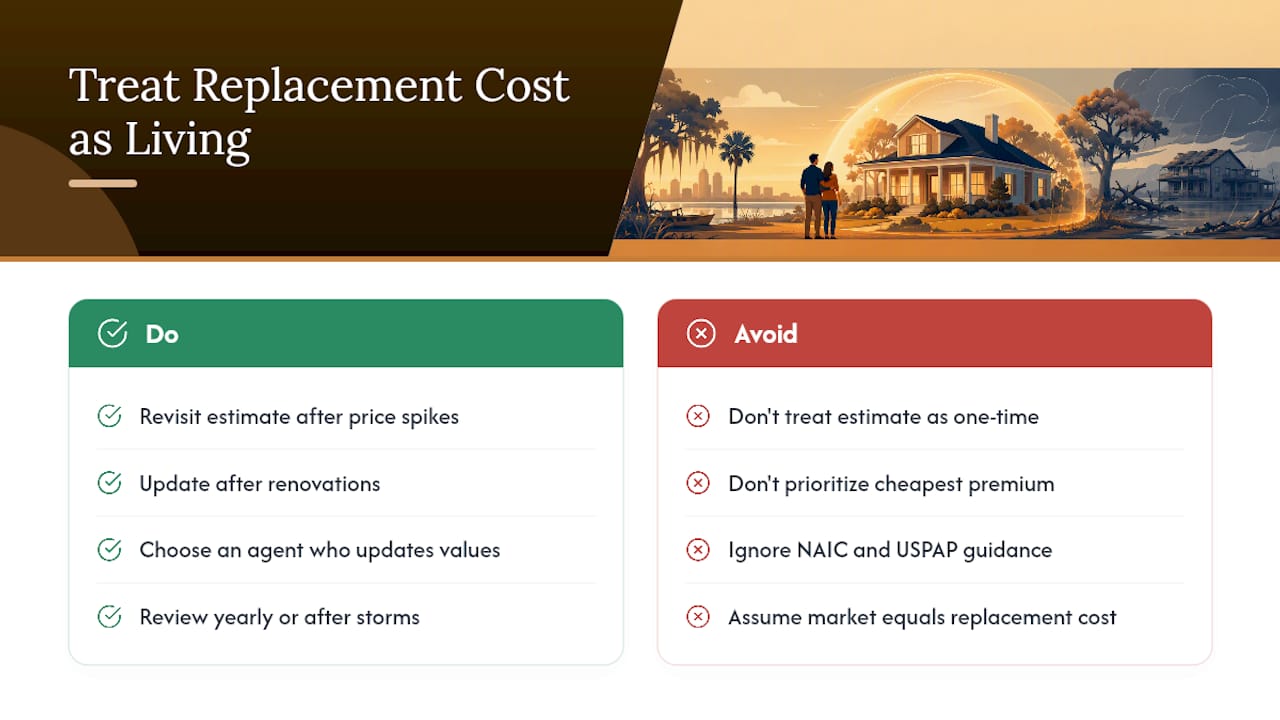
The conventional advice, get an estimate and move on, misses the real risk: estimates go stale fast, and homeowners rarely notice until they’re standing in front of a damaged house with a shortfall they can’t cover. The regulator guidance from the NAIC and the appraisal standards from USPAP both exist because these two numbers get confused constantly, and confusion at claim time costs real money.
What I’d prioritize first isn’t finding the cheapest premium. It’s finding an agent who treats your replacement cost estimate as a living number, not a form filled out once at signing. That’s the difference between a policy that pays what it promises and one that leaves you negotiating a gap after the worst week of your year.
— Steve Root
How The Root Agency Helps You Get This Right
The Root Agency is the local alternative to guessing at your dwelling limit and hoping it holds up after a storm. Rather than a call center reading you a generic quote, you get a coverage review from an agency built on Steve Root’s 20-plus years in Louisiana insurance, a 4.9-star reputation across 356 Google reviews, and a mobile catastrophe response unit that shows up in person when carriers elsewhere have already left the state.

A coverage review means someone actually looks at your dwelling limit against real rebuild costs, not a spreadsheet estimate from years ago. The Root Agency offers home insurance reviews, replacement cost guidance, and bilingual claims support around the clock, so renovations, storm damage, or a stale estimate never catch you off guard. If you’re ready to see whether your current dwelling limit actually matches what it would cost to rebuild your home today, visit the home insurance page to schedule a review, or call (225) 926-0160 to talk through your policy directly.
Sources
- What’s the difference between actual cash value coverage and replacement cost coverage? — NAIC
- Uniform Standards of Professional Appraisal Practice (USPAP) — The Appraisal Foundation
- Replacement cost vs. market value — Fox Business
FAQ
What Is the Difference Between Market Value and Insurance Value?
Market value is what a buyer would pay for your home, including the land. Insurance value, or replacement cost, is what it costs to rebuild just the structure, which is why the NAIC distinguishes these two figures so clearly in its consumer guidance.
Is It Better to Insure for Market Value or Replacement Value?
Replacement value is the correct basis for dwelling coverage, since it reflects actual rebuild cost rather than a sale price influenced by land and location. Insuring to market value risks leaving you underinsured if rebuild costs exceed what your home would sell for.
What Is the 80% Rule in Homeowners Insurance?
The 80% rule, or coinsurance requirement, means you need to insure your home for at least 80% of its full replacement cost to avoid a reduced claim payout. Fall below that threshold, and your insurer can apply a coinsurance penalty even on a partial loss claim.
Should I Insure for Market Value or Agreed Value?
Standard dwelling coverage should be based on replacement cost, not market value or an agreed sale price. A local review with an agency like The Root Agency can confirm your Coverage A limit reflects current rebuild costs rather than an outdated purchase price figure.