
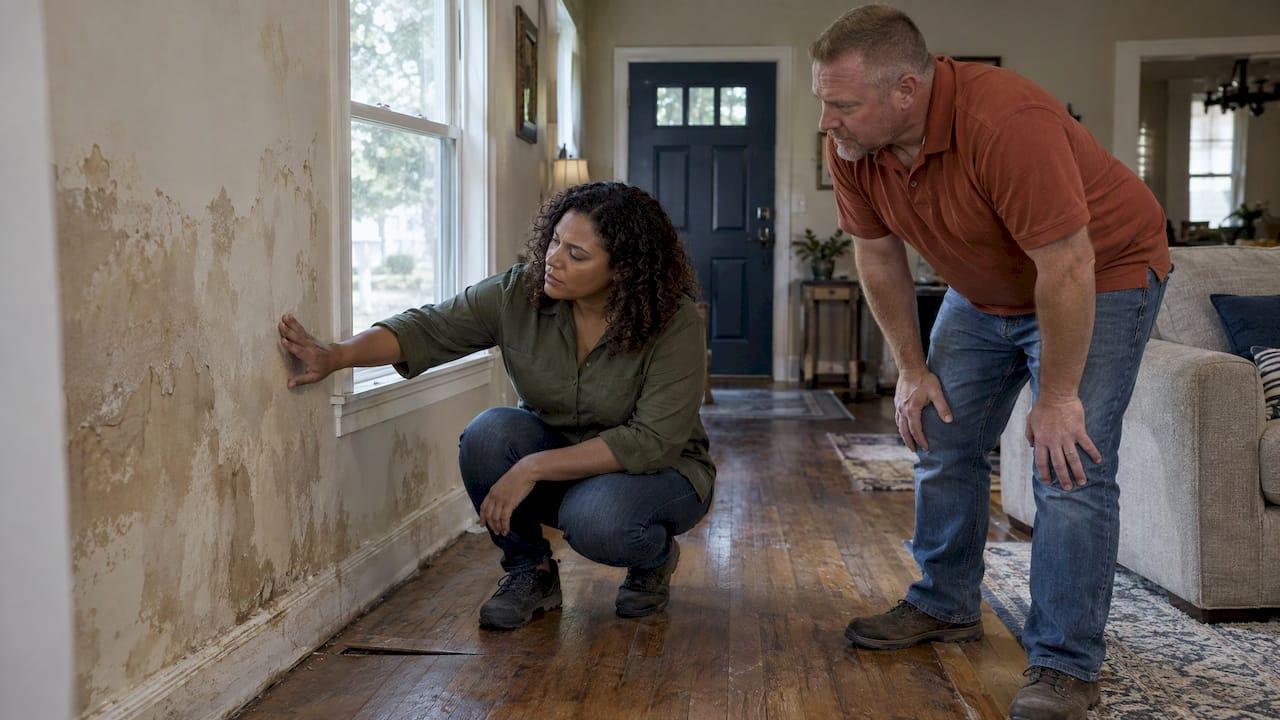
Independent vs. Staff Adjuster: Who Handles Your Claim

A staff adjuster is an employee of your insurance company. An independent adjuster is a contractor the company hires to handle claims for it, usually when claims pile up after a storm. Both are working your claim on the insurer’s behalf, and in Louisiana you will often meet one or the other, or both, after a hurricane. What matters is not the title on the business card. It is whether your policy is written correctly, whether your documentation is ready, and whether someone you trust is in your corner when the adjuster arrives.
I’m Steve Root. I have run this agency for more than 20 years, and my family has worked in Louisiana insurance for 40. I have sat with homeowners at the kitchen table after floodwater and wind, and I can tell you the adjuster rarely decides how the claim goes. The policy decides, and the preparation decides.
TL;DR
- Staff adjusters are employees of the insurer. Independent adjusters are contractors hired by the insurer, often after a catastrophe overloads its own team. Neither works for you.
- Field adjusters inspect the damage in person. Desk adjusters work from the office and often make the coverage decision. One claim can involve both, and either can be staff or independent.
- The adjuster applies your policy as written. Your deductible, roof terms, flood coverage and documentation settle most of the outcome before anyone visits.
- Louisiana law gives you rights: you can check an adjuster’s license, request the estimates used on your claim, and file a complaint with the Department of Insurance.
- Get your inventory, photos and policy review done before storm season, not after.
Table of Contents
- The short answer: who each adjuster works for
- What every adjuster actually does
- Field adjuster vs. desk adjuster
- Why you meet independent adjusters after a hurricane
- How to prepare for an adjuster’s visit
- What to watch for in Louisiana claims
- If you disagree with the adjuster
- Perspective: what we have learned about adjusters
- Protection built before the storm
- FAQ
- Sources
The short answer: who each adjuster works for
The Texas Office of Public Insurance Counsel, a state consumer office, explains that company adjusters work for the insurer, while independent adjusters are hired by the insurer but do not work directly for it. The same guide notes that insurers use independent adjusters when they lack enough staff, or when a catastrophe produces more claims than their own people can handle.
That second point is the one Louisiana homeowners feel. After a major hurricane, tens of thousands of claims land in a few weeks. No insurer keeps enough staff adjusters on payroll for that surge, so contractors fill the gap, many of them traveling in from other states.
Here is the plain comparison.
| Staff adjuster | Independent adjuster | |
|---|---|---|
| Employer | The insurance company | Often an adjusting firm or self-employed, hired by the insurer per claim or per event |
| Who they answer to | The insurer | The insurer, through the contract |
| When you usually meet them | Everyday claims: a roof leak, a fender bender, a kitchen fire | Large events: hurricanes, floods, widespread hail or tornado damage |
| Familiarity with your insurer’s process | Works inside it daily | Follows the insurer’s guidelines for the assignment |
| Familiarity with your area | Varies | Varies, and often travels in for the event |
| Represents you? | No | No |
The last row is the one people miss. Neither type is your advocate. That is not an accusation. It is simply how the job is built, and it is why the person you choose to buy coverage from matters so much.
What every adjuster actually does
The U.S. Bureau of Labor Statistics describes the work the same way regardless of employer: adjusters investigate, evaluate and settle claims, decide whether the policy covers the loss, and determine how much the insurer should pay. In doing so, they may interview claimants and witnesses, inspect property, review records and consult technical experts.
In practice, on a home claim, that means:
- They confirm your policy was in force and read what it covers.
- They inspect the damage, take photos and measurements, and note the cause.
- They write an estimate of the repair cost.
- They apply your deductible and any policy limits or special terms.
- A payment, a partial payment or a denial follows, with an explanation.
Notice how much of that is the policy talking. If your wind and hail deductible is a percentage of your home’s insured value, the adjuster does not choose that number. If your roof is on a payment schedule, the adjuster does not invent that schedule. Our posts on the types of deductibles on Louisiana homes and on the roof payment schedule endorsement explain why these terms deserve a read before a storm, not after.
Field adjuster vs. desk adjuster
This is a different split from staff versus independent, and people mix them up. It describes what the adjuster does, not who employs them.
The Florida Department of Financial Services’ post-disaster guide says field adjusters visit your home to inspect damage, while desk adjusters work in the office and make claim determinations. It also states that both work for, or on behalf of, and are paid by the insurer.
A windstorm insurer’s inspection brochure draws the same line more finely. The Texas Windstorm Insurance Association says its field adjuster documents and photographs damage and prepares reports and estimates, but does not decide coverage. A claims examiner reviews that report and makes the coverage determination.
Why this matters to you:
- The person standing in your driveway may not be the person who decides your claim. Their photos and notes are the record the decision-maker reads.
- If the field adjuster misses a damaged section of roof, or never sees the water line in the garage, the desk reviewer will not see it either.
- A single claim can pass through several people. The Texas consumer guide notes that a policyholder may deal with one or more adjusters at different stages, from first report and inspection to payments.
So your goal at the inspection is simple: make sure the record is complete. Everything you want considered should be walked, shown and photographed while the field adjuster is there.
Why you meet independent adjusters after a hurricane
Louisiana knows this pattern. A storm makes landfall, roads reopen, and within days adjusters are knocking on doors in neighborhoods from Lake Charles to Baton Rouge. Many of them are independent adjusters on catastrophe deployments, working a claim count far beyond a normal week.

The Louisiana Department of Insurance publishes a catastrophe adjuster handbook, and its 2026 edition sets out the conduct expected of them. It states that adjusters must treat claimants fairly, adjust claims according to the contract, and make truthful, unbiased reports after a thorough investigation. The handbook ties these duties to Louisiana Revised Statutes 22:1674.1.
That gives you a useful standard. A fair adjuster, staff or independent, reads your contract and reports what they find. You are entitled to expect that, and you are entitled to a policy that gives them something strong to read.
How to prepare for an adjuster’s visit
Nobody wants to think about an inspection before the loss. But the homeowners who recover fastest are the ones who did the preparation in calm weather. Here is the routine we recommend.
- Know your policy terms. Find your declarations page and locate your deductibles, especially the separate wind or hurricane deductible, and any roof payment terms. If you do not know what they mean, ask us before storm season. That is exactly what a policy review is for.
- Build a home inventory. Room-by-room photos and a list of belongings make personal property claims far easier. Our guide to finishing a home inventory in a weekend with the NAIC app walks you through it, and our explainer on personal property coverage shows how those items are paid.
- Keep records of your home’s condition. Dated photos of the roof, siding, and any upgrades give the adjuster a before-and-after picture.
- Protect the property after a loss. Take reasonable steps, such as tarping a damaged roof, and keep receipts. Photograph the damage first.
- Report the claim promptly. Our team provides 24/7 claims support, so a storm at midnight does not mean waiting until morning to start.
- Walk the adjuster through everything. Point out each area of damage, including attics, ceilings, fences, detached structures and anything not obvious from the street. Ask them to note every item.
- Write down names and contact details. Record the adjuster’s name, company, license number and whether they are staff or independent. Keep a log of every call and email.
- Ask for the estimate in writing. Keep your own copy of everything you are sent.
If the damage is water related, it also helps to understand how water loss is documented. This guide on documenting water damage in a home covers record keeping that applies to claims as well. And whether the water came from rain or rising flood matters a great deal to coverage, which is why we wrote Flood vs. Water Damage for Louisiana homeowners.
What to watch for in Louisiana claims
A few Louisiana-specific issues come up again and again when an adjuster evaluates a storm loss.
Wind versus water. Most homeowners policies exclude flood. Flood coverage is a separate policy, so an adjuster handling wind damage will separate it from rising water. If your home sits in a mapped flood zone, or even near one, a separate flood insurance policy is the piece that answers that question.
Multiple causes. When wind and water both damage a home, how the loss is divided can drive the payout. Our post on the concurrent causation doctrine explains how Louisiana homeowners should think about it.
Depreciation and roof age. An aging roof is the most common source of surprise. How your roof is paid, at full replacement cost or on a schedule based on age, is set in your policy long before the adjuster arrives.
Third parties. Contractors sometimes offer to handle your claim for you. Before you sign anything, read our overview of assignment of benefits in Louisiana.
If you disagree with the adjuster
You have options, and they are written into Louisiana law. The Louisiana Department of Insurance’s Policyholders Bill of Rights (La. R.S. 22:41) says you can check an adjuster’s license status and file a complaint against an insurer, producer or adjuster for investigation.
The same document says that on first-party property damage claims, you may request and receive the nonprivileged estimates, bids, plans, measurements, drawings and engineer or contractor reports used in adjusting your claim. That is powerful. If your own contractor’s estimate is far from the insurer’s number, ask for the documents behind the insurer’s figure and compare line by line.
A sensible order of steps:
- Ask the adjuster to explain the difference in writing.
- Request the supporting documents you are entitled to.
- Submit your own documentation: photos, a contractor’s itemized estimate, receipts.
- Call us. We can help you read the policy language and understand what the carrier is applying.
- If you believe a rule was broken, file a complaint with the Department of Insurance.
Some policyholders also hire a public adjuster, a licensed professional who works for the policyholder rather than the insurer. For disputes involving legal rights or a denial, a Louisiana attorney is the right professional to consult.
For a broader look at what trips carriers up, read common complaints Louisiana insurance carriers face in 2026.
Perspective: what we have learned about adjusters
Homeowners ask me whether they want a staff adjuster or an independent one. The honest answer is that you do not get to pick, and it is the wrong question.
The right question is whether your coverage was built to be paid in full. In 20 years of running this agency, and with 40 years of my family in Louisiana insurance behind me, I have seen the same pattern after every storm. The households that struggle are the ones with a policy they never read, a roof they never documented and an agent they could not reach.
That is why we do things the way we do. We stayed in Louisiana when other carriers and agents left after the hurricanes. We run a mobile catastrophe response unit that deploys RVs directly to disaster zones, so we are there in person, not on a hold line. Our claims support is available 24/7, and we serve clients in English and Spanish.
Our clients have left us 356 Google reviews at 4.9 stars, and The Advocate named us to its 2025 Best of Baton Rouge. I will take those over any slogan. Proper coverage and a local expert who picks up the phone are worth far more than a few dollars a month saved on a policy that does not hold up when the roof is open to the sky.
Steve Root
Protection built before the storm
The Root Agency is an Allstate exclusive agency in Baton Rouge, serving all of Louisiana and Mississippi. We write home insurance, flood, auto, life, boat, motorcycle, renters, condo, golf cart, umbrella and commercial policies, and we review your existing coverage with you so you know what an adjuster will be reading when the day comes. Business owners can start with our commercial insurance page.

If you want to walk through your policy before the next storm, call us at (225) 926-0160 or visit us at 8676 Goodwood Blvd Ste 303, Baton Rouge, LA 70806. See all our coverage lines on the products page.
FAQ
Is an independent adjuster on my side?
No. An independent adjuster is hired by your insurer to handle its claims, so the work is done on the insurer’s behalf. They are still required to treat you fairly and adjust the claim according to your contract. If you want someone who works for you in a dispute, that is a different role, such as a public adjuster or an attorney.
Can I ask for a different adjuster?
You can ask your insurer, and if you believe there is a conflict or a problem with the handling, you can raise it in writing. Louisiana’s Policyholders Bill of Rights also lets you check an adjuster’s license status and file a complaint with the Department of Insurance. Keep notes of the conversations and any specific concerns.
Does a field adjuster decide whether my claim is paid?
Not always. The field adjuster inspects, photographs and estimates the damage, and in many companies a desk adjuster or claims examiner reviews that report and makes the coverage decision. That is why a thorough inspection matters: the reviewer works from the field adjuster’s record.
Do I need to be home for the inspection?
Being present is the best way to make sure every damaged area is seen and noted. Walk the adjuster through the property, point out anything hidden such as attic stains or ceiling damage, and ask that each item be written into the estimate. If you cannot be there, send photos and a written list beforehand.
What should I do before storm season to make claims easier?
Read your declarations page, confirm your wind and flood coverage, review how your roof is paid, and finish a home inventory with dated photos. A policy review with a local agent is the quickest way to catch gaps while there is still time to fix them.
Sources
- Claims Adjusters, Office of Public Insurance Counsel (Texas)
- Claims Adjusters, Appraisers, Examiners, and Investigators, U.S. Bureau of Labor Statistics
- Post-Disaster Insurance Claims, Florida Department of Financial Services
- Inspection Brochure, Texas Windstorm Insurance Association
- Policyholders Bill of Rights (La. R.S. 22:41), Louisiana Department of Insurance
- Catastrophe Adjuster Handbook 2026, Louisiana Department of Insurance
- Water Damage: Disclose First, Then Weigh a Cash Sale Against Repairs