

How Home Inspection Affects Insurance for Homeowners

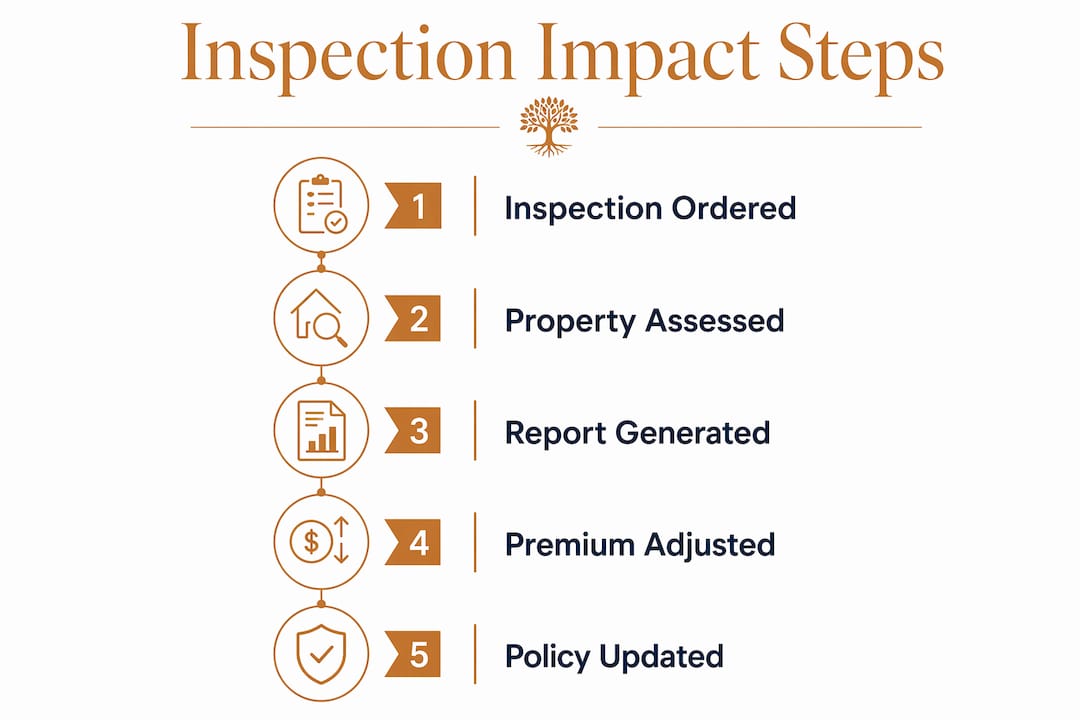
A home insurance inspection can raise your premium, reduce your coverage, or trigger a nonrenewal notice — and it can also lower your rate if you’ve made improvements. Insurers order these inspections to verify the replacement-cost estimate for your home, confirm what’s on your application, and identify risks they haven’t priced yet. The most important thing you can do right now: call your agent, pull together your roof replacement date and any recent permit records, and get ahead of the process before an inspector shows up.
Here’s what an inspection can trigger:
- Premium increase — if the inspector finds an aging roof, outdated electrical, or deferred maintenance
- Required repairs — with a deadline (often around 60 days) and a documentation requirement when complete
- Coverage restriction or exclusion — for specific systems the insurer won’t cover under current conditions
- Nonrenewal or cancellation — for properties with serious uninsurable hazards
- No change at all — 64% of homeowners who were inspected reported no negative impact
The sections below walk through every stage: what inspectors examine, how insurers respond, and exactly how to prepare.
Table of Contents
- What a home insurance inspection actually is (and how it differs from a buyer’s inspection)
- What inspectors look for and what raises a red flag
- How inspection findings affect your premiums, coverage, and policy
- When insurers request inspections and what triggers them
- How to prepare for a home insurance inspection
- What happens after the inspection and how to respond
- How long inspections take, who pays, and what documents help
- What Louisiana homeowners need to know about inspections
- Key Takeaways
- What I tell Louisiana homeowners about inspections
- Talk to The Root Agency before your next inspection
- Useful sources and further reading
What a home insurance inspection actually is (and how it differs from a buyer’s inspection)
Most homeowners confuse the two, and the confusion is understandable. Both involve someone walking through your property and taking notes. But the purpose, scope, and outcome are completely different.
A home insurance inspection is ordered by your insurer to assess risk and verify coverage accuracy. It is an underwriting tool, not a condition-of-sale report. The inspector isn’t looking for every defect — they’re looking for the specific factors that affect how much it would cost to rebuild your home and whether the risk profile matches what you described on your application.
A buyer’s home inspection, by contrast, is ordered by the purchaser to identify construction defects, maintenance issues, and negotiating points before closing. It’s far more exhaustive and focused on protecting the buyer, not pricing a policy.
| Feature | Insurance inspection | Buyer’s home inspection |
|---|---|---|
| Who orders it | Your insurance carrier | The home buyer |
| Purpose | Risk assessment and replacement-cost verification | Condition disclosure and buyer protection |
| Scope | Roof, electrical, plumbing, HVAC, safety hazards | Full structural, mechanical, and cosmetic review |
| Who pays | Insurer (in most cases) | Buyer |
| Typical duration | 15–60 minutes | 2–4 hours |
| Result | Underwriting decision | Inspection report for negotiation |
Common situations that trigger an insurer-ordered inspection include:
- Binding a new homeowners policy
- Renewal underwriting review (often every 3–5 years)
- After a claim, to verify repairs and assess remaining risk
- Following a major remodel or an addition the insurer wasn’t told about
- High-value homes that require a full interior-exterior assessment before binding
What inspectors look for and what raises a red flag
Inspectors work from a defined checklist, but not all items carry equal weight. These are the systems and conditions that most directly affect your premium and insurability.
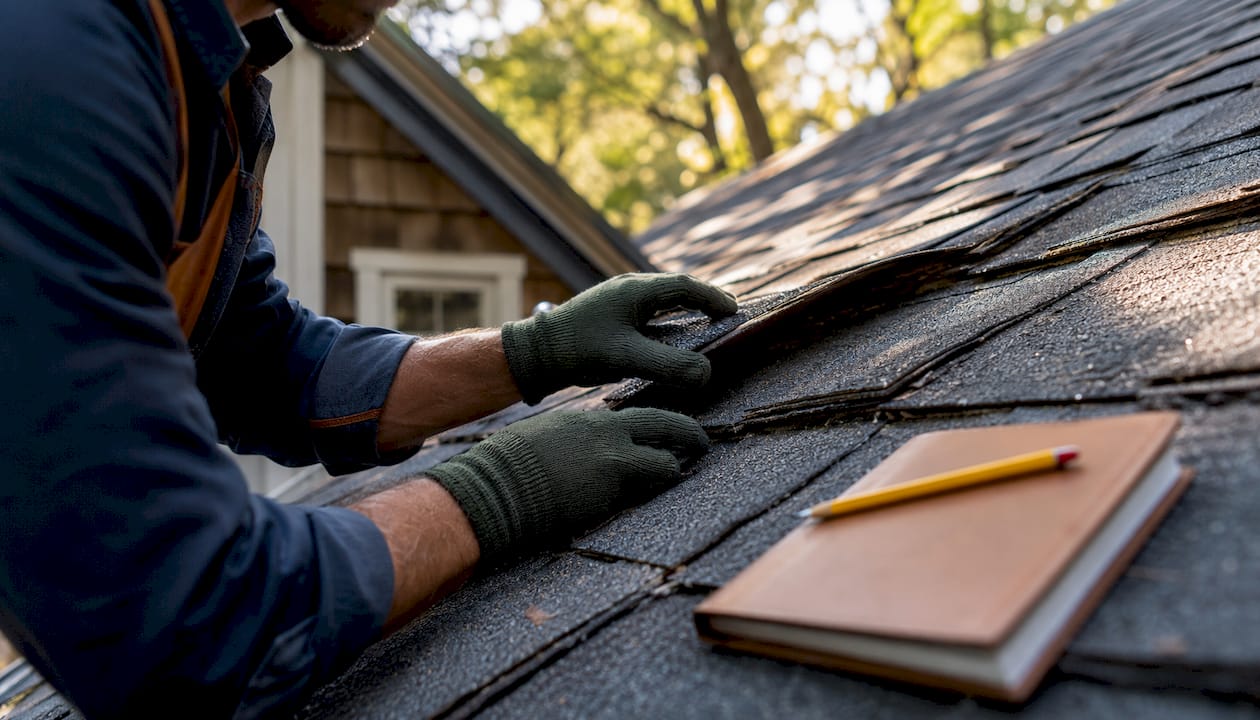
Roof — The single most scrutinized element. Carriers commonly restrict replacement-cost coverage on roofs older than 10–20 years depending on material and regional risk. Missing shingles, visible sagging, or storm damage can trigger an immediate conditional notice.
Electrical — Knob-and-tube wiring, Federal Pacific or Zinsco panels, and aluminum branch wiring are the three findings that most often result in a declination or required upgrade. These aren’t cosmetic issues; they carry documented fire risk that standard admitted carriers won’t absorb without remediation.
Plumbing — Polybutylene pipes, active leaks, and corroded supply lines are common flags. Inspectors check supply and drain lines for damage and verify that systems are functional.
HVAC — Age, working condition, and visible maintenance matter. A system that hasn’t been serviced in years signals deferred maintenance across the board.
Safety and liability hazards:
- Broken or missing stair railings and handrails
- Cracked or uneven walkways (trip hazard)
- Pools without proper fencing
- Trampolines (many carriers require a specific liability endorsement or exclude them)
- Dead or overhanging trees that could fall on the structure
- Missing smoke detectors or carbon monoxide detectors
Property details that change replacement cost:
- Finished basements or attic conversions not listed on the application
- Detached garages, guest houses, or other outbuildings
- New additions built since the policy was written
- High-end finishes (granite, custom millwork) that affect rebuild cost per square foot
Pro Tip: Keep a folder with your roof replacement date, contractor receipts, and any permit records for work done in the last 10 years. Handing that to an inspector or your agent before the report is written can prevent a conditional finding from ever appearing.
How inspection findings affect your premiums, coverage, and policy
The impact of home inspection results on your policy depends entirely on what the inspector finds and how your carrier’s underwriting guidelines classify it. There’s no single outcome — the range runs from a rate decrease to outright nonrenewal.
Common findings and typical insurer responses:
- Aging roof (15+ years, composition shingles) — Carrier may shift from replacement-cost to actual cash value (ACV) settlement, which means a depreciated payout if you file a claim. Some carriers add a higher wind/hail deductible or decline renewal entirely.
- Knob-and-tube or Federal Pacific wiring — Often results in a required upgrade with a 30–90 day deadline, or a coverage exclusion for fire losses tied to that system.
- Pool without fencing — Required repair with documentation deadline; failure to comply typically leads to cancellation.
- Undisclosed finished basement or addition — This is treated as a material misrepresentation and can void coverage. The insurer may also recalculate your replacement cost upward, raising your premium.
- Deferred maintenance (peeling paint, broken gutters, overgrown trees) — Usually a conditional notice with a repair deadline rather than immediate cancellation.
How replacement-cost recalculation works: If an inspector finds square footage, finishes, or structures that weren’t on your original application, your insurer recalculates the dwelling coverage limit. That recalculation almost always raises your premium because you’re now insured for what your home actually costs to rebuild.
Timeline after an inspection: The inspector files a report, typically within a few days of the visit. Your insurer then has a defined review window — usually 30–60 days from policy binding — to issue any action notice. If repairs are required, the deadline is commonly around 60 days, and you’ll need to submit receipts and photos as documentation of completion. Most states require 30 days’ written notice for mid-term cancellation and 30–60 days for nonrenewal.
When insurers request inspections and what triggers them
Inspections aren’t random. They follow predictable patterns, and knowing those patterns lets you prepare.

New policy binding is the most frequent trigger. An exterior inspection is standard for most residential submissions. If the roof age or visible condition raises a concern during the desk review, an interior inspection may follow.
Renewal underwriting reviews happen on a cycle — often every 3–5 years — or when satellite imagery, loss history, or a credit-based insurance score flags a potential change in property condition.
Post-claim inspections are common after a paid loss. The carrier wants to verify that repairs were completed to code and that no latent damage remains. This inspection can directly affect whether your next claim settles at replacement cost or ACV.
Age-based triggers are especially relevant in Louisiana and Mississippi. 4-point inspections are commonly required for older homes, and carriers in storm-exposed markets apply stricter age thresholds for roofs and key systems.
Method variants you may encounter:
- Exterior-only drive-by or walk-around (most common for new policies)
- Scheduled interior appointment (required for older homes and high-value properties)
- Remote aerial or drone imagery, now used by some carriers for roof condition assessment
- Specialized 4-point inspection form covering only roof, electrical, plumbing, and HVAC
How to prepare for a home insurance inspection
Preparation is the single most effective way to protect your coverage and your rate. Most inspections don’t produce negative findings — and the ones that do are often triggered by items a homeowner could have addressed in a weekend.
Step-by-step preparation checklist:
- Pull your documents together. Gather your current policy, roof replacement records, permits for any additions or remodels, contractor receipts, and prior inspection or 4-point reports.
- Photograph recent work. Before-and-after photos of a new roof, updated electrical panel, or repaired plumbing give your agent something concrete to submit to the underwriter.
- Clear access to key systems. Make sure the electrical panel, HVAC unit, water heater, and attic access are unobstructed. An inspector who can’t reach a system will note it.
- Walk the exterior first. Look for peeling paint, damaged siding, missing shingles, cracked walkways, and broken railings. Fix what you can before the inspection date.
- Trim overhanging branches. Dead limbs and branches touching the roofline are a common required-repair item. Addressing them beforehand removes the finding entirely.
- Check pool fencing and gate latches. If you have a pool, confirm the fence is intact and the self-latching gate works. This is one of the most frequently cited liability hazards.
- Test smoke and CO detectors. Replace batteries, confirm they’re functional, and note the locations. Some carriers require a minimum number per floor.
- Gather security and alarm documentation. If you have a monitored alarm system, have the monitoring certificate ready — it may qualify you for a discount.
What not to do:
- Don’t guess at system ages if you’re unsure. “I don’t know” is a better answer than a wrong date that contradicts the inspector’s findings.
- Don’t admit to undisclosed remodeling without documentation. If work was done without permits, talk to your agent before the inspection, not during it.
- Don’t refuse entry for a scheduled interior inspection. Refusing an insurer-ordered inspection often produces a worse outcome than cooperating — carriers may assume the worst, restrict coverage, or nonrenew the policy.
Pro Tip: Contact your agent before the inspection, not after. A good agent can flag likely concerns, help you frame documentation correctly, and sometimes negotiate the scope of what gets reviewed.
What happens after the inspection and how to respond
Most inspections end without drama. But when they don’t, your response in the first few days determines whether you keep your coverage, your rate, and your claims-settlement terms.
Common post-inspection outcomes and what to do:
- No change — Your policy continues on current terms. No action required, but keep your documentation folder updated for the next renewal cycle.
- Premium adjustment — Up or down. If it went up, ask your agent for the specific finding that drove the change. If it went down because of a recent improvement, confirm the new rate in writing.
- Conditional offer with required repairs — You have a deadline (commonly around 60 days). Get contractor quotes immediately, complete the work, and submit receipts and photos to your insurer before the deadline. Request written confirmation that the condition has been cleared.
- Coverage exclusion or restriction — The insurer has added an exclusion (for example, excluding fire losses tied to a specific electrical system) or shifted your roof settlement from replacement cost to ACV. Understand exactly what is and isn’t covered before your next storm season.
- Nonrenewal notice — You have time. Most states require 30–60 days’ advance written notice. Use that window to complete the flagged repairs, request a re-inspection, or work with your agent to find a carrier whose guidelines fit your property.
How to appeal an inspection finding:
- Request a copy of the inspection report and review every finding.
- Gather documentation that contradicts or mitigates the finding (a recent roof permit, a licensed electrician’s letter, contractor photos).
- Submit the documentation to your insurer through your agent, not directly — agents can frame the submission in underwriting language and follow up more effectively.
- If the finding stands and you believe it’s inaccurate, ask for a re-inspection with the documentation present.
Treating the inspection report as a roadmap for protection rather than a verdict is the right mindset. Every flagged item is something that, if left unaddressed, could turn a future claim into an underinsured loss.
How long inspections take, who pays, and what documents help
Duration by inspection type:
| Inspection type | Typical duration | Who pays |
|---|---|---|
| Exterior-only | 15–30 minutes | Insurer |
| 4-point inspection | 30–60 minutes | Insurer (or homeowner if self-ordered) |
| Full interior-exterior | 1–2 hours | Insurer |
| Buyer’s home inspection | 2–4 hours | Buyer |
Cost when the homeowner pays: A 4-point inspection typically runs $50–$175 when ordered independently. A full home inspection runs $300–$500 depending on home size and location. Insurer-ordered inspections are covered by the carrier in most cases.
Documents that shorten the underwriting decision:
- Roof replacement date and contractor receipt (or permit)
- Electrical panel upgrade documentation
- Plumbing replacement records (especially if polybutylene was removed)
- HVAC service records and installation date
- Prior 4-point inspection report (if less than 3–5 years old)
- Roof warranty, if available
- Photos of completed repairs with dates
Proactive documentation makes insurers more willing to keep coverage and price it accurately. A carrier that can see exactly what was done and when doesn’t have to assume the worst about your property.
What Louisiana homeowners need to know about inspections
Louisiana sits in the bullseye for hurricanes, and carriers know it. That reality shapes how inspections work here in ways that homeowners in lower-risk states don’t experience.
Why Louisiana homeowners see more inspections:
- Storm exposure and roof age sensitivity mean carriers apply stricter thresholds than the national average.
- 4-point inspections are especially common in storm-exposed markets like Louisiana and Mississippi, where carriers target roof and key-system conditions specifically.
- After major storm events, carriers conduct waves of renewal inspections using aerial imagery to assess roof damage across large areas.
Local pro tips for Louisiana homeowners:
- Keep your roof replacement documents in a dedicated folder, physical and digital. In Louisiana, roof age is one of the strongest predictors of underwriting outcome. A clear replacement date with a permit can be the difference between replacement-cost coverage and an ACV settlement.
- Confirm wind-mitigation features with permits. Hip roofs, hurricane straps, and impact-resistant shingles can qualify you for credits — but only if you can document them.
- Trim trees before hurricane season, not after an inspection flags them. Overhanging limbs are a common required-repair item and a real liability in a storm.
- If you’ve made improvements since your last policy review, tell your agent before the next renewal. Undisclosed additions discovered during an inspection can be treated as material misrepresentation.
The Root Agency’s catastrophe response team deploys directly to disaster zones after major storms — one of the few agencies in Louisiana with a mobile unit that shows up in person. That matters when you need to document damage quickly, before a post-claim inspection locks in the findings.
Pro Tip: Schedule a policy review with your agent every year before hurricane season. Bring your roof records, any permit history, and a list of improvements made since your last review. Thirty minutes of preparation can protect years of coverage.
Key Takeaways
A home insurance inspection can change your premium, restrict your coverage, or trigger a nonrenewal — but proactive documentation and prompt repairs give you the best chance of a favorable outcome.
| Point | Details |
|---|---|
| Inspections affect premiums and coverage | Findings can raise or lower your rate, add exclusions, or trigger a nonrenewal notice. |
| Roof age is the highest-risk item | Carriers commonly restrict replacement-cost coverage on roofs older than 10–20 years; keep your replacement date documented. |
| Documentation shortens decisions | Permits, receipts, and photos of completed work help underwriters price accurately rather than assume the worst. |
| Respond to findings quickly | Required repairs typically carry a deadline of around 60 days; submit documentation before the deadline and confirm clearance in writing. |
| The Root Agency supports you through every stage | From pre-inspection policy reviews to post-storm re-inspections, The Root Agency’s local team helps Louisiana homeowners protect their coverage. |
What I tell Louisiana homeowners about inspections
Most homeowners treat an insurance inspection like a pop quiz — something that happens to them, not something they can prepare for. After more than 20 years working with Louisiana families, I’d push back on that framing pretty firmly.
The homeowners who come through inspections without rate increases or coverage restrictions are almost always the ones who kept their records, made repairs promptly, and called us before the inspector showed up. The ones who get surprised are usually the ones who let a roof age past the carrier’s threshold without telling anyone, or who finished a basement and never updated their policy. The inspection didn’t create the problem. It just made it visible.
What I recommend to every client: treat your home’s documentation the same way you’d treat your car’s service records. Keep a single folder with your roof replacement date, permits, contractor receipts, and any prior inspection reports. Update it every time you make a significant improvement. That folder has saved clients from nonrenewals, helped us negotiate repair deadlines, and in a few cases, actually lowered premiums when we could prove a new roof or updated electrical panel.
The Root Agency holds 356 five-star reviews and was named to The Advocate’s 2025 Best of Baton Rouge. We’ve built that reputation by showing up — in person, after storms, when other carriers and agents weren’t around. An inspection result is not the end of the conversation. It’s the beginning of one.
Talk to The Root Agency before your next inspection

An inspection notice in the mail doesn’t have to mean a rate increase or a coverage gap. What it means is that you need someone in your corner who knows how to read an underwriting report, frame your documentation correctly, and negotiate on your behalf when the findings are borderline.
The Root Agency offers homeowners insurance policy reviews for Louisiana and Mississippi homeowners — before an inspection, after one, or any time your coverage situation changes. We help you gather the right documents, understand what your insurer is actually looking for, and respond to findings in a way that protects your replacement-cost coverage. If you’re in a flood-prone area, we can also review your flood coverage alongside your homeowners policy, since inspection findings sometimes surface drainage or elevation issues that affect both.
Call us at (225) 926-0160 or visit steverootagency.com to schedule a policy review. We’re at 8676 Goodwood Blvd Ste 303, Baton Rouge, LA 70806, and we serve all of Louisiana and Mississippi.
Useful sources and further reading
These are the most authoritative sources used to build this article. Each one is worth bookmarking if you want to go deeper on a specific topic.
- Why Does My Insurance Company Want to Inspect My House? — LegalClarity — Covers the insurer’s legal basis for inspections, material misrepresentation risk, and what happens if you refuse entry. Useful if you’ve received an inspection notice and want to understand your rights and obligations.
- What to Expect from a Home Insurance Inspection — NerdWallet — Practical overview of the inspection process, what inspectors examine, and how documentation affects outcomes. Good starting point for first-time homeowners.
- Homeowners Insurance Inspection: What Do They Check? — Insurance.com — Covers the range of possible outcomes and includes survey data on how often inspections result in negative impacts. Useful for setting realistic expectations.
- When and Why You Might Need a 4-Point Inspection — Redfin — Explains the 4-point inspection format, typical cost, duration, and when carriers require it. Especially relevant for Louisiana and Mississippi homeowners with older homes.
- What Do Insurance Home Inspectors Look For — Plymouth Rock — Detailed breakdown of interior and exterior inspection items with a clear checklist format.
- Home Insurance Baton Rouge LA — The Root Agency — For Louisiana and Mississippi homeowners who want a policy review, help responding to inspection findings, or a quote on replacement-cost coverage.
- Homeowners Insurance — Roman Insurance — Additional resource explaining how inspection findings connect to premium calculations and coverage decisions.