
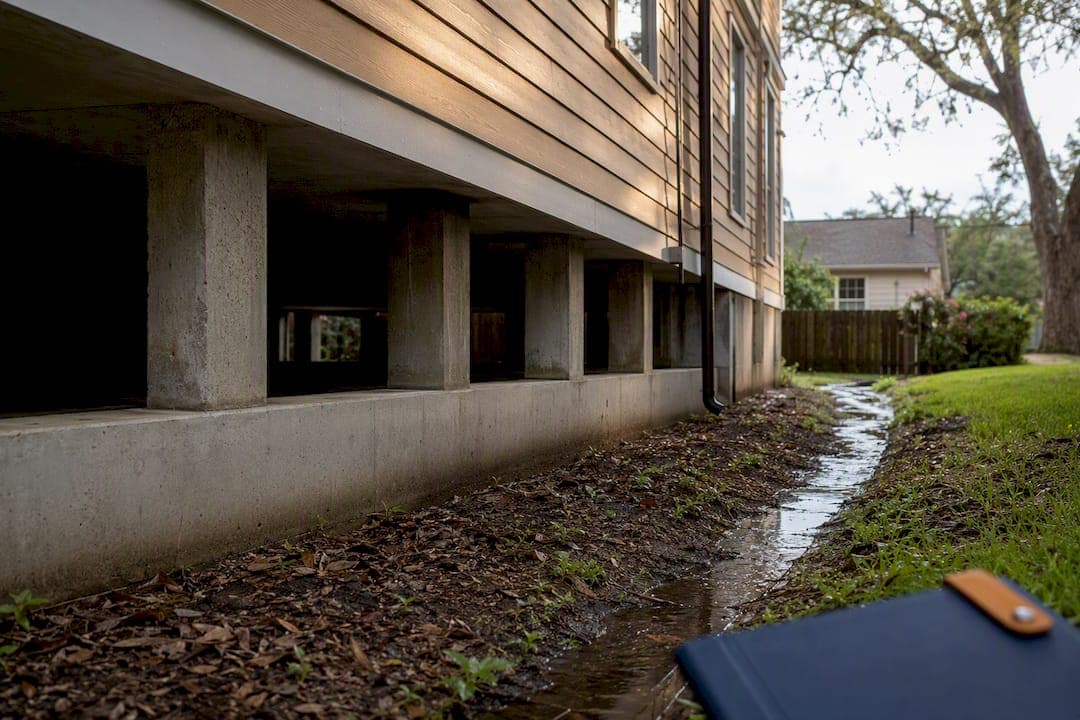
Louisiana Flood Insurance Costs: $826–$1,470. Local Agents Matter
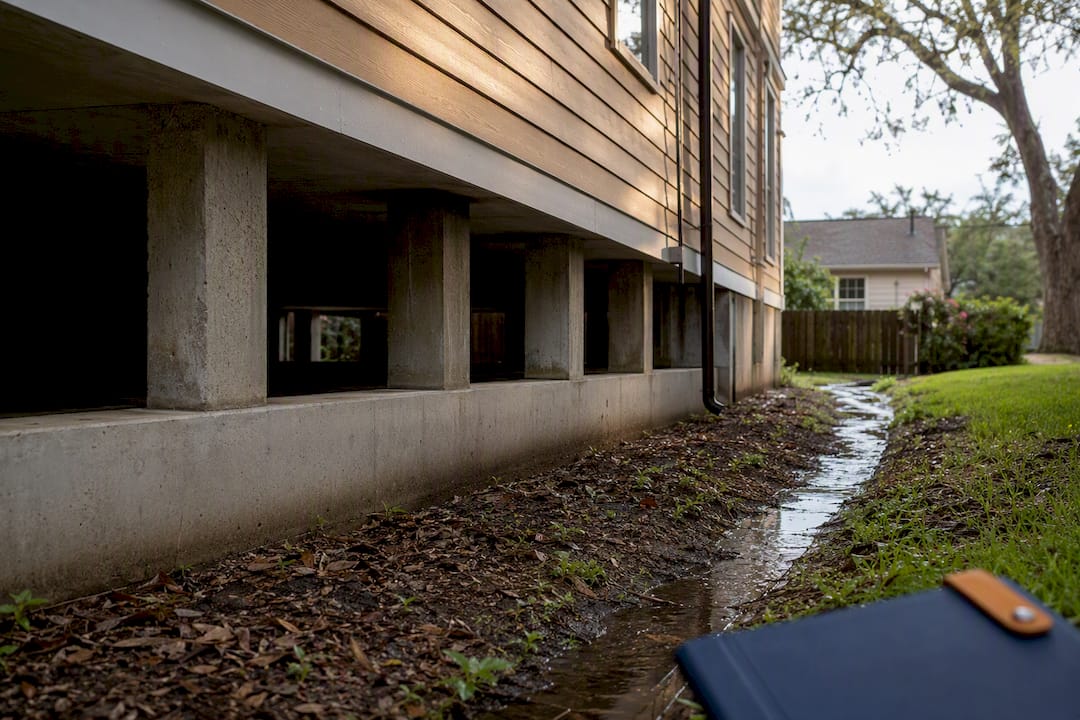
Most Louisiana homeowners pay between $826 and $1,470 a year for flood insurance, with statewide averages hovering around $1,022 depending on flood zone and elevation. The right move isn’t chasing the lowest number online. It’s calling a licensed local agent who can pull your property’s actual flood zone, elevation data, and replacement cost, then quote you a policy that matches what your home would really cost to rebuild.
TL;DR:
- Flood premiums in Louisiana vary widely based on location, elevation, foundation, and flood zone, with coastal parishes paying significantly more.
- FEMA’s Risk Rating 2.0 evaluates each property individually, leading to differences in premiums even within the same flood zone.
- Private flood insurance can offer higher coverage limits and loss-of-use coverage but may not be accepted by all lenders.
- Elevating key home components above flood levels and participating in community floodplain management can meaningfully lower premiums.
- Accurate quotes require precise address information, an elevation certificate available, and understanding your property’s specific risk factors.
Table of Contents
- How Much Is Flood Insurance in Louisiana? State Averages and Parish Examples
- What Actually Determines Your Flood Insurance Premium?
- NFIP vs. Private Flood Insurance: Which One Fits Your Property?
- Why Did My Flood Insurance Go Up? Risk Rating 2.0 Explained
- How to Get an Accurate Flood Insurance Quote
- Real Ways to Lower Your Flood Insurance Premium
- Choosing the Right Coverage Limits and Deductible
- Questions to Ask Your Louisiana Flood Insurance Agent
- Why Local Expertise Still Beats the Lowest Quote
- Get a Flood Insurance Quote Built Around Your Actual Property
- Where to Verify Your Flood Risk and Rates
- Sources
How Much Is Flood Insurance in Louisiana? State Averages and Parish Examples
An industry tracker put the average NFIP premium in Louisiana at $1,022 in June 2026, but that number smooths over enormous local variation. Some parishes pay far less. Others, especially along the coast, pay considerably more.
FEMA’s own policy data shows a similarly wide spread. Roughly a third of single-family NFIP policies nationally land between $1,000 and $2,000 annually, but the range on either side of that band is where the real story lives.
By the numbers: Cameron Parish, sitting directly on the Gulf, ranks among the highest-cost parishes in the state for flood coverage. Inland parishes with higher elevation and lower storm surge exposure often pay a fraction of that.
Why such a gap? A few forces are at work:
- Coastal exposure to storm surge drives up risk scores independent of a home’s individual elevation.
- Distance to a mapped flood source (a river, bayou, or the Gulf itself) factors directly into Risk Rating 2.0’s pricing formula.
- Local elevation data varies block to block, not just parish to parish.
- Older homes on slab foundations in low-lying areas tend to sit at the higher end of any parish’s range.
A statewide average is a useful starting point, but it tells you almost nothing about what you’ll actually pay. Your address does that. This is one reason a flood insurance cost breakdown specific to your property matters more than any statewide figure.
What Actually Determines Your Flood Insurance Premium?
FEMA’s Risk Rating 2.0 methodology prices every property on its own individual risk profile rather than lumping homes into broad flood zone categories the way the old system did. That shift means two houses on the same street can carry noticeably different premiums.
The variables that move your number the most:
- Flood zone designation on FEMA’s flood insurance rate maps, though it’s now one input among several rather than the whole story.
- First-floor elevation relative to the base flood elevation, sometimes called freeboard.
- Distance to the nearest flooding source, whether that’s storm surge, a river, or heavy rainfall pooling.
- Foundation type, since slab, pier, and crawlspace foundations flood differently.
- Replacement cost value (RCV), which sets how much coverage you need and directly affects premium.
- Deductible choice, where a higher deductible lowers your annual premium but raises your out-of-pocket cost after a claim.
Storm surge risk and riverine flood risk are rated differently under Risk Rating 2.0, which is part of why two Louisiana homes just a few miles apart, one near the coast and one near a bayou, can see very different quotes.
Pro Tip: Don’t assume your flood zone letter is your destiny. Two homes in the same zone can carry different premiums once elevation, foundation type, and RCV get factored in. Ask your agent to walk through each variable line by line, not just the zone.
NFIP vs. Private Flood Insurance: Which One Fits Your Property?
The National Flood Insurance Program caps residential building coverage at $250,000 and contents coverage at $100,000. For a modest Louisiana home, that’s often enough. For a larger or custom-built property, it frequently isn’t.
The Louisiana Department of Insurance’s flood insurance guidance lays out the tradeoffs clearly. NFIP policies are backed by the federal government, standardized in coverage, and accepted by every mortgage lender in the state. Private flood policies, often written through surplus lines carriers, can offer:
- Higher coverage limits for homes valued well above the NFIP caps.
- Loss-of-use coverage, which pays for temporary housing during repairs, something standard NFIP policies don’t include.
- Replacement cost settlement on contents in some private policies, rather than actual cash value.
The catch is lender acceptance. Not every mortgage servicer accepts private flood policies as satisfying a federal flood insurance requirement, so confirm that in writing before you switch. For most primary residences near the NFIP coverage caps, NFIP remains the simpler, more universally accepted choice. For higher-value homes or investment properties, a private policy from a licensed agent who understands Louisiana’s requirements may close real coverage gaps.
Why Did My Flood Insurance Go Up? Risk Rating 2.0 Explained
Risk Rating 2.0 replaced the old flood-zone-only pricing model with one that scores each property individually, factoring in elevation, foundation, distance to water, and rebuild cost. Homes that were historically underpriced under the old system have seen increases. Homes that were overpriced have seen decreases.
FEMA built in a glidepath to soften the shock: no NFIP policy’s annual premium can increase by more than 18% in a single year, even when the new full-risk rate is higher. That cap means some Louisiana homeowners are still climbing toward their true risk-based premium years after the rollout.
By the numbers: Communities that participate in FEMA’s Community Rating System can see average discounts of roughly 15%, worth around $162 per policy, simply because the parish or municipality has invested in floodplain management.
- If your community raised its CRS score through better drainage management or floodplain ordinances, your premium likely reflects a discount already.
- If your home sits below base flood elevation, expect to still be climbing the glidepath toward full-risk pricing.
- If you’ve never checked your community’s CRS class, ask your agent. It’s worth knowing.
Understanding how Risk Rating 2.0 actually prices your home helps explain a renewal bill that jumped without warning.
How to Get an Accurate Flood Insurance Quote
Getting a number that actually reflects your property, instead of a rough estimate, comes down to preparation:
- Have your exact address and legal description ready. Risk Rating 2.0 prices at the address level, not the neighborhood level.
- Pull a replacement cost estimate for your home, separate from its market value, since that’s what building coverage is based on.
- Gather your Elevation Certificate if one exists. It’s no longer required to get an NFIP quote, but a favorable certificate can override default mapping assumptions and lower your premium.
- Ask about the 30-day waiting period. NFIP coverage generally doesn’t take effect until 30 days after purchase, except when tied to a mortgage closing or a recent flood map change, which can waive that wait.
- Confirm your flood zone using an official flood insurance rate map lookup before your call, so you can ask informed questions.
Real Ways to Lower Your Flood Insurance Premium
Raising a home above base flood elevation, or relocating utilities and mechanical equipment above that line, can meaningfully cut your annual cost for the life of the policy.
Smaller steps help too, even if the savings are more modest:
- Elevating HVAC, water heaters, and electrical panels above base flood elevation.
- Installing flood vents in enclosed areas below the living space.
- Filing for Increased Cost of Compliance (ICC) coverage, which pays up to $30,000 toward mitigation work after a qualifying flood loss.
- Checking whether your parish participates in CRS, since community-level floodplain management earns policyholders an automatic discount.
Pro Tip: Before spending money on mitigation, ask your agent to model the premium impact first. Not every improvement moves the needle the same amount, and a licensed agent can tell you which upgrade actually pays for itself fastest.
Choosing the Right Coverage Limits and Deductible
Your building coverage limit should match your home’s replacement cost, not its market value. A home that would cost $280,000 to rebuild but is only insured to the NFIP’s $250,000 cap leaves a real gap if disaster strikes.
A higher deductible lowers your annual premium, but it also raises what you pay out of pocket before coverage kicks in. For a family without a large cash cushion, a lower deductible often makes more financial sense even at a higher premium.
Watch for these common gaps:
- Basements and below-grade areas have limited coverage under standard NFIP policies, regardless of what’s stored there.
- Loss of use isn’t covered by standard NFIP policies at all, meaning a hotel stay during repairs comes out of your pocket unless a private policy adds it.
- Detached structures like a shed or detached garage sometimes need separate coverage, not automatic inclusion.
Questions to Ask Your Louisiana Flood Insurance Agent
Before you sign anything, run through this checklist with whoever you’re working with:
- Will my lender accept a private flood policy, or does it require NFIP specifically?
- Does this quote include Increased Cost of Compliance coverage, and what does it pay for?
- What’s the waiting period on this policy, and does my situation qualify for an exception?
- Would submitting an Elevation Certificate lower my premium?
- What mitigation steps would meaningfully reduce my rate, and by roughly how much?
- What happens the day a flood actually hits my house?
That last question separates agents who sell policies from agents who show up. If an agent can’t explain what happens after the water recedes, that’s a red flag worth taking seriously.
Why Local Expertise Still Beats the Lowest Quote
Twenty years in this business has taught me that the homeowners who fare best after a flood aren’t the ones who found the cheapest premium. They’re the ones who had an agent who understood their exact flood zone, pushed for the right coverage limits, and picked up the phone the week the water rose. Louisiana sits in the bullseye for hurricanes and heavy rain events, and that reality doesn’t change based on what a policy costs. Schedule a policy review before storm season, not after.
— Steve Root
Get a Flood Insurance Quote Built Around Your Actual Property
The Root Agency is the alternative to guessing at your flood risk online. We pull your property’s actual flood zone, elevation data, and rebuild cost, then walk you through NFIP and private options side by side so you know exactly what you’re buying and why.
Steve Root has spent more than 20 years writing flood policies for Louisiana families, backed by 356 five-star Google reviews and a mobile catastrophe response unit that deploys directly to disaster zones after a storm, not weeks later. The agency offers bilingual service in English and Spanish and 24/7 claims support, so you’re never navigating a claim alone. If you’re ready for a property-specific quote or want a second opinion on your current coverage, visit The Root Agency’s flood insurance page to request a free policy review, or ask about bundling with home insurance for broader protection under one trusted agent.
Where to Verify Your Flood Risk and Rates
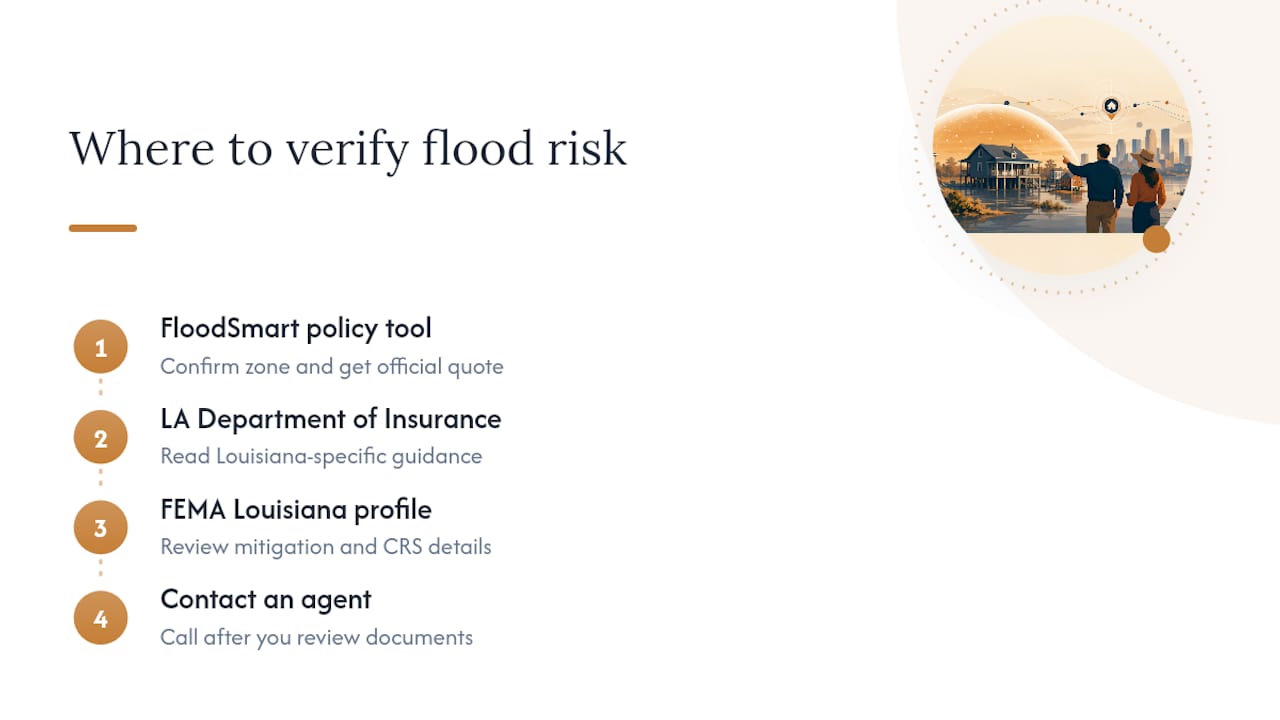
Confirm your flood zone and pull an official quote through FloodSmart’s policy tool. Read Louisiana-specific guidance from the Louisiana Department of Insurance, and review FEMA’s Louisiana state profile for mitigation and CRS details before you call an agent.
Sources
- Cost of Flood Insurance for Single-Family Homes under NFIP’s Pricing Approach
- Frequently Asked Questions about Flood Insurance (Louisiana Department of Insurance)
- Louisiana Flood Insurance Costs: $1,022 Average Premium (June 2026) — Out of the Storm News
- NFIP Flood Application and Sales Tool