
Condo Special Assessment Coverage: What HO-6 Pays

Condo special assessment coverage is called loss assessment coverage, and it sits inside your HO-6 condo policy. It helps pay your share when the association bills every owner for a covered loss that the master policy does not fully pay. The default limit is small, the exclusions are real, and in Louisiana a single storm can produce a bill much larger than the default. We are Steve Root and The Root Agency, and below we explain how this coverage works, what to check on your policy, and how to claim.
TL;DR
- Loss assessment coverage reimburses your share of an association assessment after a covered loss, such as wind damage to roofs that exceeds the master policy limit.
- The standard limit is low. One analysis of the standard HO-6 form puts it at $2,000, and higher limits are added by endorsement. Ask for a limit that fits your building.
- It follows your policy’s covered perils. Flood, earthquake and assessments from a government body are generally not covered.
- Maintenance shortfalls and poor budgeting are not covered. Storm, fire and liability losses are the typical triggers.
- Read your association’s master policy deductible before you pick a limit. That number tells you how big your share could get.
Table of Contents
- What a special assessment is, and where loss assessment coverage fits
- When the bill arrives: three ways it happens
- What loss assessment coverage usually does not pay
- How much loss assessment coverage to carry
- Timing: the policy period matters
- Where your HO-6 ends and the master policy begins
- How to file a loss assessment claim
- Our perspective
- Work with a Baton Rouge condo insurance agent
- Questions condo owners ask
- Sources
What a special assessment is, and where loss assessment coverage fits
A condo association pays for shared property out of monthly dues, reserves and its master insurance policy. When a bill is larger than those sources, the board can levy a special assessment: a one-time or short-term charge on each unit owner, on top of regular dues.
Some assessments are about the building aging, like a roof or elevator that reserves did not cover. Others come after a loss: a storm, a fire, or a lawsuit after someone is hurt in a shared space. Loss assessment coverage is built for the second kind.
The Washington Office of the Insurance Commissioner states that loss assessment coverage is included in a standard condo (HO-6) policy and may help you pay special assessments for losses the community sustained. The word to watch is “included.” It is there, but the amount of it is what we review with every condo owner.

When the bill arrives: three ways it happens
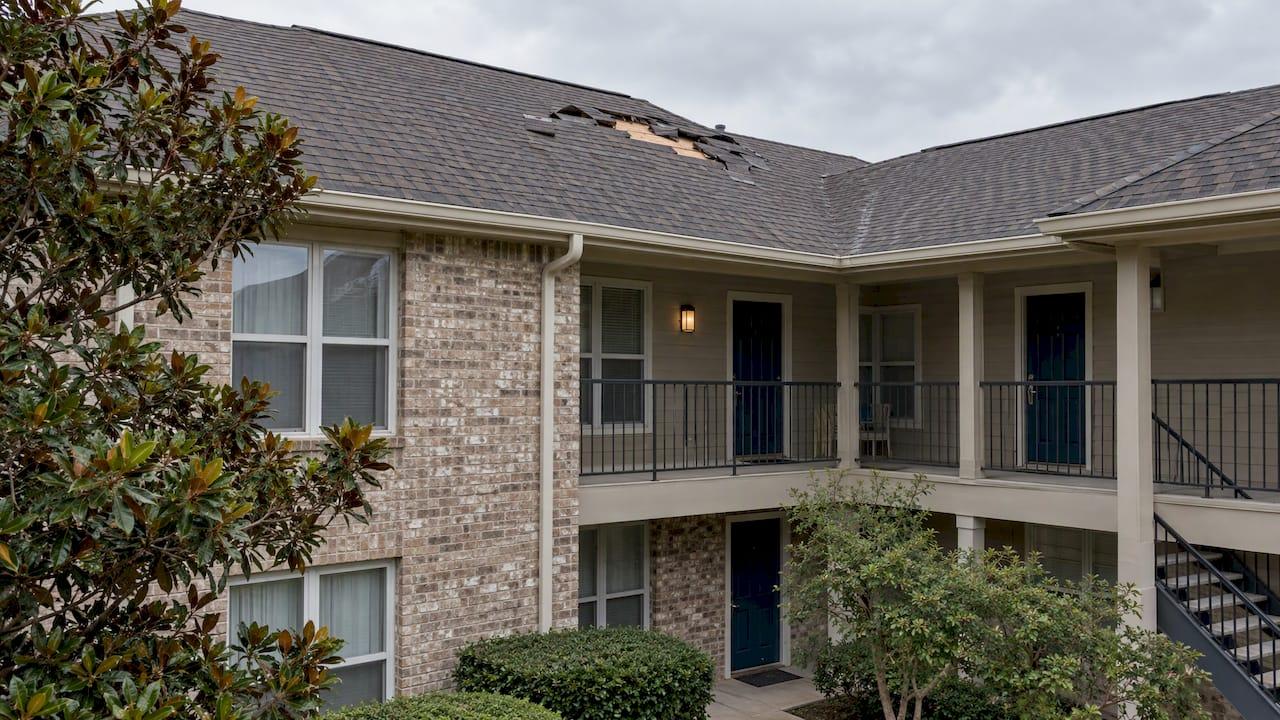
1. The master policy limit runs out. The Washington insurance commissioner gives the example of wind damage to multiple roofs that exceeds the master policy limit. The association owes the remainder, and the owners split it. If you live on the Gulf Coast, you can see how easily that happens after a named storm.
2. The master policy deductible gets passed down. Master policies carry their own deductibles. Progressive gives an example where master-policy deductibles may run up to $25,000 or higher, and says loss assessment coverage may help with the assessment that passes that deductible to owners. Many associations carry separate, larger deductibles for wind or named storms, so read the master policy itself.
3. A liability claim exceeds the association’s coverage. Allstate says loss assessment coverage may respond to assessments tied to damage to common areas and to liability claims from injuries in shared spaces. Nationwide adds that claims could include vandalism to the building exterior and shared-interior damage from certain events.

In each case, your share is set by the association’s governing documents. Your HO-6 loss assessment coverage reimburses that share, up to your limit, once the conditions are met.
What loss assessment coverage usually does not pay
The exclusions are where owners get surprised, so we go through them plainly.
Perils your HO-6 does not cover. PropertyCasualty360 explains that loss assessment coverage is tied to named perils and to what the HO-6 would cover if you owned the damaged property. If the underlying cause is excluded, the assessment generally is too.
Earthquake and similar events. PropertyCasualty360’s analysis of the HO-6 form says the loss assessment language does not cover assessments tied to earthquake or volcanic eruption tremors.
Assessments charged by a government body. The same analysis lists assessments by any governmental body as excluded, and the 2021 PropertyCasualty360 piece says the same. Policy forms differ, so the form you hold decides the details.
Maintenance and wear and tear. Insure.com says this coverage generally responds to covered perils like fire, wind or liability lawsuits, and is not usually for maintenance, wear and tear or mismanagement. A special assessment to replace a roof that simply reached the end of its life is a budgeting question, not an insurance claim.
Amounts over your limit. You are responsible for anything above the limit on your policy. That is the reason we spend time on limits below.
Flood. Standard condo policies do not cover flood, and loss assessment follows those exclusions. In Louisiana that matters. A condo association can carry flood coverage on the building, and you can carry your own flood policy. Our flood insurance page explains how we help Louisiana owners sort that out, and our guide to how the anti-concurrent causation clause works shows why the cause of a storm loss can change what is paid.
How much loss assessment coverage to carry
The default is not a plan. Here is what the sources show about the baseline:
| Source | What it says about the baseline limit |
|---|---|
| PropertyCasualty360 on the HO 00 06 form | Additional coverage up to $1,000, with higher limits available by the HO 04 35 endorsement |
| PropertyCasualty360 contract analysis (2022 edition) | Up to $2,000 for a unit owner’s share of an assessment in the policy period |
| Florida Statutes § 627.714 | At least $2,000 of property loss assessment coverage for residential unit-owner policies in Florida, with a deductible of no more than $250 per direct property loss |
Those figures differ because the form edition, the carrier and the state all matter. Louisiana owners should not assume the Florida minimum applies here. It is a Florida statute.
Here is how we think about the right number.
- Find the master policy deductible. Ask the board or property manager for the declarations page. Note the all-peril deductible and the wind or named storm deductible. Wind deductibles are often a percentage of the insured value, which can be a large dollar figure on a big building.
- Count the units. Your share is usually proportional, so a 12-unit building and a 200-unit complex behave differently.
- Picture the storm scenario. If the roof damage exceeded the building’s coverage, what would the shortfall be per unit? Pick a limit that covers a realistic version of that figure, not the default.
- Check the deductible on the endorsement. TheHOAGuide notes that loss assessment often carries its own small deductible, commonly $250 to $1,000, separate from the master policy deductible.
- Ask how the limit is structured. Some policies use a single limit and others split it into categories, such as one for property and one for the master deductible, so confirm which yours does.
Higher loss assessment limits are typically a small part of a condo premium compared with the exposure they cover. For an owner who has lived through a storm, that trade is easy to see.
Timing: the policy period matters
Loss assessment is tied to dates. PropertyCasualty360 explains that coverage applies when the date of loss occurs during the policy period, and the loss date and assessment date can differ. Florida’s statute adds a rule of its own: the insurer’s maximum payment is the limit in effect one day before the occurrence.
The practical lesson: raise your limit before hurricane season, not after a storm is named. Insurers commonly restrict changes when a storm is approaching. Make the call in the spring and leave it.
Where your HO-6 ends and the master policy begins
Filing a condo claim usually involves two policies, depending on where the damage is. The Washington insurance commissioner explains that the claim may involve both your HO-6 and the association’s master policy, and that you may be responsible for the master policy deductible for damage to your unit, while your own HO-6 has its own deductible.
What counts as your responsibility comes from the association’s bylaws. NJM notes that condo insurance generally covers the parts of the condo you are responsible for as set by the HOA bylaws. We recommend reading the declaration and bylaws once, with your HO-6 beside them. Our Louisiana HO-6 page covers the pieces that sit inside your walls. Two related coverages complete the picture: personal property coverage for your belongings, and loss of use coverage for living expenses when your unit is unlivable.
How to file a loss assessment claim
- Tell the board or property manager right away. The Washington claim guide directs unit owners to contact the HOA, board or property manager immediately and to file with their own insurer for belongings, additional living expenses and anything the master policy does not cover.
- Call your agent before you pay. Give us the assessment notice, the date of the loss and the cause. We tell you whether it fits your policy.
- Gather the paperwork. You will want the written assessment notice, the board’s explanation of the loss, the master policy claim details and your payment record. Keep a copy of every document in one folder.
- Check the notice itself. A clear assessment notice states the amount, the reason and the due date. A HOA assessment reminder letter shows what these notices typically contain, which helps you spot anything missing before you submit.
- Submit and follow up. Your insurer will review the loss date, the cause of loss and your limit. Keep the board informed of the status, since assessments often have due dates.
The association’s own timeline may run faster than an insurance claim. If a payment is due before reimbursement, ask your agent how to handle it, so you do not fall behind with the association.
Our perspective
We have sat across the table from condo owners after storms, and the same thing happens every time. The owner paid their HO-6 premium for years, never thought about the loss assessment line, and then a notice arrived with a number on it.
Louisiana sits in the bullseye for hurricanes, and condo buildings share one roof, one set of walls and one master policy. When the master policy falls short, you are not dealing with your claim. You are dealing with everyone’s. That is why we do not treat the loss assessment limit as a box to tick.
The Root Agency is an Allstate exclusive agency, and I have run it personally for more than 20 years, on top of a 40-year family legacy in Louisiana insurance. We read the master policy with you. We ask what the wind deductible is, how many units share it, and what a bad season would cost per owner. Then we set a limit that fits that building, not a default.
Our 356 Google reviews at 4.9 stars come from people who called and got a person. When a storm hits, our mobile catastrophe response unit brings RVs to the affected area, and claims support runs 24/7. A few extra dollars a month for the right limit buys peace of mind, and an agent who picks up the phone when the notice shows up.
Steve Root
Work with a Baton Rouge condo insurance agent
We write HO-6 coverage for condo owners across Louisiana and Mississippi, and we review your loss assessment limit alongside your personal property and loss of use coverage. If you own in Baton Rouge, start with our condo insurance page for Baton Rouge, or see everything we offer on our products page.

Call us at (225) 926-0160 or visit us at 8676 Goodwood Blvd Ste 303, Baton Rouge, LA 70806. We offer bilingual service in English and Spanish, and we will go through your master policy with you.
Questions condo owners ask
Does an HO-6 policy cover special assessments?
Partly. A standard HO-6 includes loss assessment coverage, which can help pay your share of an assessment for a covered loss to the community, according to the Washington insurance commissioner. It does not typically pay assessments for routine maintenance or an underfunded reserve. The amount is limited, so we review it with you.
Is loss assessment coverage optional?
It depends on the policy form and the state. Nationwide describes it as optional coverage, while other sources describe a base amount inside the HO-6 with higher limits by endorsement. Ask your agent to show you the line on your declarations page, so you know exactly which applies to you.
Does loss assessment cover a roof replacement assessment?
Only if a covered loss damaged the roof, such as wind damage. Replacing a roof because of age or wear is a maintenance cost, and Insure.com notes these are not usually covered. Your policy’s covered perils and your limit determine the payment.
Does loss assessment cover flood?
Generally no. Standard policies exclude flood and loss assessment follows those exclusions. Ask about separate flood coverage for your unit and find out what flood coverage your association carries on the building.
How is a special assessment different from loss assessment?
A special assessment is the charge the association levies on owners. Loss assessment is the insurance coverage that may reimburse you for it when the charge comes from a covered loss. The charge exists whether or not you have the coverage.
Sources
- Learn how condo insurance works, Washington Office of the Insurance Commissioner
- Filing a condo unit insurance claim, Washington Office of the Insurance Commissioner
- Understanding Loss Assessment Coverage, PropertyCasualty360
- Homeowners 6 Unit-Owner’s Form Contract Analysis, PropertyCasualty360
- What Is Loss Assessment Coverage for Condos?, Allstate
- What Is Loss Assessment Coverage?, Progressive
- What Is Loss Assessment Coverage?, Nationwide
- Condo special assessment insurance, Insure.com
- Florida Statutes § 627.714
- What Is Condo (HO-6) Insurance?, NJM
- Loss Assessment Coverage Explained, The HOA Guide
- HOA Assessment Reminder Letter Template