
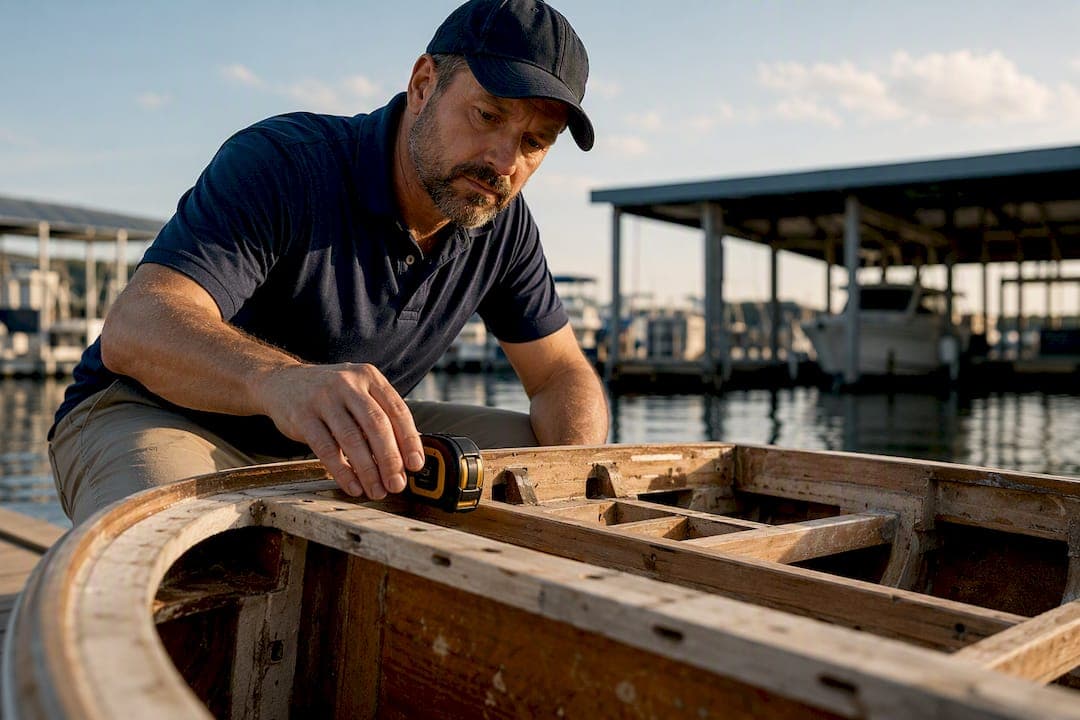
Agent Checklist: Agreed Value Boat Insurance in Louisiana
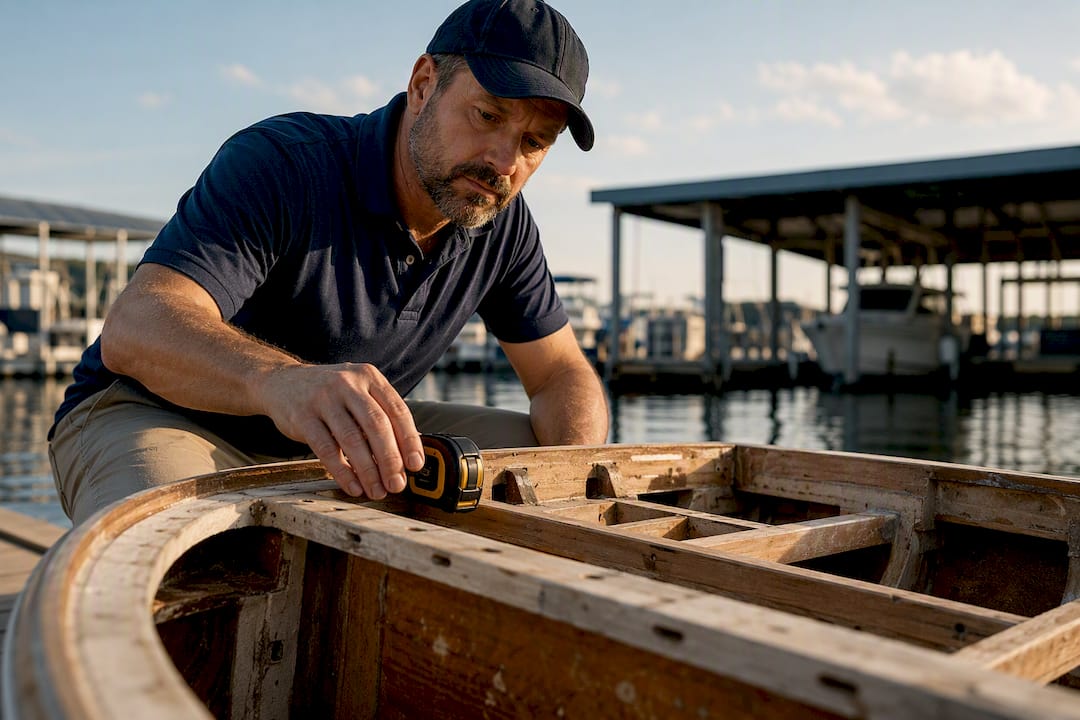
Agreed value boat insurance pays a fixed, pre-agreed payout if your boat is a total loss, with no deduction for depreciation. It makes the most sense for newer boats, financed boats, and vessels with upgraded engines or electronics, because it guarantees you get real replacement money instead of a diminished check. The trade-off is a higher premium, but for most owners with meaningful equity in their boat, that cost buys certainty you cannot get any other way.
TL;DR:
- Agreed value insurance is recommended mainly for newer, financed, or upgraded boats to ensure full replacement costs without depreciation deduction.
- The premium for agreed value is higher but provides certainty that payout equals the insured amount, especially valuable for boats with custom or expensive features.
- Owners should update and verify their agreed value regularly using receipts, survey reports, and documentation to prevent undervaluation over time.
- The payout process simplifies with agreed value, paying the policy’s set amount minus salvage value for total losses, and partial losses may still depreciate items like sails or upholstery.
- Insurers typically determine agreed value based on purchase price, third-party surveys, and records of upgrades, making documentation crucial for accurate valuation.
Table of Contents
- What Agreed Value and Actual Cash Value Really Mean
- Why Boat Owners Choose Agreed Value
- When Agreed Value Makes Sense for Your Boat
- How Claims and Payouts Work With Agreed Value
- How Insurers Set Your Agreed Value
- Policy Details Worth Checking Before You Sign
- What Agreed Value Actually Costs You
- Why a Local Agent Matters When You’re Documenting Agreed Value
- A Note From Steve Root
- How The Root Agency Helps You Get Agreed Value Right
- Sources
- FAQ
What Agreed Value and Actual Cash Value Really Mean
Agreed value, sometimes called stated value, sets a fixed payout amount when you write the policy. If your boat is declared a total loss, BoatUS explains that agreed hull value coverage pays to replace your boat up to the agreed hull value determined when you start your policy, and it’s offered for most boat types. Actual cash value works differently. It calculates your payout using market value minus depreciation at the time of loss, which means the older your boat, the smaller your check.
Here’s how the two diverge in practice:
- Agreed value: You insure a boat for $60,000. Three years later it sinks in a storm. You receive $60,000, full stop.
- Actual cash value: You insure that same $60,000 boat, but by year three it has depreciated to $42,000. A total loss pays $42,000, not the number on your original declarations page.
Chubb notes that agreed value normally pays the amount shown on the policy for a total loss, while ACV factors in depreciation and can pay considerably less. That gap between the two numbers is the entire reason this decision matters.
Why Boat Owners Choose Agreed Value
Owners who pick agreed value coverage aren’t buying peace of mind out of caution alone. They’re protecting real dollars they’ve already put into the boat.
- No depreciation penalty on a total loss, so the payout matches what you actually agreed to insure
- Better protection for upgraded engines, electronics, and custom gear added after purchase
- New-for-old repairs on many partial losses, rather than a depreciated replacement part
- Easier to satisfy a lender’s requirements on a financed boat, since the bank wants a payout that covers the loan balance
OnTheWater’s guidance notes agreed value coverage typically fits newer boats, yachts, and boats with upgraded engines precisely because those owners have the most to lose from a depreciated payout.
Pro Tip: Keep a running folder, physical or digital, with every upgrade receipt the moment you make the purchase. Insurers move faster on claims when documentation is already organized instead of reconstructed after a loss.
When Agreed Value Makes Sense for Your Boat
Not every boat needs agreed value coverage, but certain situations make it the clear right call.
- Your boat is under 10 to 15 years old. Sea Insure’s guidance ties the agreed value decision closely to a boat’s age and condition, and newer boats depreciate fast enough that ACV can shortchange you badly in the first decade.
- You’ve added expensive upgrades. A repowered engine, new electronics package, or custom hardtop adds real value that ACV won’t fully credit back to you.
- The boat is financed. Lenders want assurance that a total loss payout will cover what’s still owed, and agreed value delivers that certainty.
- You simply prefer predictability. Some owners would rather budget for a slightly higher premium than gamble on a depreciation calculation after a hurricane.
ACV remains a reasonable choice for older boats with modest market value, where the premium savings outweigh the smaller gap in a total loss payout.
How Claims and Payouts Work With Agreed Value
A claim starts with the insurer determining whether the damage counts as a total loss or a partial loss, and that distinction changes everything about your payout. Most policies use a constructive total loss threshold, meaning if repair costs exceed a set percentage of the boat’s insured value, often somewhere around 75 to 80%, the insurer treats it as a total loss rather than authorizing repairs. Marine surveyors and USCG recreational boating safety resources outline how salvage value factors into that calculation, since the insurer typically deducts what the wreck is worth in salvage before cutting your check.
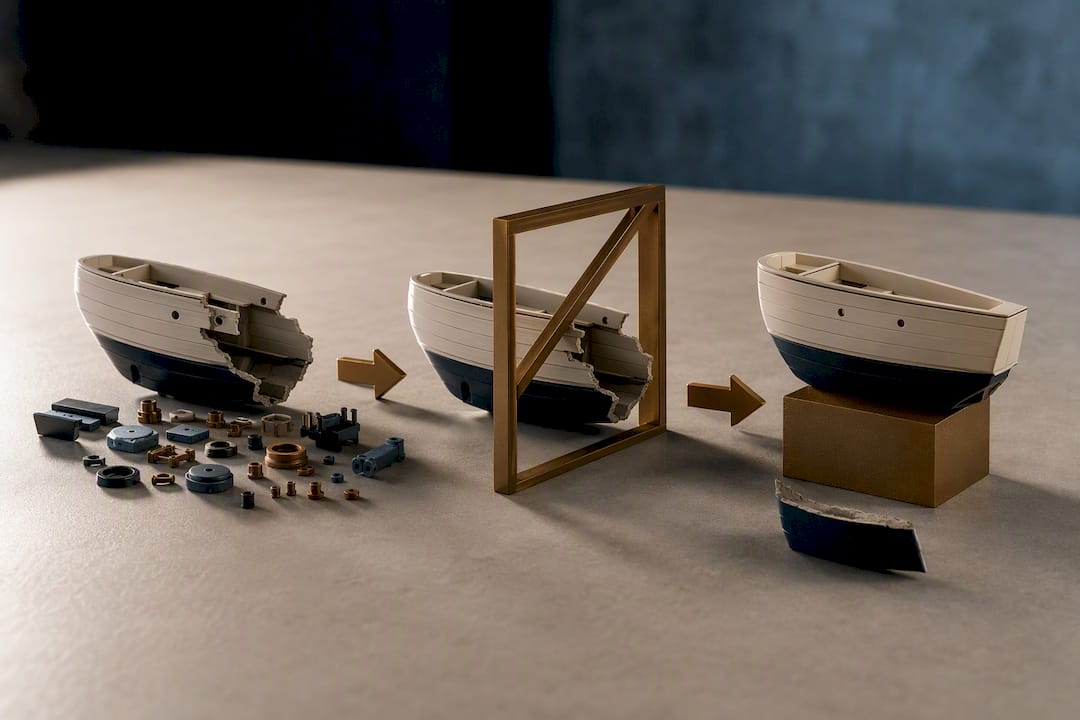
Once a total loss is declared, agreed value coverage removes the guesswork. You get the number on your declarations page, not a negotiated figure based on comparable boat listings. Partial losses work differently. Some components, like canvas, upholstery, and sails, may still depreciate even under an agreed value policy, so don’t assume every repair comes back as new-for-old.
To speed up a claim and strengthen your position, gather these items before you ever need them:
- Original purchase receipt and any bill of sale
- Engine serial numbers and maintenance logs
- Photos of the hull, engine, and major equipment taken in good condition
- Copies of any recent marine survey reports
- Invoices for upgrades, electronics, or repowers completed after purchase
Owners who show up to a claim with this paperwork already organized tend to see faster settlements, because the adjuster spends less time chasing down verification and more time processing the payout.
How Insurers Set Your Agreed Value
The number on your policy doesn’t come out of thin air; working with an asset protection attorney in Rhode Island ensures your valuation preserves your personal assets properly. Insurers typically lean on one or more of these methods to land on a fair agreed value figure.
- Purchase price as a starting point. A recent sale, especially with a clean bill of sale, gives the insurer a defensible baseline.
- Third-party marine survey. For older boats or high-value vessels, a licensed surveyor’s appraisal carries the most weight and often becomes the standard the insurer references.
- Dealer invoices and upgrade records. If you’ve added a new engine, electronics, or custom features, those invoices adjust the agreed value upward from the original purchase price.
Keep receipts, engine serial numbers, maintenance logs, and dated photos in one place, because you’ll need them again anytime you renegotiate. Get a fresh survey every few years, or immediately after a major upgrade, and call your agent to update the policy right away. An agreed value that hasn’t been revisited since purchase can quietly fall out of step with what your boat is actually worth.
Policy Details Worth Checking Before You Sign
The declarations page tells only part of the story. Before you commit to an agreed value policy, confirm these details in the fine print.
- Deductible structure: Ask whether the deductible applies the same way to a total loss as it does to a partial loss claim.
- Depreciated items: Chubb’s carrier-level guidance flags canvas, sails, and trailers as items that can still depreciate even under an agreed value policy.
- Endorsements: Confirm engines, electronics, and custom gear are scheduled with their own coverage limits, not lumped into a general hull value.
- Cruising limits and exclusions: Check navigation area restrictions, since coverage can lapse if you take the boat outside approved waters.
- Salvage rights and loss-of-use limits: Understand who controls salvage decisions after a total loss, and review your loss-of-use coverage limits if you rely on the boat for income or regular use.
What Agreed Value Actually Costs You
Premiums for agreed value coverage run higher than ACV, and the size of that gap depends on a handful of factors: the boat’s value, how and where you use it, your claims history, and any upgrades you’ve scheduled onto the policy.
- Higher-value vessels and yachts see the widest premium spread between agreed value and ACV
- Storage location and cruising area (open Gulf waters versus inland lakes) shift the rate
- A clean claims history typically keeps the agreed value premium more reasonable
- Recent upgrades raise the agreed value, and the premium with it, but they raise your protection just as much
Industry commentary consistently frames ACV as a false economy for newer or high-value boats, since the premium savings rarely make up for what you lose in a real total loss. ACV still works fine for an older boat with modest resale value, where the smaller depreciation gap doesn’t justify the extra premium.
Pro Tip: Run the math on your specific boat rather than trusting a rule of thumb. Ask your agent to quote both agreed value and ACV side by side so you can see the real dollar difference before deciding.
Why a Local Agent Matters When You’re Documenting Agreed Value
Steve Root has spent more than 20 years building The Root Agency into one of Louisiana’s most trusted insurance names, carrying a family legacy in Louisiana insurance that stretches back 40 years. That kind of tenure matters when you’re setting an agreed value, because getting the number right the first time protects you when a claim actually happens.
The agency backs that experience with real proof points and services built for exactly this kind of coverage decision:
- 356 Google reviews at 4.9 stars, and a spot on The Advocate’s 2025 Best of Baton Rouge list
- A catastrophe response team that assists owners in disaster zones after a storm
- 24/7 claims support with bilingual service
- Policy reviews where you can provide documentation so your agreed value reflects the boat you actually own today
A Note From Steve Root
I’ve watched too many boat owners find out the hard way that a cheap policy doesn’t pay what they need after a storm. Louisiana boaters know what underinsurance looks like, and none of us are going back to it. When a hurricane comes through, our catastrophe team shows up in person, not just on the phone. That’s the promise behind every policy we write. If your agreed value hasn’t been reviewed in a while, or you’ve upgraded your boat since you bought it, schedule a review with us before the next storm season, not after.
— Steve Root
How The Root Agency Helps You Get Agreed Value Right
Getting an agreed value number that actually protects you takes more than a form. The Root Agency reviews your purchase records, upgrade invoices, and survey reports in person, then builds a policy around what your boat is really worth today, not what a generic online quote assumes. That’s the difference between a policy that pays out fully after a loss and one that leaves you negotiating over depreciation.
Every review comes backed by 24/7 claims support, bilingual service in English and Spanish, and a mobile catastrophe response team that shows up in person after major storms instead of leaving you to file paperwork alone. Explore the full lineup of boat and watercraft coverage options or browse all available policy lines to see how agreed value coverage pairs with your other insurance needs. Call (225) 926-0160 or visit our office at 8676 Goodwood Blvd Ste 303, Baton Rouge, LA 70806 to schedule a policy review and find out what your boat is actually worth to insure.
This article is general information, not a substitute for advice from a qualified financial advisor. Consult a qualified financial professional about your own circumstances before acting on anything here.
Sources
- Learn About Agreed Hull Value Coverage - Boat Insurance
- Understanding boat insurance | Chubb
- Agreed Value vs Actual Cash Value Boat Insurance
- Understanding Agreed Value vs. Actual Cash Value for Your Boat Insurance - Sea Insure
FAQ
Is agreed value or actual cash value better for boat insurance?
Agreed value is generally better for newer, financed, or upgraded boats because it pays a fixed amount with no depreciation deduction, while actual cash value fits older boats with lower resale value where the premium savings matter more than the payout gap.
How much does boat insurance cost for a $30,000 boat?
Cost varies by usage, location, and claims history, but agreed value coverage on a boat that size typically runs a modest annual premium that reflects the boat’s full replacement value rather than a depreciated market estimate. Ask The Root Agency for a direct quote based on your specific boat and cruising area.
Should I choose market value or agreed value coverage?
Choose agreed value if you want a predictable, pre-set payout regardless of market swings; choose market value or ACV coverage if you’re comfortable with a payout tied to depreciation and want a lower premium in exchange.
What are the three main types of marine insurance?
The three main categories are hull insurance (covering the vessel itself), liability insurance (covering injury or property damage you cause), and protection and indemnity coverage, which handles broader marine liability exposures beyond basic hull and liability limits.